
The relentless expansion of artificial intelligence and data infrastructure has created an unprecedented energy demand that conventional power grids are increasingly struggling to meet, forcing a critical reevaluation of how next-generation industries will be powered. High-temperature microreactor technology is emerging as a pivotal solution within the advanced nuclear energy sector, representing a significant leap forward. This review explores the evolution of this technology, its key design features, performance metrics, and the transformative impact it is poised to have on industrial and computational applications. The purpose is to provide a thorough understanding of the technology’s current development status and its potential future as a critical component of modern energy infrastructure.
An Introduction to Advanced Microreactor Technology
High-temperature microreactors represent a paradigm shift from traditional nuclear power. These are compact, factory-built systems designed to deliver consistent, carbon-free energy on a much smaller scale than their predecessors. Their core principle involves using advanced materials and fuels to operate at significantly higher temperatures, unlocking new efficiencies and applications. Key components often include a solid-core reactor, high-efficiency heat exchangers, and a simplified power conversion unit, all housed within a small, transportable footprint.
The emergence of this technology is directly tied to a market context defined by soaring energy demands. The rapid growth of AI, the reshoring of heavy manufacturing, and the construction of energy-intensive facilities like semiconductor plants have created a pressing need for reliable, uninterrupted power that is both scalable and clean. Microreactors are positioned not merely as an alternative energy source but as a foundational infrastructure technology capable of supporting this new industrial landscape, offering a decentralized solution to a growing national energy challenge.
Core Technology and Design Principles
Unlocking Industrial Potential with High-Temperature Heat
The primary distinguishing feature of these advanced reactors is their ability to generate extremely high temperatures, with some designs, like that of NuCube Energy, targeting up to 1,100°C. This capability is a fundamental departure from conventional nuclear reactors, which typically operate at much lower temperatures suitable primarily for steam-driven electricity generation. The higher heat output is achieved through innovative core designs and advanced materials that can withstand extreme conditions, allowing for more efficient energy conversion and opening the door to a host of industrial processes previously reliant on fossil fuels.
This thermal output is not just an incremental improvement; it is a transformative one. The significance lies in its ability to decarbonize sectors of the economy that are otherwise difficult to electrify. Industries such as steel manufacturing, hydrogen production, and chemical synthesis require intense process heat that traditional renewable sources and conventional nuclear plants cannot directly provide. By delivering this heat without combustion, high-temperature microreactors offer a direct, carbon-free replacement for natural gas and coal in heavy industry.
Dual-Use Functionality for Power and Process Heat
A key design feature of this technology is its dual-use capability, allowing for both the generation of electricity and the direct application of industrial process heat. This flexibility is a significant technical advantage, enabling a single microreactor unit to serve multiple functions simultaneously. For instance, a facility could use a portion of the reactor’s output to power its operations and data centers while channeling the remaining high-temperature heat to drive manufacturing processes, maximizing energy efficiency and economic utility.
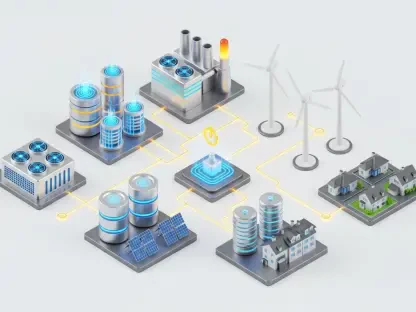
This versatility offers immense real-world value for decarbonizing industrial clusters. A strategically placed microreactor could provide a reliable baseload of electricity for a local grid while also supplying high-grade heat to nearby factories, creating an integrated energy ecosystem. This model not only reduces carbon emissions but also enhances energy security and cost stability for industrial consumers, making it a compelling proposition for revitalizing manufacturing hubs.
An Emphasis on Simplicity and Inherent Safety
Many developers in this space are emphasizing simple, “no-moving-parts” designs to enhance reliability and safety. This architectural philosophy, described by NuCube co-founder Bill Gross as a necessary step to make nuclear “fundamentally simpler,” moves away from the complex pumps and cooling systems of older reactor designs. Instead, it relies on natural physical principles like conduction and convection for heat transfer and passive safety systems that function without human intervention or external power.
This focus on simplicity has profound implications for the technology’s commercial viability. By reducing operational complexity, these designs minimize the potential for mechanical failure and human error, thereby strengthening the inherent safety case. This, in turn, simplifies the regulatory and licensing process, a major hurdle for any new nuclear technology. Furthermore, a less complex system is more suitable for factory production and scalable deployment, improving its commercial licensability and paving the way for wider adoption.
Emerging Trends and Market Drivers
The latest developments in the high-temperature microreactor field are being shaped by powerful market forces and accelerating investment trends. The recent $13 million funding round for NuCube Energy, led by the firm Arizona Nuclear Ventures, exemplifies a growing recognition among investors that advanced nuclear is essential for future economic growth. This infusion of capital is not an isolated event but rather a signal of a broader trend where private investment is flowing toward technologies that can solve the immense energy challenges posed by AI and industrial expansion.
This momentum is sustained by a clear consensus among industry leaders, investors, and economic officials. The core market driver is the undeniable reality that reliable and affordable energy underpins all economic activity. As Rob Walton, an investor in NuCube, noted, a scalable and dependable power solution becomes increasingly vital as industrial and computational demands escalate. This shared perspective is accelerating development, creating a feedback loop where market demand attracts investment, which in turn speeds up technical validation and commercialization efforts.
Real-World Applications and Strategic Implementations
Powering the AI and Data Center Revolution
The explosive growth of artificial intelligence and its associated data centers has created an insatiable appetite for power that is both massive and uninterrupted. These facilities operate around the clock, and any disruption can result in significant financial and operational losses. High-temperature microreactors are uniquely suited to meet this demand by providing a dedicated, reliable, and carbon-free energy source that can be co-located with data centers, ensuring grid independence and operational resilience.
This application goes beyond simply supplying electricity; it addresses a strategic vulnerability for the tech industry. As data centers become more powerful, their energy consumption is projected to strain regional power grids. Deploying microreactors on-site offers a scalable solution that allows the AI industry to expand without compromising grid stability or climate goals, making it a critical enabling technology for the future of computation.
Supporting Industrial Reshoring and Advanced Manufacturing
The strategic push to reshore manufacturing and establish energy-intensive facilities like semiconductor plants in the United States hinges on access to stable, high-output energy. These advanced manufacturing processes are highly sensitive to power fluctuations and require vast amounts of electricity and heat. Microreactors provide the kind of dependable, localized energy infrastructure needed to attract and sustain these critical industries.
This capability is particularly relevant for sectors that are foundational to national security and economic competitiveness. By offering a reliable power source independent of volatile fossil fuel markets or intermittent renewables, microreactors can de-risk major industrial investments. This makes them a cornerstone technology for regions aiming to build robust domestic supply chains and reestablish leadership in advanced manufacturing.
Fostering Regional Energy and Technology Hubs
Strategic investment is being used to cultivate regional innovation ecosystems centered around advanced nuclear technology. Arizona serves as a compelling case study, where a concerted effort is underway to create a national hub for the industry. The investment in NuCube by Arizona-based entities is a deliberate move to anchor the technology’s development within the state, aligning it with local economic ambitions.
This regional strategy is validated by endorsements from key economic leaders. Both Sandra Watson of the Arizona Commerce Authority and Christine Mackay of the Greater Phoenix Economic Council have highlighted the critical need for resilient, uninterrupted power to support the state’s burgeoning semiconductor and data infrastructure sectors. Their support illustrates a clear understanding that technologies like NuCube’s microreactor are foundational for strengthening the regional energy grid, attracting further high-tech investment, and securing long-term economic prosperity.
Challenges and the Path to Commercialization
Navigating Technical Validation and Materials Science
Despite the promising designs, a significant technical hurdle remains in completing the critical validation tests required for deployment. Proving the long-term durability of materials under the extreme temperatures and radiation present inside the reactor core is paramount. As NuCube’s CEO, Dr. Cristian Rabiti, has indicated, the current phase of development is focused on precisely these materials and validation tests, which are essential prerequisites for moving forward.
Successfully completing these tests will provide the empirical data needed to confirm the safety, reliability, and operational lifespan of the reactor components. This validation is not just a technical milestone but a crucial step in building confidence among regulators, investors, and future customers. The field’s progress hinges on demonstrating that these advanced materials can perform as designed over decades of continuous operation.
Overcoming Regulatory and Licensing Processes
Navigating the complex regulatory landscape presents one of the most significant challenges on the path to commercialization. Any new nuclear technology must undergo a rigorous licensing process overseen by regulatory bodies to ensure it meets stringent safety and security standards. This process is often lengthy and requires extensive engagement, detailed safety analyses, and robust documentation.
For microreactor developers, the challenge is twofold: they must prove their novel designs are inherently safe while also working with regulators who may be more familiar with traditional, large-scale reactor technologies. A simplified and transparent design can aid this process, but successfully moving from technical validation to a demonstration project and eventual market entry requires a clear and proactive regulatory strategy from the outset.
Ensuring Economic Viability and Supply Chain Readiness
Beyond technical and regulatory hurdles, high-temperature microreactors must overcome market obstacles to achieve commercial success. A primary concern is achieving cost-competitiveness with incumbent energy sources, including natural gas and established renewables. The economic viability of these systems will depend on leveraging factory production to drive down costs, simplifying maintenance requirements, and demonstrating a compelling return on investment for end-users.
Furthermore, scalable production requires the establishment of a robust and resilient supply chain for specialized components and advanced materials. Building this ecosystem from the ground up is a considerable undertaking that involves qualifying new suppliers and ensuring a steady flow of materials. The readiness of this supply chain will be a critical factor in determining how quickly microreactor technology can be deployed at the scale needed to meet market demand.
Future Outlook and Long-Term Impact
Looking ahead, the trajectory for high-temperature microreactor technology appears promising, driven by undeniable market needs and growing investment. Potential breakthroughs in materials science and advanced manufacturing could further reduce costs and accelerate deployment timelines. As the first demonstration units come online in the coming years, they will provide invaluable operational data that will inform the next generation of designs, likely leading to even greater efficiencies and broader applications.
The long-term impact of this technology could be profound. By providing a reliable source of clean energy and heat, microreactors have the potential to enhance national energy security, stimulate economic growth by enabling industrial expansion, and play a crucial role in global decarbonization efforts. Their successful commercialization could reshape modern energy infrastructure, creating a more decentralized, resilient, and sustainable power grid capable of supporting the industries of the future.
Conclusion: A New Paradigm for Scalable Energy
The development of high-temperature microreactors marked a pivotal moment in the evolution of advanced nuclear energy. The technology’s unique ability to deliver both high-temperature process heat and reliable electricity addressed a critical gap in the clean energy landscape, offering a viable path to decarbonize heavy industry and power next-generation computational infrastructure. Its emphasis on inherent safety and simplified design represented a strategic departure from the complexity of legacy nuclear systems.
Ultimately, the convergence of urgent market demand, strategic private investment, and focused regional economic development created a fertile ground for this technology to advance. The progress made in technical validation and regulatory engagement laid the groundwork for a new energy paradigm, one where scalable, clean, and continuous power became an accessible foundation for economic prosperity and technological leadership. This shift established advanced microreactors not just as an alternative, but as an essential component of the future energy mix.