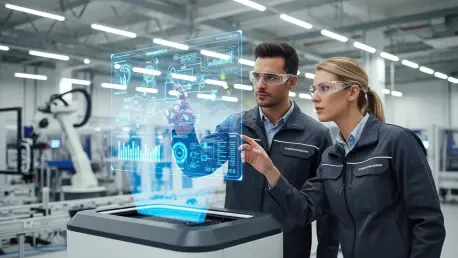

The silent hum of industrial air filtration systems has long been the overlooked backbone of manufacturing, but a technological revolution is now underway that promises to redefine their environmental and economic impact. As global pressure mounts for industries to decarbonize and operate more sustainably, the focus has shifted from simply capturing pollutants to doing so with maximum efficiency and minimal ecological consequence. This transition is not merely about swapping out old filters for new ones; it represents a fundamental rethinking of industrial processes, driven by advanced materials, intelligent data analytics, and a circular economic mindset. For decades, filtration was a necessary but costly and wasteful function, but today’s green technologies are turning it into a strategic asset for achieving long-term operational resilience and genuine environmental leadership in an increasingly conscious global market.
The Environmental Burden of Legacy Systems
For many years, the standard for industrial air filtration was built on an environmentally costly model that prioritized performance at the expense of sustainability. Traditional systems relied almost exclusively on synthetic, petroleum-derived materials such as fiberglass, polyester, and a variety of nonrecyclable polymers. This dependence created a linear “cradle-to-grave” lifecycle that was inherently wasteful, contributing to the depletion of finite resources during the manufacturing phase and generating a significant stream of non-biodegradable waste at the end of a filter’s operational life. This model, while effective at capturing particulate matter, was a product of an era where the long-term consequences of material choice and disposal were not primary considerations in engineering design, leaving a legacy of environmental liability that modern innovations now seek to correct by fundamentally altering the composition of filter media.
Beyond the significant material waste stream, a primary and persistent criticism of legacy filtration systems is the immense energy consumption required for their operation. The core design of these systems involves forcing vast quantities of air through dense, synthetic filter media, a process that necessitates the use of powerful, energy-intensive fans running continuously. This substantial electricity demand places these systems on par with other notoriously high-consumption equipment like industrial dust collectors and electrostatic scrubbers. As a result, facilities have historically faced inflated energy budgets and, consequently, a much larger carbon footprint. This high performance came at a steep environmental and economic price, effectively locking industries into a cycle of high operational expenditures and significant greenhouse gas emissions that is no longer tenable under modern efficiency standards and environmental regulations.
Innovations Reshaping Filtration Efficiency
A foundational shift in modern air filtration is occurring in the very composition of the filter media, with a decisive move away from petroleum-derived plastics toward sustainable, renewable, and recycled alternatives. Key among these advancements are bioplastics, such as Polylactic acid (PLA), which are derived from plant sources like corn starch and emit up to 70% fewer greenhouse gases in landfills compared to their conventional plastic counterparts. Alongside bioplastics, the use of plant-derived cellulose fibers and recycled synthetic fibers offers another critical pathway to reduce the consumption of virgin resources and divert substantial waste from landfills. This transition, however, presents an “environmental trade-off,” as some sustainable materials do not yet match the lifespan of traditional options. Looking forward, the industry is exploring circular economy concepts, such as regenerating polymeric membranes, a technology that could enable the reuse of filter components to create a more closed-loop system for capturing even ultrafine particles.
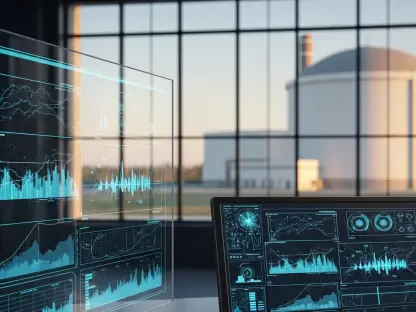
Complementing advancements in material science, the integration of intelligent technologies is a cornerstone of modern filtration, transforming system management from a reactive to a proactive model. The deployment of Internet of Things (IoT) sensors is central to this change, providing a continuous stream of real-time data on critical parameters like airflow, filter loading, and pollutant concentrations. This constant monitoring enables predictive maintenance, allowing operators to replace filters precisely when performance begins to degrade, rather than adhering to a fixed, often wasteful, schedule. This smart approach reduces strain on equipment, cuts maintenance costs, and extends infrastructure life. Furthermore, electrostatic air filtration represents a paradigm shift in methodology. Instead of physically trapping particles, these systems use a high-voltage electric field to charge and capture them, meaning the air faces almost zero resistance. This allows for operation with extremely low energy use and eliminates the need for consumable filter materials entirely.
Quantifying the Value of Green Investments
To translate abstract environmental benefits into a concrete business strategy, organizations are increasingly relying on sophisticated analytical tools like the Life Cycle Assessment (LCA). This comprehensive methodology provides a holistic, 360-degree view of a filter’s environmental impact by examining every stage of its existence, from the extraction of raw materials and the energy consumed during manufacturing to its operational energy use and final disposal or recycling. By quantifying the total environmental burden associated with a piece of equipment, the LCA allows decision-makers to move beyond simplistic performance metrics and understand the true ecological footprint of their operational choices. This data-driven approach is essential for making informed decisions that align with corporate sustainability goals and demonstrate a verifiable commitment to reducing environmental harm throughout the entire value chain, fostering a culture of genuine stewardship rather than mere compliance.
Working in tandem with environmental analysis, the Total Cost of Ownership (TCO) provides the critical financial justification for investing in advanced green filtration systems. This financial tool calculates the full, long-term cost of a system, encompassing not only the initial purchase price but also all associated expenses over its entire lifespan, including installation, ongoing energy consumption, routine maintenance, and eventual disposal or recycling costs. By utilizing a TCO framework, organizations can make data-driven decisions that look beyond the immediate capital expenditure, often revealing that the higher upfront cost of a green system is more than offset by significant long-term savings in energy and maintenance. This quantitative approach helps businesses move past regulatory compliance as their sole motivator, empowering them to adopt a model of operational excellence and environmental leadership that is both sustainable and economically sound.
Charting the Course for a Sustainable Future
The global push for sustainability is fueling robust growth in the industrial filtration market, which is anticipated to reach $65.08 billion by 2033. This expansion is propelled by increasingly stringent regulations, such as those from the U.S. Environmental Protection Agency and the European Union’s Green Deal, which impose strict limits on emissions and energy consumption. Interestingly, a regional divergence in adoption rates has emerged; while some U.S. manufacturers have shown hesitancy due to high initial costs and integration complexities, the Asia-Pacific market has become a global leader in adoption. Despite the positive outlook, significant barriers to implementation remain, including financial constraints tied to the high upfront cost of advanced systems, the technical challenges of integrating new technologies into legacy infrastructure, and a skills gap in operating and maintaining these sophisticated systems.
The trajectory of industrial air filtration had clearly shifted toward a smarter, more integrated future. The implementation of artificial intelligence and machine learning was set to drive the next generation of predictive maintenance systems, which had already demonstrated the potential to anticipate failures with remarkable accuracy and deliver substantial cost savings. Simultaneously, the financial and regulatory landscapes evolved to further incentivize these green practices. The expansion of carbon credit frameworks into industrial settings created tangible opportunities for companies with low-emission, high-efficiency filtration systems to participate in carbon offset programs. This integration aligned operational improvements directly with broader decarbonization goals, turning environmental responsibility into a potential financial asset. Ultimately, the industry-wide adoption of green materials, intelligent technologies, and circular economic principles was the definitive path that enabled industries to reduce emissions, conserve energy, and lead in an increasingly eco-conscious world.