
A single day’s trading session on December 18, 2025, encapsulated the turbulent reality for investors in GE Vernova, as the company’s stock plunged a startling 10.5% despite a backdrop of overwhelmingly positive news and a strategic position at the heart of the global energy transition. This sharp downturn, seemingly disconnected from the company’s strong operational performance and recently upgraded financial forecasts, underscored a critical tension in the market. It revealed how a solid industrial powerhouse, buoyed by a massive order backlog and clear growth drivers, can still be subject to the volatile whims of market sentiment, particularly when its valuation becomes deeply intertwined with the speculative and fast-moving narrative surrounding the artificial intelligence infrastructure boom. The day served as a potent reminder that in today’s market, perception can, at times, wield as much power as performance.
The Anatomy of a Sell-Off
Whispers of Financial Strain
The precipitous decline in GE Vernova’s stock was not triggered by a flaw in its own operations but by a ripple of anxiety spreading through the broader technology infrastructure market. A pivotal catalyst was a Reuters report that cast a shadow of doubt over the financing mechanisms for the colossal data-center projects that are central to the AI revolution. This report highlighted the immense capital required for such endeavors and raised questions about the sustainability of funding, particularly in a climate of rising capital costs. The market’s nervousness was further exacerbated by specific news concerning Oracle, which had to address a partner change related to a significant data-center initiative in Michigan. While not directly involving GE Vernova, this development was perceived as a symptom of potential execution risk within the very ecosystem the company serves. For a stock that had become a proxy for the AI power buildout, these whispers of financial friction were enough to spook investors, who began to question whether the ambitious project timelines and capital expenditure plans of hyperscalers were truly secure, thereby re-evaluating the near-term certainty of GE Vernova’s projected revenue streams.
This undercurrent of doubt swiftly transformed into a tangible sell-off as investors grappled with the complex interplay between technological ambition and financial reality. The narrative shifted from celebrating the scale of the opportunity to scrutinizing the practicalities of its implementation. The immense figures often cited—trillions in investment needed for data centers by 2028—suddenly appeared less like a guaranteed boom and more like a potential liability if funding were to become constrained. This sentiment shift was particularly damaging for GE Vernova because its stock valuation had been propelled by the assumption of a smooth and rapid buildout. Any hint of delays, cancellations, or financing difficulties in these mega-projects directly threatened the growth premium embedded in its share price. The market began to price in a higher degree of uncertainty, leading to a rapid de-risking among shareholders who had enjoyed a substantial run-up in the stock’s value throughout the year. The sell-off was, therefore, a classic case of sentiment overpowering fundamentals, where the fear of potential future headwinds outweighed the reality of current operational strength and a robust order book.
The Specter of Efficiency
Compounding the financial jitters was the resurgence of a persistent technological fear: the possibility that innovation could render the entire “power bottleneck” thesis obsolete. This anxiety was given fresh life by an announcement from Mythic, a tech startup that successfully closed a funding round for its novel AI architecture, which it claims is dramatically more energy-efficient than the dominant GPU-based systems. While Mythic is a relatively small player in a vast industry, the news tapped into a deep-seated market concern that a breakthrough in chip efficiency could drastically reduce the projected power demand from future data centers. Such a development would directly undermine the core investment case for companies like GE Vernova, whose growth is predicated on the assumption that the insatiable computational needs of AI will require a massive expansion of power generation and grid infrastructure. This narrative, however speculative, was potent enough to cause a reassessment of long-term demand forecasts.
The market’s reaction to the Mythic news highlighted the inherent vulnerability of “theme stocks” that are tied to a single, powerful narrative. GE Vernova’s identity as a key enabler of the AI revolution had been a primary driver of its stock’s impressive performance. However, this also made it acutely sensitive to any information that could challenge the foundational assumptions of that narrative. The news of more efficient AI hardware, even from a nascent company, created a narrative crack, prompting investors to consider a future where data centers could achieve exponential growth in processing power without a corresponding explosion in energy consumption. This possibility, however remote, was enough to trigger a re-pricing of risk. Investors who had bought into the story of a perpetual energy crunch were forced to contemplate an alternative scenario, leading to a swift move to lock in profits. The episode demonstrated that in a market fixated on future growth, the mere suggestion of a disruptive technology can have an outsized impact on valuations, even before that technology has achieved widespread adoption or proven its commercial viability.
The Bedrock of a Bullish Case
A Future Forged in Ambitious Forecasts
In stark opposition to the market’s momentary panic, GE Vernova’s management had recently presented a vision of the future rooted in concrete, upgraded financial targets that painted a picture of exceptional growth and profitability. At a comprehensive investor update, the company unveiled a significantly more aggressive long-term outlook for 2028, raising its revenue target to an impressive $52 billion. This was accompanied by an ambitious goal to achieve a 20% adjusted EBITDA margin, signaling a strong focus on enhancing profitability alongside top-line expansion. Perhaps most compellingly, the company projected it would generate over $22 billion in cumulative free cash flow between 2025 and 2028, a substantial increase from previous estimates. This forecast was not just a distant aspiration; it was supported by a detailed medium-term framework for 2026, which outlined a clear pathway to achieving between $41 and $42 billion in revenue and a robust $4.5 to $5.0 billion in free cash flow.
This meticulously detailed financial roadmap served as the bedrock of the bull case, providing a powerful counter-narrative to the day’s market volatility. By offering specific, quantifiable targets, GE Vernova’s leadership aimed to shift the investment conversation from speculative sentiment to tangible performance metrics. The projections underscored a deep confidence in the company’s ability to execute on its massive backlog, capture market share, and translate immense demand into durable financial results. The emphasis on free cash flow generation was particularly significant, as it demonstrated a commitment to not only growing the business but also creating substantial value that could be returned to shareholders or reinvested for future growth. For long-term investors, this strategic clarity and financial discipline provided a compelling reason to look past the short-term noise and focus on the company’s well-defined trajectory toward becoming a more powerful and profitable industrial leader in the global energy sector.
Rewarding Shareholder Confidence
Further cementing its optimistic outlook, GE Vernova translated its financial confidence into tangible actions aimed directly at rewarding its shareholders. The company made a powerful statement by announcing its intention to double its quarterly dividend to $0.50 per share. This move was far more than a simple adjustment; it was a clear and unambiguous signal from the board and management that they possessed a high degree of certainty in the company’s future earnings and its capacity to generate consistent and substantial cash flow. A dividend increase of this magnitude is often interpreted by the market as a testament to underlying financial health and a disciplined approach to capital allocation, suggesting that the company sees a clear path to sustainable profitability that can support higher payouts without compromising necessary investments in growth. This action served to directly counter the narrative of uncertainty that was driving the stock’s decline, offering a concrete reason for investors to remain confident in the company’s long-term value proposition.
In addition to the enhanced dividend, GE Vernova significantly bolstered its share repurchase program, expanding its authorization from $6 billion to a formidable $10 billion. This decision provided management with a powerful tool to support the stock price and demonstrated a belief that the company’s shares represented an attractive investment. Share buybacks can increase earnings per share and signal to the market that the company’s leadership believes its stock is undervalued, making it a strategic use of excess capital. By committing an additional $4 billion to this program, GE Vernova armed itself with the flexibility to opportunistically repurchase shares, potentially during periods of market weakness like the one it was experiencing. Together, the dividend hike and the expanded buyback authorization formed a two-pronged strategy to reinforce shareholder value and broadcast a message of unwavering confidence in the operational and financial trajectory outlined in its ambitious multi-year plan, providing a sturdy anchor of fundamentals amidst a sea of speculative sentiment.
From Projections to Purchase Orders
The robust financial forecasts presented by GE Vernova were not built on abstract market trends but on the tangible reality of a swelling order book and a commanding competitive position. A key element of the bull case, frequently highlighted by analysts, is the “scarcity” factor in the heavy industrial market. Essential hardware such as advanced gas turbines and critical grid equipment is not a commodity that can be produced overnight. These components require specialized manufacturing facilities, complex supply chains, and long lead times, creating a significant barrier to entry for competitors. This inherent scarcity gives GE Vernova considerable pricing power and allows it to build a durable and highly visible backlog of future revenue. The company’s dominance in this area was underscored by its recent performance, having signed contracts for 18 GW of gas turbines in the fourth quarter alone.
This tangible business momentum culminated in the expectation that GE Vernova would end the year with a massive 80 GW backlog of firm orders and slot reservations for its gas turbines. This backlog provides extraordinary visibility into future revenue streams, with some commitments extending into 2029 and beyond. It transforms the narrative of future demand from a mere projection into a set of contractual obligations and secured production slots. For investors, this backlog serves as a critical de-risking element, offering a degree of certainty that is rare in a market often driven by speculation. It demonstrates that customers—from utility companies to data center developers—are actively making long-term financial commitments to secure GE Vernova’s technology, validating the company’s central role in both the ongoing energy transition and the buildout of digital infrastructure. This foundation of secured orders provides a powerful buffer against short-term market sentiment, grounding the company’s valuation in the solid reality of signed deals and a full production schedule.
Powering More Than Just AI
While the narrative surrounding GE Vernova has been heavily focused on its role as a key supplier for the power-hungry AI industry, a crucial component of its strength lies in the robust growth of its broader Electrification segment. This division, responsible for supplying the essential equipment that underpins modern electrical grids, is experiencing a powerful growth surge of its own, driven by the global imperative to upgrade aging infrastructure and integrate renewable energy sources. The Electrification segment was on pace for an exceptional year, with revenue projected to grow by an impressive 25% in 2025, followed by another strong 20% in 2026. This performance is not solely dependent on the data center boom; it reflects a much wider trend of grid modernization and expansion worldwide. In fact, the current quarter was shaping up to be the segment’s largest ever for orders related to hyperscaler data centers, indicating that it is successfully capturing demand from multiple, synergistic growth drivers.
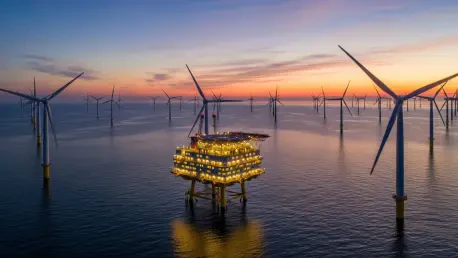
The strength and strategic importance of this business line were recently exemplified by a major contract win as part of a consortium for the TenneT BalWin5 project in Germany. This landmark project involves the construction of a 2.2-gigawatt high-voltage direct current (HVDC) system designed to transmit vast amounts of offshore wind power from the North Sea to the German mainland, with the capacity to supply electricity to approximately 2.75 million homes. Securing this contract not only adds a significant, long-term project to GE Vernova’s backlog but also reinforces its technical leadership in the critical field of grid technology. It serves as a powerful reminder that the company’s growth trajectory is supported by multiple pillars. While the AI narrative provides a compelling high-growth story, the steady, essential work of grid modernization offers a parallel and equally vital source of demand, providing a layer of diversification that makes the company’s overall business case more resilient and less susceptible to the fluctuations of any single market trend.
Wall Street’s Verdict: A Bullish Consensus with a Caveat
Analysts Raise Their Targets
In the wake of GE Vernova’s comprehensive investor update and despite the stock’s daily volatility, the overwhelming consensus among Wall Street analysts remained decidedly constructive. The detailed financial roadmap and tangible evidence of business momentum triggered a wave of positive revisions from leading financial institutions, signaling a strong belief in the company’s long-term value proposition. JPMorgan, for instance, responded by raising its price target to an ambitious $1,000, reflecting a deep conviction in the company’s ability to capitalize on the immense demand for energy infrastructure. This sentiment was echoed across the street, with Goldman Sachs lifting its target to $840 and Morgan Stanley increasing its target to $822. The analyst at Morgan Stanley specifically cited the concept of “time-to-power” scarcity as a key competitive advantage for GE Vernova, arguing that the urgency to bring new data centers online would create sustained demand for the company’s products and services.
This chorus of bullish sentiment was not limited to just a few firms. Other influential voices, including Wells Fargo, Evercore ISI, Oppenheimer, and UBS, all issued positive notes and reinforced their optimistic outlooks with price targets largely clustering in the $830 to $860 range. This widespread agreement among analysts created a powerful institutional underpinning for the stock, suggesting that sophisticated financial models and deep industry analysis supported a valuation significantly higher than the current trading price. The collective judgment of Wall Street was clear: the short-term market jitters were a distraction from a powerful and durable underlying growth story. The analysts’ reports focused on the company’s strong execution, its strategic positioning in high-growth markets, and the tangible evidence of its massive order backlog, collectively painting a picture of a company poised for significant appreciation as it continues to execute on its multi-year plan.
The Question of Valuation
Amidst the widespread bullishness, a critical and nuanced counterpoint emerged, shifting the focus of the debate surrounding GE Vernova’s stock. The dissenting voice came from Seaport Global, which downgraded the shares from Buy to Neutral. Crucially, this downgrade was not a critique of the company’s strategy, its operational execution, or the fundamental demand for its products. Instead, the rationale was based purely on valuation. Seaport Global pointed to the stock’s elevated price-to-earnings (P/E) ratio of 118.4, arguing that after a tremendous run-up that had seen the stock more than double in 2025, the share price had already captured a significant portion of the optimistic future growth story. This perspective suggested that while the company was performing exceptionally well, the market might have gotten ahead of itself, leaving little room for error and making the stock vulnerable to any shifts in sentiment.
This valuation-centric argument marked a pivotal evolution in the investment thesis for GE Vernova. The central conflict was no longer about whether the demand for power infrastructure was real but rather how much of that anticipated demand was already reflected in the stock’s premium valuation. The downgrade crystallized the concerns of a segment of the market that, while acknowledging the company’s strong fundamentals, had become cautious about the potential for further upside without a period of consolidation. This viewpoint highlighted the inherent tension for a “theme stock” that had performed so well; it was now a victim of its own success, with expectations set incredibly high. The debate had matured from a simple question of growth to a more complex analysis of risk versus reward, where investors had to weigh the company’s impressive execution and massive backlog against a stock price that assumed a near-perfect implementation of its ambitious long-term plan. This left the market to consider whether the recent sell-off was merely a temporary wobble or the beginning of a more sustained re-pricing as investors grappled with how much perfection was already priced in.