
The long-held approach to integrating renewable energy has traditionally followed a straightforward, if prohibitively expensive, mantrbuild more grid capacity to accommodate every new kilowatt of power. This paradigm, however, is being fundamentally challenged in France, where a strategic pivot towards operational flexibility is rewriting the rules for connecting new energy projects. A landmark biennial report from the French Energy Regulatory Commission (CRE) has established that the nation’s ambitious energy transition goals are inextricably linked to a new model where adaptability is not just a feature, but a prerequisite. The report’s findings signal a definitive move away from the era of unconditional grid access, ushering in a more agile and digitally managed electrical system. For developers of solar and storage projects, the message is clear: those who can embrace operational limitations and provide localized, controllable support to the grid will gain a decisive competitive advantage in securing a connection, transforming them from simple power producers into active partners in maintaining grid stability.
A New Era of Agile Interconnection
Accelerating Renewables Through Modulated Power
A central pillar of France’s new strategy is the rapidly accelerating adoption of flexible, power-modulated grid connections for renewable energy installations, a trend that is dramatically reducing project timelines. In 2024, a total of fifteen renewable parks were successfully connected under these innovative schemes, marking a threefold increase from the previous year. These arrangements empower developers to circumvent the long and costly process of waiting for grid reinforcement works, which can delay a project by up to three years. By agreeing to temporary or permanent limitations on their power injection, these facilities can connect to the existing network much more quickly. This pragmatic compromise has proven so effective that the CRE is now actively considering relaxing the current 30% power limitation threshold, a move that would further expedite the integration of new renewable capacity. This approach signifies a crucial shift in grid management, treating network capacity not as a rigid barrier but as a dynamic resource that can be intelligently managed through collaboration between operators and producers, thereby unlocking a faster path to decarbonization.
Redefining Grid Access for a Digital Age
The shift towards flexible connections represents more than just a technical workaround; it heralds a complete redefinition of what it means to be a power producer in a modern energy system. The long-standing model of unconditional grid access, where the network was obligated to accept all generated power regardless of system conditions, is being replaced by a more sophisticated, digitally managed framework. In this new paradigm, renewable energy projects are no longer viewed as passive sources of electricity but as active, intelligent assets capable of contributing to grid stability. This requires a fundamental change in project design, compelling developers to integrate advanced control systems and operational flexibility from the earliest stages. The result is a more resilient and decentralized grid, where supply and demand can be balanced with greater precision at a local level. This evolution away from a centralized, command-and-control structure leverages the inherent capabilities of modern solar and storage technologies to create a smarter, more responsive electrical system that is better equipped to handle the intermittency of renewable sources.
The Critical Role of Energy Storage
Navigating the Storage Connection Queue
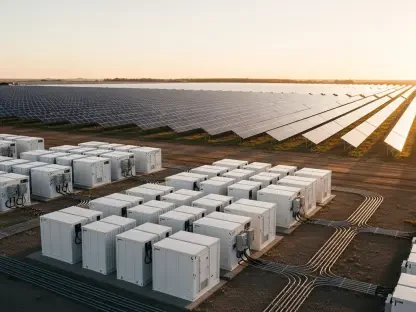
Battery storage has emerged as a critical component in this flexible grid strategy, yet its own success has introduced a new set of complex challenges. Developers have enthusiastically embraced optimized grid connection offers (OROs), which feature predefined injection or withdrawal limits, as a fast track to getting their storage projects online. The demand for these offers has been so immense that the available capacity was rapidly reserved, creating substantial connection queues and revealing a structural tension in the system. Currently, an impressive 2.8 GW of storage projects, representing approximately 25% of the entire national connection queue, are categorized under these limited-capacity offers. While storage is vital for deferring costly grid investments and balancing renewables, the massive influx of proposed projects—with 12.6 GW approved versus only 0.3 GW currently operational—has created significant management and planning hurdles. This is further complicated by the fact that the most strategically valuable locations for storage are finite, concentrating connection requests in areas where the grid is already under pressure.
Standardizing Solutions for Scalable Integration
To address the growing bottleneck in the storage connection queue, the CRE has championed a proactive approach centered on standardization and streamlined processes. Recognizing that a bespoke, case-by-case evaluation is unsustainable given the volume of applications, the commission has endorsed the development and implementation of standardized connection templates. This method draws inspiration from previously successful models, such as standardized time-of-use tariffs, which brought order and predictability to complex grid interactions. The CRE is now calling for the creation of new, purpose-built templates specifically designed to accommodate a greater number of storage projects within the optimized queue. This strategic move aims to create a clear, efficient, and repeatable pathway for developers, reducing administrative delays and ensuring that storage assets are integrated in a manner that maximizes their benefit to the grid. By standardizing the technical and contractual framework, regulators can more effectively manage the massive influx of projects and guide their placement toward locations where they can provide the most value, ensuring the storage boom accelerates rather than impedes the energy transition.
A Blueprint for Future Energy Systems
France’s strategic pivot established a powerful blueprint for how modern energy systems could evolve. The country successfully moved beyond the simplistic solution of building more physical infrastructure and instead tackled the far more complex challenge of intelligent grid integration. The core lesson from this initiative was that by valuing and monetizing flexibility, regulators could unlock a significantly faster and more cost-effective path for deploying renewable energy. This created a new economic reality where projects designed with operational agility were inherently more valuable, spurring innovation among developers. The subsequent decision to standardize connection templates for energy storage proved to be a critical act of foresight. It provided a scalable framework to manage the overwhelming success of the flexibility-first policy, preventing the system from becoming a victim of its own progress. Ultimately, this comprehensive strategy laid the essential groundwork for a more resilient, decentralized, and digitally-native power grid prepared for the demands of the future.