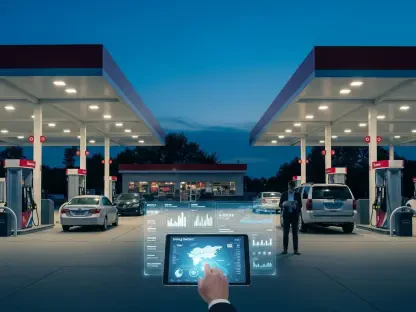

A comprehensive new analysis has revealed a profound strategic realignment within global organizations, with energy efficiency in buildings decisively climbing to become the paramount infrastructure priority. This represents a remarkable ascent from its previous ranking of seventh place in 2023, underscoring a fundamental shift in corporate thinking. The powerful forces driving this reprioritization are the intertwined imperatives of accelerating decarbonization efforts and sharpening overall business competitiveness. This seismic change signals that sustainable operational practices are no longer a peripheral concern or a reputational nicety but are now intrinsically woven into the very fabric of economic performance and long-term strategic success. The findings, drawn from a biennial study, suggest that leaders now view their real estate portfolios not as static assets, but as dynamic levers for achieving critical environmental and financial objectives in an increasingly resource-constrained world.
A Definitive Shift in Investment Strategy
The report, which provides a detailed analysis of the infrastructure landscape by surveying 1,400 senior executives and government representatives across 19 countries, documents a clear and accelerating trend toward proactive, sustainable building management. The data indicates a significant evolution from mere ambition to tangible action. Compared to the previous study, a much greater proportion of organizations now report that their key green initiatives have progressed to mature or advanced stages of implementation. This includes critical projects such as the development of onsite renewable energy production and the comprehensive electrification of heating and cooling systems to phase out fossil fuels. This marked progression demonstrates a firm commitment to transforming real estate portfolios, moving beyond initial planning phases and into the concrete execution of strategies designed to create more resilient, efficient, and environmentally responsible properties for the future.
This heightened strategic focus is directly translating into concrete and substantial investment plans for the upcoming year, confirming that capital is flowing to support these new priorities. The survey data presents a powerful consensus on where future financial resources will be allocated. A significant majority of respondents, 57%, confirmed their intention to increase investment in energy efficiency measures for their facilities and buildings. This is closely followed by a planned boost in spending on smart building technologies, with 55% of organizations recognizing their indispensable role as the primary enabler of modern efficiency strategies. Furthermore, 54% are set to increase their investment in building electrification, a cornerstone strategy for eliminating reliance on fossil fuel-based heating and cooling. These figures, taken together, underscore a robust and widespread corporate commitment to modernizing building infrastructure to meet contemporary environmental mandates and pressing economic demands.
Navigating Challenges and Embracing Digitalization
Despite this clear forward momentum and the widely acknowledged strong return on investment (ROI) that many energy retrofits offer, organizations continue to grapple with significant barriers to progress. Financial constraints have emerged as the most persistent and formidable challenge since 2023. The primary obstacles consistently cited by senior leaders include a lack of available capital for necessary initial outlays, the intense financial pressure exerted by rising and volatile energy prices, and the substantial expense associated with acquiring and implementing new equipment and the sophisticated technologies required for modernization. To address these pervasive cost-related hurdles, innovative financial solutions are being actively promoted, most notably the Energy-as-a-Service (EaaS) model. This service, often supported by in-house financing capabilities, is engineered to fundamentally transform the investment paradigm. It effectively replaces the need for large, often prohibitive, upfront capital expenditures (CapEx) with a more manageable and predictable outcome-based operational cost (OpEx) structure.
In this transformative landscape, digitalization has decisively emerged as a critical accelerator, enabling organizations to achieve their infrastructure goals with greater speed and precision. The study reveals a profound belief in the power of technology, with over half (55%) of all respondents stating that digitalization exerts a strong or even transformational impact on their ability to achieve energy efficiency targets. The perceived benefits of this digital pivot extend far beyond simple energy savings. A compelling 56% of organizational leaders expect digitalization to directly reduce their operational costs, while a nearly equal 55% believe it can significantly improve the health and safety of their workforce. Susanne Seitz, CEO of Buildings at Siemens Smart Infrastructure, emphasized this technological pivot, observing that buildings are now viewed as strategic assets in the infrastructure transition, with advanced technologies such as AI, digital platforms, and autonomous systems acting as powerful catalysts for change and improvement.
Bridging the Data Gap for a Smarter Future
However, the report illuminated a crucial challenge that threatens to impede progress: a persistent and significant data gap. Currently, only half (50%) of the surveyed organizations feel they possess the necessary data and analytical capabilities to make fully informed and effective decisions regarding their decarbonization strategies. This critical finding underscores an urgent and widespread need for the broader implementation of modern building technology, which is essential for the comprehensive collection, processing, and analysis of operational data. Smart building technologies are overwhelmingly seen as the definitive solution to this problem. In fact, after delivering a strong ROI, the second-biggest perceived benefit of these systems was their ability to dramatically increase transparency. This enhanced visibility empowers organizations to accurately understand their energy consumption and emissions profiles, allowing them to effectively plan and execute refurbishments and optimize maintenance schedules for maximum efficiency and asset longevity.
This movement ultimately pointed toward a future where buildings were no longer seen as passive structures but as active, strategic assets. The high expectations for autonomous systems went beyond simple efficiency to encompass smarter anomaly detection for predictive maintenance, the deployment of stronger physical security protocols, and the cultivation of healthier, more comfortable indoor environments for occupants. This vision aligned with a broader strategic goal of developing human-centric, autonomous buildings that were more responsive to the needs of the people within them. The analysis concluded that successfully bridging the existing data gap through strategic and timely technology investment was the critical next step. This action was identified as essential for organizations to fully unlock the substantial economic and environmental benefits promised by a new generation of efficient, intelligent, and autonomous building infrastructure.