
The global financial landscape has undergone a violent recalibration as the once-stagnant pipes of the industrial age now dictate the speed and success of the digital frontier. While software and cloud services previously enjoyed the spotlight of investor enthusiasm, the current year has seen a dramatic rotation into the tangible assets of the energy industry. The Energy Select Sector SPDR Fund (XLE) has climbed by over 14 percent in just the first six weeks of the year, signaling a departure from its historical role as a cyclical value play. Today, energy is no longer just a commodity; it is the essential lifeblood of the high-growth digital economy, proving that the most advanced algorithms are ultimately tethered to the physical world.
The Resurgence of the Global Energy Backbone
The transition of energy assets from overlooked value stocks to high-growth essentials marks a pivotal moment in market history. Investors are beginning to realize that the exponential growth of data processing cannot exist in a vacuum. This realization has transformed companies once viewed as aging giants into critical infrastructure providers. The market now values these firms not just for their dividends, but for their ability to guarantee the power required for the next generation of technological advancement. As a result, the traditional volatility of the sector is being replaced by a structural premium driven by long-term necessity.
Moreover, the synergy between bits and barrels has created a new hybrid industry where extraction and computation are inseparable. Traditional oil and gas companies are no longer just pulling fuel from the ground; they are becoming high-tech utility providers. This merger of interests is most evident in the way oilfield service leaders are deploying advanced technology to optimize power generation. The industry is evolving to meet a global mandate for reliable, high-capacity electricity, turning the extraction of fossil fuels into a sophisticated logistics operation designed to feed the world’s insatiable hunger for data.
This physical infrastructure mandate is reshaping the corporate hierarchy of the energy world. Integrated oil giants and service leaders are being propelled to the forefront of the market, supported by a significant shift in regulatory attitudes. Policymakers are increasingly favoring permitting reform to allow for the rapid expansion of the electrical grid and production facilities. This regulatory tailwind is essential for maintaining the pace of digital expansion, as the limitations of existing infrastructure have become the primary bottleneck for technological progress.
The Dual-Catalyst Framework: Geopolitical Friction and Computational Hunger
Structural Drivers of the 2026 Energy Rally
The current market surge is powered by a transition of Artificial Intelligence from an abstract software innovation into a resource-heavy industrial process. AI electricity consumption has officially exceeded the 500 TWh threshold this year, placing a strain on global power supplies that few anticipated a decade ago. This massive consumption requirement has shifted the focus toward energy density and reliability. Developers are moving away from the idea that software can solve all problems, recognizing instead that the availability of electrons is the ultimate arbiter of corporate success in the modern era.
Supply-side volatility has further tightened the market, creating a high-pressure environment for energy prices. The implementation of Operation Absolute Resolve in Venezuela, combined with ongoing diplomatic stalemates in the Persian Gulf, has disrupted established supply chains. These events have removed a significant cushion of global spare capacity, leaving the market sensitive to even minor disruptions. The resulting price spikes are not merely temporary fluctuations but are indicative of a world where energy security is once again the top priority for sovereign nations and global corporations alike.
Furthermore, the death of intermittency is changing how the world thinks about renewable energy. While solar and wind remain part of the long-term mix, data centers are increasingly prioritizing reliable baseload power to avoid costly downtime. This shift in behavior has revitalized interest in natural gas and nuclear energy, as these sources provide the constant, unwavering flow of power that silicon chips require. Corporations are no longer willing to gamble their operational integrity on the weather, leading to a renewed appreciation for traditional, reliable energy generation.
Market Projections and Performance Indicators
A permanent geopolitical risk premium of at least $10 has established a new price floor for global oil, driven by naval tensions in the Strait of Hormuz. This premium reflects the constant threat to transit routes and the ongoing transitions in South American production. Investors are now pricing in these risks as a standard feature of the market rather than an outlier. This floor provides energy companies with a predictable revenue stream that supports massive capital expenditure in new infrastructure, ensuring that the current rally has a solid fundamental foundation.
The sector’s outperformance is expected to continue as AI power requirements are projected to double every two years for the foreseeable future. This compounding demand creates a scenario where energy firms are the primary beneficiaries of the tech boom. While tech companies face the challenge of rising costs, energy providers are seeing their valuations expand as they become the primary suppliers to the world’s most profitable industries. This dynamic has created a rare period of sustained growth for a sector that was once considered to be in a long-term decline.
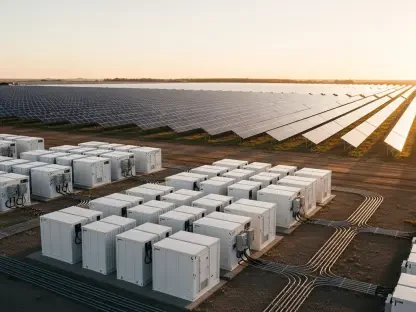
Innovative valuation models are now focusing on energy-as-a-service, where firms bypass the traditional, aging grid to provide power directly to hyperscale data centers. By co-locating power generation with data processing, companies can eliminate transmission losses and avoid the bureaucratic hurdles of public utilities. This direct-to-consumer model for industrial power is opening new revenue streams for integrated energy firms, allowing them to capture a larger share of the value chain that was previously distributed among multiple intermediaries.
Navigating the Friction of a Re-Industrialized Economy
The survival of the hyperscalers is now an existential question that favors massive, vertically integrated corporations over smaller tech firms. As electricity overhead costs continue to climb, only the most well-capitalized entities can afford to secure the power they need to remain competitive. This trend is leading to a consolidation of the technology sector, where the ability to manage physical resources is just as important as the ability to write code. Smaller players are finding themselves priced out of the market, unable to compete with the scale and efficiency of the giants.
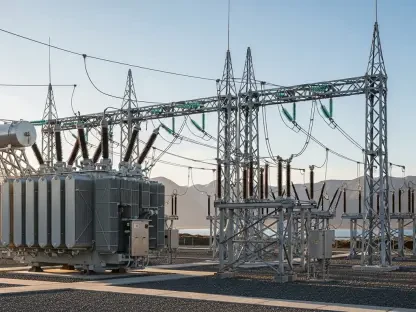
Infrastructure obsolescence poses a significant threat to the national economy, with approximately 70 percent of grid assets nearing the end of their functional life. The current energy crisis has exposed the fragility of a system that was never designed to handle the localized, high-density loads required by modern data centers. Upgrading these assets is a monumental task that requires trillions in investment and years of construction. The friction caused by this outdated hardware is forcing a rapid rethinking of how electricity is distributed and managed across the country.
Resource competition is intensifying in data-dense regions, leading to rivalries over land and water rights. In areas like Northern Virginia and West Texas, the demand for cooling water and space for power plants is pitting technology companies against local agriculture and residential interests. This competition is driving up land values and creating complex legal challenges for new developments. The physical footprint of the digital world is expanding, and the limits of geography are becoming a major factor in corporate strategy.
The Regulatory Response to a High-Voltage Crisis
Bipartisan permitting reform has become a cornerstone of recent legislative efforts to stabilize the economy. Lawmakers are moving with uncharacteristic speed to accelerate the construction of natural gas facilities and small modular nuclear reactors. These efforts are designed to strip away the red tape that has historically delayed energy projects for decades. By streamlining the approval process, the government hopes to spark a construction boom that can meet the surging demand for electricity before the grid reaches a breaking point.
National security concerns are driving a new era of energy sovereignty, with government intervention playing a key role in stabilizing global production. The focus on securing domestic energy reserves has led to a more assertive foreign policy aimed at ensuring the steady flow of oil and gas from volatile regions. This intervention is viewed as necessary to protect the economic interests of a nation that is increasingly dependent on high-tech industries. The link between energy and national security has never been more explicit or more critical to policy decisions.
Compliance in the age of AI infrastructure is also evolving, with new standards for grid security and the management of private power plants. Regulators are grappling with the rise of gigawatt-scale facilities that operate outside the traditional utility framework. Ensuring these private plants meet safety and environmental standards while maintaining national grid stability is a complex challenge. The regulatory environment is shifting from a focus on consumer protection to a focus on industrial resilience and the protection of critical digital assets.
The Future of Energy-Tech Convergence
The rise of the energy-tech giant is an inevitable consequence of the current market shift. As oil companies and electric utilities compete for dominance, the lines between these two historically distinct industries are blurring. We are seeing a new class of corporation emerge—one that manages the entire process from fuel extraction to the delivery of high-voltage power to a server rack. This convergence is creating a powerful new lobby and a new category of stock that defies traditional sector classification.
Technological disruptors in extraction, such as SLB and Halliburton, are playing a vital role in meeting the global heavy crude deficit. By utilizing advanced reservoir management and AI-driven drilling techniques, these firms are squeezing more value out of existing fields than ever before. Their expertise is essential for bridging the gap between current production and the future needs of a power-hungry world. These companies are the unsung heroes of the digital age, providing the raw materials that make everything else possible.
The long-term floor for energy assets is being reinforced by the exponential demand for silicon-driven data. Regardless of diplomatic breakthroughs or temporary lulls in geopolitical tension, the structural need for power remains. This demand ensures that energy valuations will stay elevated for the foreseeable future. The market has moved past the era of cheap energy, entering a phase where the value of a company is determined by its access to the physical resources that drive the modern world.
Strategic Outlook: The Link Between Bit-Rates and Flow-Rates
The pivot of the current year has firmly re-established energy as the premier market performer, highlighting its role as the foundation of the digital revolution. This resurgence is not a temporary trend but a fundamental shift in how the economy functions. The successful integration of energy and technology has created a new paradigm for growth, where physical and digital assets are treated with equal importance. As the world moves forward, the ability to generate and manage power will be the primary differentiator between economic leaders and laggards.
Investment strategies must now prioritize vertical integration and the strategic value of firms that control the entire value chain. Companies that own their power sources and the means of delivery are better positioned to weather the volatility of the modern market. Investors who ignore the physical requirements of the digital age do so at their own peril, as the costs of energy will continue to exert pressure on every sector of the economy. The focus has shifted from pure software growth to the resilience of the physical systems that support it.
The new normal is an era where economic survival is inextricably linked to the resilience and expansion of the global power grid. Policymakers and corporate leaders had to confront the reality that the virtual world requires a massive, physical engine to run. By investing in next-generation nuclear technology and reinforcing traditional energy sectors, the groundwork was laid for a more stable and high-capacity future. The integration of high-tech extraction with localized power generation became the standard for industrial development, ensuring that the next wave of computational progress would not be stalled by a lack of fuel.