
In a decisive move to combat a severe and persistent energy crisis within its building sector, Croatia’s Parliament has passed the landmark Energy Efficiency in Buildings Act, a comprehensive law aimed at aligning the nation with ambitious European Union climate directives. This legislation initiates a monumental undertaking to transition the country’s entire building stock to zero-emission standards by the middle of the century. The urgency of this initiative is underscored by the stark reality that buildings across the EU are responsible for a staggering 40% of total energy consumption and 36% of greenhouse gas emissions. In Croatia, as in much of Europe, the vast majority of household energy usage is dedicated to heating, cooling, and hot water, making the inefficiency of its buildings a critical economic and environmental liability. The new law establishes a clear and aggressive timeline, mandating that all new constructions must be zero-emission buildings starting in 2030, with a more accelerated deadline of 2028 for any new buildings constructed for the public sector.
Addressing a National Challenge
The Scope of Inefficiency
A comprehensive 2023 assessment of Croatia’s housing stock painted a bleak picture of the challenge ahead, revealing deep-seated issues of energy inefficiency that span the nation. Of the country’s nearly one million residential buildings, a staggering 37% were identified as belonging to the worst energy efficiency categories, a direct consequence of decades of outdated construction standards. The majority of buildings are classified in the lower-tier energy classes C (34%) or D (17%), highlighting a systemic problem. Compounding this issue is the fact that only a mere 9% of the total building stock currently possesses an energy certificate, leaving a massive information gap for both homeowners and policymakers. This widespread inefficiency is largely a historical legacy, as the country’s first regulations concerning thermal insulation were not introduced until 1970. This left a vast number of older properties with either poor or completely nonexistent insulation, making them highly vulnerable to energy waste. The situation was further exacerbated by the devastating earthquakes of 2020, which introduced a complex dual mandate: buildings not only required energy-focused renovations but also needed urgent structural reconstruction and seismic resilience upgrades, intertwining national safety with climate goals.
New Legislative Mandates
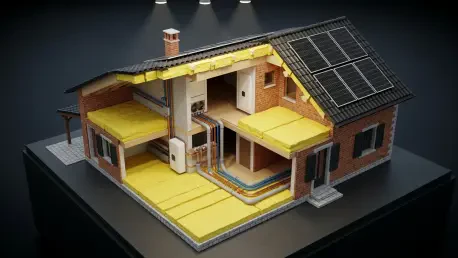
The newly enacted Energy Efficiency in Buildings Act represents Croatia’s primary legislative tool for tackling this multifaceted problem, setting forth a clear and legally binding path toward a sustainable future. At its core, the law’s ultimate objective is the complete transformation of the nation’s building stock into a highly efficient, decarbonized, and zero-emission portfolio by the year 2050. This long-term vision is supported by concrete, phased-in deadlines designed to accelerate the transition. A key provision mandates that all new buildings constructed from 2030 onwards must meet zero-emission standards. In a move to lead by example, the public sector faces an even tighter deadline, with all new publicly owned or occupied buildings required to achieve this standard by 2028. This legislative framework is not an isolated national effort but a direct implementation of updated European Union directives, which recognize building renovation as a cornerstone of the continent’s climate strategy. By aligning with these standards, Croatia is addressing its domestic energy vulnerabilities while contributing to the EU’s collective goal of mitigating climate change, directly targeting the 40% of energy consumption and 36% of emissions attributed to the building sector.
Navigating the Path to Modernization
Securing Financial Backing
To power this ambitious national renovation wave, Croatia has successfully assembled a substantial and diverse financial package from both European and domestic sources. A cornerstone of this funding strategy is an allocation of over €2 billion from the National Recovery and Resilience Plan, which strategically earmarks funds for renovating both earthquake-damaged structures and buildings that are intact but energy inefficient. This is supplemented by an additional €274 million from the European Regional Development Fund, which will further bolster large-scale renovation projects across the country. Beyond direct grants, the government is also leveraging financial instruments like ESIF loans to provide flexible financing options for property owners. On the national level, the Environmental Protection and Energy Efficiency Fund has committed €120 million specifically for the renovation of family homes. A crucial social component of the plan includes a dedicated €25 million fund aimed at assisting households identified as being at risk of energy poverty, ensuring the transition is equitable. Furthermore, the Social Fund for Climate Policy and the National Housing Policy Plan are set to channel significant resources toward helping vulnerable citizens and promoting the development of affordable, energy-efficient housing.
Overcoming Financial and Social Hurdles
Despite the significant funding secured, the road to a fully renovated building stock is laden with considerable challenges, primarily stemming from financial and logistical complexities. The high upfront investment cost remains the single greatest barrier for most property owners, often deterring them from undertaking comprehensive energy efficiency upgrades. This issue is intensified by a growing pressure from the European Union to transition the financing model away from non-repayable grants and toward financial instruments such as loans. While Croatian government officials acknowledge this trend and suggest that grants may soon be reserved exclusively for the most vulnerable households, this policy shift has drawn criticism. Political figures like MEP Gordan Bosanac have publicly argued that Croatia should resist this change, contending that it is inequitable to place the primary financial burden of the green transition on citizens whose average incomes are significantly lower than those in other EU member states. Beyond financial concerns, a major logistical hurdle exists, particularly for multi-apartment buildings. The process requires achieving a consensus among all co-owners, which can be exceptionally difficult not only for approving the renovation itself but also for agreeing on the specific scope and details of the project.
Envisioning a Sustainable Future
The Long-Term Benefits of Renovation
Experts emphasize that the long-term rewards of this nationwide renovation initiative will be transformative, extending far beyond simple energy savings. According to Dean Smolar of the Croatian Green Building Council, residents of renovated buildings can anticipate significantly lower utility bills for heating and cooling, providing direct and lasting financial relief. In addition to these savings, the upgrades are projected to increase the long-term market value of their properties, turning their homes into more valuable assets. Another critical benefit is enhanced resilience against the growing threat of extreme weather events, as improved insulation and structural integrity provide better protection from heatwaves and cold spells. The impact, however, is not purely economic. These renovations promise to substantially improve the overall quality of life and health for occupants by creating more comfortable, modern, and healthier indoor environments with better air quality. On a broader scale, the initiative is poised to create more attractive, vibrant, and sustainable neighborhoods, fostering a sense of community pride and contributing to the nation’s long-term environmental and social well-being.
A Strategic Blueprint for Success
To steer these multifaceted efforts, Croatia was mandated to develop a comprehensive National Building Renovation Plan, a document that crystallized the nation’s strategic path forward. The draft, submitted to the European Commission, laid out the precise policies, financing mechanisms, and timelines required to achieve a highly efficient and decarbonized building stock by the 2050 deadline. This plan became more than a regulatory requirement; it served as the definitive blueprint that integrated the legislative mandates of the new Act with the complex funding streams and addressed the social challenges inherent in such a massive undertaking. The creation of this strategic document marked a pivotal moment, transforming a set of ambitious goals into an actionable, long-term national project. It established a clear framework for guiding investments, prioritizing projects, and measuring progress, ensuring that every step taken was aligned with the ultimate vision of a sustainable and energy-independent future for all its citizens.