
The Rise of Long-Duration Solutions: A Changing Energy Landscape
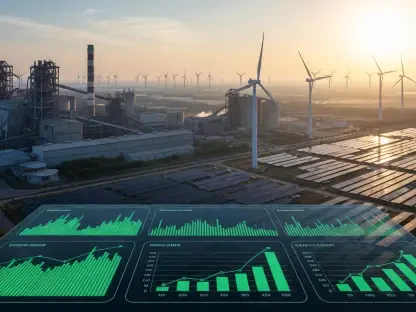
The global energy grid is currently undergoing a fundamental transformation that requires storage systems to function for days rather than just hours, yet one nation has already captured nearly the entire market. As the world accelerates the transition toward renewable energy, the limitations of standard battery technology have become increasingly apparent. While solar and wind power are essential for decarbonization, their intermittent nature requires a robust backup system that can provide power for more than just a few hours. This is where Long-Duration Energy Storage (LDES) enters the spotlight. LDES refers to technologies capable of discharging power at maximum capacity for durations exceeding four hours, with some systems designed to last up to 100 hours or more. This analysis explores how China has positioned itself as the undisputed leader in this field, the technological shifts occurring within the market, and the economic hurdles that remain for global competitors.
Historical Context: The Evolution of Grid Stability
The journey of energy storage began with a heavy reliance on pumped hydro and, more recently, the meteoric rise of lithium-ion batteries. For the past decade, lithium-ion has dominated the market, benefiting from mature supply chains and rapid cost reductions driven by the electric vehicle industry. However, as grids reach higher levels of renewable penetration, the need for firm power—energy that is available regardless of weather conditions—has shifted the focus toward longer discharge cycles. Historically, the energy sector viewed LDES as a secondary concern, but recent shifts in global climate policy and the increasing frequency of extreme weather events have transformed it into a strategic necessity for grid reliability and national security. This evolution has forced a reevaluation of how power is stored and distributed during extended periods of low renewable generation.
The Engines of Market Growth: Regional Leadership
Global market dynamics in the energy sector are currently defined by a massive surge in deployment, yet this growth is heavily concentrated within specific geographical and technological niches. While the total capacity of long-duration systems has expanded significantly, the distribution of these assets reveals a stark contrast between state-led initiatives and market-driven economies. This section examines the specific drivers behind China’s dominance and the diverse technological landscape that is attempting to break the lithium-ion monopoly.
China’s Strategic Mandates: Unrivaled Deployment
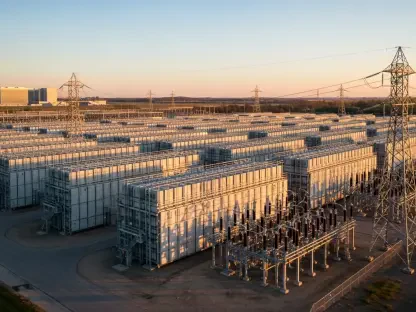
China currently commands a staggering 93% of all cumulative LDES installations globally, a figure that highlights the power of centralized industrial planning. This dominance is not merely a result of market forces but is the product of aggressive state-level mandates that require new renewable energy projects to include specific amounts of long-duration storage. By prioritizing technologies like Vanadium Redox Flow Batteries (VRFB) and Compressed Air Energy Storage (CAES), China has bypassed the hesitant approach taken by many Western nations. This proactive stance has allowed the country to build a massive lead in both manufacturing capacity and real-world operational data, making it the central hub for LDES innovation and setting a benchmark that other nations are finding difficult to match.
Diverse Technologies: Beyond the Lithium-Ion Standard
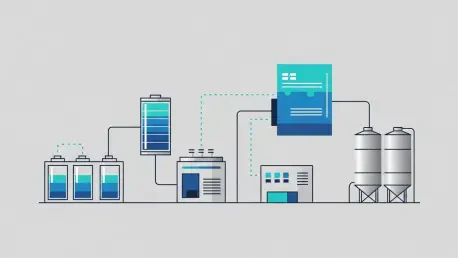
The technological landscape shows that LDES is far from a one-size-fits-all sector, with several non-lithium solutions gaining significant ground. Compressed Air Energy Storage has emerged as a frontrunner, accounting for 45% of new installations, followed by thermal storage at 33% and flow batteries at 21%. These technologies offer distinct advantages over traditional lithium-ion; for instance, thermal systems can reach eight-hour discharge windows, while flow batteries offer long cycle lives without the degradation seen in chemical batteries. These alternatives are crucial because they fill the duration gap that lithium-ion cannot economically bridge, providing the stability needed for industrial hubs and large-scale utility grids that require reliable energy during protracted periods of calm or cloud cover.
The Strategic Squeeze: Economic Headwinds
Despite the technical promise of LDES, the industry faces a strategic squeeze from the established lithium-ion market and a tightening investment climate. Because lithium-ion batteries have already achieved commercial scale, they often capture the four-to-eight-hour storage market, leaving newer LDES technologies to fight for the more difficult multiday niche. Furthermore, the investment environment has grown challenging, with high interest rates and a shift in venture capital toward artificial intelligence making it harder for capital-intensive LDES projects to secure funding. Excluding massive government-backed grants, global funding for LDES firms has seen a notable decline, forcing many developers to rely on specific state-level mandates or demonstration projects to prove their commercial viability in an increasingly crowded market.
Future Trends: The Impact of Emerging Innovations
The evolution of the LDES market will likely be defined by multiday storage breakthroughs and a shift in regulatory frameworks. Innovations such as iron-air batteries, which utilize a reversible rusting process to store energy for up to 100 hours, are beginning to move from pilot phases to utility-scale projects. These systems are specifically designed to meet the massive energy demands of data centers and seasonal grid fluctuations. As governments realize that net-zero goals are unattainable without roughly 20 hours of average storage duration, we can expect a shift in market mechanisms to finally put a premium on long-term reliability. This transition will require a fundamental change in how energy capacity is priced, moving away from short-term efficiency toward long-term grid resilience.
Actionable Strategies: Navigating the LDES Sector
For stakeholders looking to engage with this evolving market, the focus should be on policy alignment and strategic partnerships in high-demand regions. Businesses should prioritize projects in jurisdictions like California, Minnesota, or China, where legislative mandates create a guaranteed demand for long-duration services. Professionals in the energy sector must also look beyond simple Levelized Cost of Storage and instead evaluate the value of resiliency, which accounts for the high cost of grid failures. Diversifying portfolios to include non-lithium technologies now can provide a competitive edge as the market matures and the limitations of short-duration storage become more pronounced. Investing in supply chain transparency for raw materials like vanadium and iron will also be critical as these technologies move toward mass production.
Concluding Thoughts: The Global Energy Transition
The dominance of China in the long-duration energy storage market served as a clear indicator of the shift toward centralized energy planning. While lithium-ion remained the incumbent for short-term needs, the long-term stability of the carbon-free grid depended on the successful scaling of LDES technologies. The paradox of the market—rapid deployment growth coupled with an investment crisis—highlighted the urgent need for stable policy frameworks that valued multiday reliability over short-term savings. Stakeholders realized that LDES was not just a technological alternative but the fundamental bridge to a sustainable energy future. Ultimately, the industry moved toward a model where the value of grid resilience outweighed the initial capital costs, ensuring that the transition to renewable energy remained both permanent and reliable.