
In the global race to diversify energy storage solutions and reduce reliance on geographically concentrated raw materials, Chinese battery manufacturing giant CATL has unveiled an ambitious strategic roadmap that positions sodium-ion battery technology for a major commercial breakthrough by 2026. This comprehensive plan signals a decisive shift for sodium-ion batteries (SIBs), aiming to elevate them from a niche alternative to a mainstream pillar in the energy and mobility sectors. The core of this initiative is a “dual-star” strategy, which envisions sodium-ion and lithium-ion technologies coexisting and developing in parallel. Rather than seeking to replace the established lithium-ion chemistry, CATL plans to leverage the unique advantages of each to address a wider spectrum of market demands. This complementary approach is designed to accelerate the adoption of SIBs in critical areas such as grid-level energy storage systems, innovative battery-swapping networks, and a new generation of both passenger and commercial electric vehicles, heralding a new era of battery technology diversification.
The Dual-Star Strategy and Market Integration
At the heart of CATL’s forward-looking plan is the “dual-star” concept, a strategic framework that treats sodium-ion and lithium-ion batteries as complementary partners rather than direct competitors. This philosophy acknowledges that no single battery chemistry can optimally serve every application in the rapidly expanding clean energy landscape. While lithium-ion technology continues to excel in high-energy-density applications demanding maximum range and performance, sodium-ion batteries offer a compelling value proposition centered on lower cost, abundant raw materials, and superior performance in extreme temperatures. By developing both chemistries in parallel, CATL can offer a tailored portfolio of solutions. This allows the company to meet diverse global market requirements, providing high-performance lithium-ion packs for premium electric vehicles while deploying cost-effective and robust sodium-ion systems for stationary storage and mass-market transportation, thereby creating a more flexible, resilient, and economically viable energy storage ecosystem.
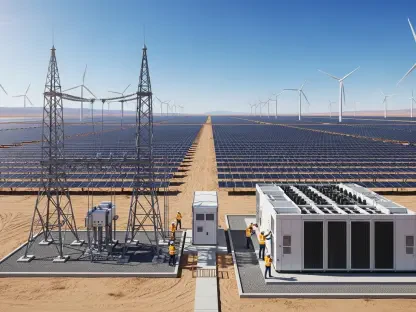
The strategic deployment of sodium-ion batteries is targeted at several key sectors where their unique attributes provide a distinct advantage. For large-scale grid energy storage, the lower projected cost and long cycle life of SIBs make them an ideal solution for stabilizing power grids and integrating intermittent renewable energy sources like solar and wind. In the realm of urban mobility, battery-swapping infrastructure stands to benefit significantly from SIBs’ enhanced safety profile and tolerance for high-rate charging and discharging cycles. Furthermore, the technology is poised for widespread adoption in both commercial and passenger electric vehicles. Its exceptional performance in extreme climates reduces the need for complex thermal management systems, lowering vehicle cost and improving reliability. For commercial fleets operating in diverse weather conditions and for affordable passenger EVs, SIBs present a practical and economically attractive pathway to electrification, broadening the accessibility of clean transportation.
Performance Milestones and Technical Advantages
A cornerstone of CATL’s expansion is the significant performance upgrade planned for its sodium-ion batteries, which are marketed under the Naxtra brand. The company has already achieved an impressive energy density of up to 175 Wh/kg in its initial generation of SIBs. By 2026, advancements are expected to further refine this capability, enabling a projected driving range of approximately 500 kilometers (around 310 miles) in standard passenger electric vehicles. This milestone is critical, as it directly addresses one of the primary historical limitations of sodium-ion chemistry and significantly narrows the performance gap with many mainstream lithium-ion technologies. Achieving this level of range transforms SIBs from a solution primarily for short-range urban vehicles into a viable contender for a much broader segment of the automotive market, challenging long-held industry perceptions and positioning the technology as a practical and competitive alternative for everyday driving needs.
Beyond headline figures for energy density, CATL emphasizes that the inherent advantages of sodium-ion chemistry extend to crucial operational characteristics that enhance real-world usability and safety. One of the most significant benefits is the exceptionally wide operational temperature range, from a frigid -40°C to a scorching 70°C. This robustness drastically reduces the need for complex and costly active thermal management systems, which are essential for maintaining the performance and longevity of lithium-ion batteries in harsh climates. This simplification not only lowers manufacturing costs but also improves overall system efficiency and reliability. Additionally, the company highlights the potential for a lower carbon footprint in the SIB manufacturing process, owing to the use of more abundant and easily sourced materials. Coupled with enhanced safety characteristics that make the batteries less prone to thermal runaway, these benefits create a compelling case for SIB adoption in applications where safety, durability, and sustainability are paramount.
Industry Outlook and Supply Chain Considerations
The growing momentum behind sodium-ion technology is not confined to CATL’s internal strategy but is also supported by analysis from independent industry bodies. A recent report from the International Renewable Energy Agency (IRENA) reinforces the technology’s immense potential, particularly on the economic front. IRENA forecasts that SIB cell costs could plummet to as low as $40 per kilowatt-hour in the coming years. Such a price point would make them a profoundly disruptive force, especially in cost-sensitive sectors like grid-scale energy storage, where the levelized cost of storage is a critical factor for project viability. This external validation aligns perfectly with CATL’s vision of SIBs as a complementary technology. IRENA’s analysis also concludes that SIBs are unlikely to completely displace lithium-ion batteries, but will instead carve out a significant market share by offering a highly attractive combination of performance, safety, and unparalleled cost-effectiveness for specific, large-scale applications.
Despite the optimistic outlook and strong technological progress, both CATL and external observers like IRENA acknowledge that the path to mass adoption is not without its challenges. A primary area of uncertainty revolves around the establishment of a completely new and resilient supply chain. While sodium is abundant, scaling up the production of other key components, such as cathode and anode materials specific to SIBs, requires significant investment and industrial coordination. Another critical factor is the need to secure consistent and large-scale market demand. This involves convincing major original equipment manufacturers in the automotive and energy sectors to commit to integrating this newer technology into their product roadmaps. Overcoming this inertia will be key to driving the economies of scale necessary to achieve the projected low-cost targets and fully realize the potential of sodium-ion batteries as a cornerstone of the future energy landscape.
A Strategic Shift Solidified
CATL’s comprehensive 2026 roadmap represented a pivotal moment for the energy storage industry. The announcement moved the conversation around sodium-ion batteries from the realm of promising laboratory research to a tangible and imminent commercial reality. By laying out a clear, well-funded plan for mass production and technological advancement, the company effectively validated SIB technology as a scalable solution ready for widespread deployment. This decisive action established a new benchmark for the sector, signaling that the future of energy storage would be built on a diversified portfolio of chemistries. The plan solidified sodium-ion’s role not as a fringe alternative, but as a critical pillar alongside lithium-ion, poised to accelerate the global transition toward a more sustainable, resilient, and economically accessible energy future.