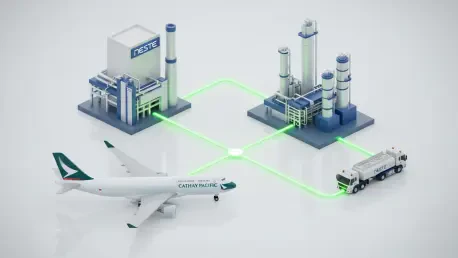

As the global aviation industry grapples with the immense challenge of reducing its carbon footprint, a landmark agreement has solidified the role of Sustainable Aviation Fuel (SAF) as the most critical tool for near-term decarbonization. The Cathay Group and renewable fuels producer Neste have significantly broadened their partnership, establishing a multi-regional supply chain that underscores a pivotal shift from pilot programs to scalable, operational use of lower-emission fuels. This expanded collaboration represents a crucial step in the airline’s ambitious strategy to achieve its climate targets, leveraging Neste’s global production and distribution network to integrate SAF into its daily operations at some of the world’s busiest airports. The deal not only advances Cathay’s sustainability goals but also sends a powerful signal to the market about the growing demand for SAF, which is essential for stimulating the investment needed to increase production capacity worldwide and make meaningful progress on aviation’s path to a more sustainable future.
A Strategic Partnership for Decarbonization
The agreement marks a significant operational expansion, with Neste set to supply its Neste MY Sustainable Aviation Fuel to Cathay Pacific flights departing from two key international hubs: Amsterdam Airport Schiphol and Los Angeles International Airport. This move extends the use of SAF beyond a single region, creating a transatlantic bridge for the airline’s sustainability efforts. Furthermore, the partnership includes Cathay’s all-cargo subsidiary, Air Hong Kong, which will begin uplifting SAF at Singapore Changi Airport, one of the world’s most vital logistics centers. This comprehensive, multi-airport approach demonstrates a strategic commitment to embedding SAF use across the group’s diverse network, encompassing both passenger and cargo operations. By securing a reliable supply in the European Union, the United States, and the Asia-Pacific region, Cathay is actively accelerating the adoption of lower-emission fuels and building a foundation for scaling its SAF usage as production volumes grow in the coming years.
A core element of this collaboration is the seamless integration of SAF into existing airport fueling systems, a feature that is critical for widespread and rapid adoption. Neste’s product is a “drop-in” fuel, meaning it is chemically identical to conventional jet fuel and can be blended directly with it. This blended fuel is then distributed through the standard hydrant systems and fueling trucks already in place at airports, eliminating the need for costly and time-consuming modifications to aircraft, engines, or ground infrastructure. This technical compatibility is a paramount advantage, as it allows airlines and airports to immediately reduce their carbon emissions without disrupting complex and finely tuned operational procedures. The ability to use SAF interchangeably with fossil-based fuels provides the operational flexibility necessary for a gradual but steady transition, demonstrating that the industry can decarbonize its activities using currently available technology and infrastructure.
Navigating the Supply and Demand Imbalance
Within the aviation industry, there is a broad and firm consensus that SAF is the most practical and impactful solution currently available for reducing carbon emissions, particularly for long-haul flights where alternatives like battery-electric or hydrogen propulsion are not yet technologically viable. The environmental benefits are substantial; Neste’s SAF is produced from 100% renewable waste and residue raw materials, such as used cooking oil and animal fat waste. When used in its neat form, it can reduce greenhouse gas emissions by up to 80% over the fuel’s life cycle compared to conventional jet fuel. Current regulations permit it to be blended up to 50% with traditional fuel, offering an immediate and significant reduction in an airline’s carbon footprint. This partnership allows Cathay to offer its customers a tangible way to mitigate the environmental impact of their travel and shipping needs, turning sustainability into a shared responsibility.
Despite the clear benefits and growing demand, the aviation industry faces a formidable challenge: a significant disparity between the available supply of SAF and the volumes required to meet ambitious decarbonization targets. While Neste is a leading global producer with a current annual production capacity of 1.5 million metric tons, a figure projected to increase to 2.2 million by 2027, this represents a small fraction of the industry’s total fuel consumption. The estimated global need for SAF is immense, and even with numerous new production projects announced, the pace of capacity growth is a source of concern. This supply-side constraint is the primary bottleneck preventing a more rapid transition. Agreements like the one between Cathay and Neste are therefore doubly important; they not only secure precious volumes of SAF for the airline but also provide the consistent, long-term demand signals that are essential for fuel producers to secure financing and move forward with new production facilities.
Future Implications of the Agreement
The expanded partnership between Cathay and Neste ultimately represented more than just a fuel supply transaction; it marked a crucial maturation point for the global SAF market. By committing to offtake agreements across multiple continents, Cathay provided a powerful vote of confidence in the viability and necessity of SAF, setting a precedent for other multinational carriers to follow. This strategic move demonstrated that integrating lower-emission fuels into complex, global operations was not a future ambition but a present-day reality. The collaboration successfully showcased how a producer with a global footprint could support an airline’s worldwide decarbonization strategy, building a scalable model for future industry-wide adoption. It was a clear signal that shifted the conversation from small-scale trials to the tangible logistics of creating a sustainable aviation future.