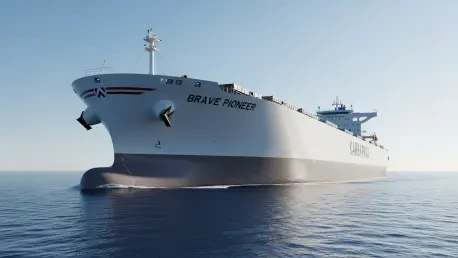

The global shipping industry, the lifeblood of international trade, faces an unprecedented challenge in navigating the turbulent waters of decarbonization, and one of the world’s largest charterers is now steering a new course. In a significant move toward a sustainable maritime future, agricultural giant Cargill has officially launched the maiden voyage of the “Brave Pioneer,” its first chartered vessel capable of running on green methanol. This initiative represents more than just a single ship; it is a tangible step in a broader, multifaceted strategy designed to address the environmental impact of ocean freight. As the vessel embarks on its inaugural journey from the Philippines to Europe, it carries not only its cargo but also the industry’s hopes for a viable, low-carbon fuel alternative. The voyage serves as a crucial real-world test, meticulously planned to gather data on the practicalities of green methanol bunkering, the accuracy of carbon accounting systems, and the market’s willingness to embrace and invest in more sustainable freight solutions, signaling a pivotal moment in the transition to cleaner shipping fuels.
Charting a Course with Dual-Fuel Technology
The Maiden Voyage as a Living Laboratory
The “Brave Pioneer” is a Kamsarmax vessel, meticulously engineered by Tsuneishi Shipbuilding and owned by Mitsui & Co., representing the vanguard of a planned fleet of five such ships. Its core innovation lies in its dual-fuel engine, which grants it the flexibility to operate on either conventional marine fuel or green methanol. The latter option is projected to slash carbon dioxide emissions by an impressive 70% compared to traditional fossil fuels, offering a substantial leap forward in environmental performance. The ship’s first journey is far from a routine transit; it has been intentionally designed as a comprehensive field test. A primary objective is to navigate the nascent and complex logistics of green methanol bunkering, a process that is still in its infancy globally. Concurrently, the voyage will serve to rigorously validate advanced carbon accounting systems, ensuring that emissions reductions are accurately measured and reported. Furthermore, Cargill is using this high-profile launch to gauge market dynamics, assessing the demand and willingness of customers to support and pay a premium for freight transported via more sustainable, lower-emission vessels.
A Pragmatic Approach to Innovation
Cargill’s investment in this dual-fuel vessel is a cornerstone of what the company terms a “multi-solution” strategy, reflecting a pragmatic and adaptable approach to the immense challenge of decarbonization. This strategy deliberately avoids placing an all-or-nothing bet on a single technology. Instead, it views the dual-fuel capability as a future-proofing measure that balances immediate operational needs with long-term environmental goals. Company leadership acknowledges the current reality that green methanol is not yet a widely available or cost-competitive commodity. The design of the “Brave Pioneer” directly addresses this by allowing it to run efficiently on conventional fuels today, ensuring its commercial viability from the outset. As the global supply chain for green methanol matures and availability improves, the vessel can seamlessly transition to the cleaner fuel source without requiring costly retrofits. This forward-thinking design allows the company to make progress now while remaining prepared for the energy landscape of tomorrow, mitigating risk while actively participating in the evolution of sustainable shipping.
Leading the Industry-Wide Transition
Beyond a Single Fuel Source
The launch of the methanol-powered vessel is a prominent part of a much broader and more diversified decarbonization portfolio at Cargill. The company’s commitment to exploring a range of solutions underscores the understanding that there will likely be no single silver bullet for greening the maritime sector. In addition to pioneering alternative fuels like green methanol and biofuels, the company is actively investigating and investing in other promising technologies aimed at enhancing vessel efficiency and reducing reliance on fossil fuels. Among the most notable of these are advanced wind-assisted propulsion systems, which harness a timeless source of energy with modern technology to supplement engine power and cut fuel consumption. This holistic approach signals a deep-seated belief in the necessity of a layered, technology-agnostic strategy. By simultaneously advancing multiple pathways to decarbonization, from innovative fuel sources to efficiency-boosting hardware, the company aims to build a resilient and adaptable framework for achieving its long-term sustainability targets in the maritime domain.
A New Chapter for Maritime Sustainability
The successful deployment of the “Brave Pioneer” on its initial voyage marked a critical milestone in the maritime industry’s journey toward sustainability. This initiative was not merely a technological demonstration but a powerful market signal that created a tangible demand for alternative fuels and encouraged further investment in production and infrastructure. The data and operational insights gathered from the journey provided invaluable, real-world experience that helped refine bunkering procedures and validate emissions accounting models. By transparently undertaking this project, the company fostered a collaborative environment, sharing key learnings with partners and competitors alike to help establish the industry standards necessary for broader adoption. This pioneering effort ultimately helped de-risk similar investments for other stakeholders, accelerating the collective momentum needed to transform global shipping into a more environmentally responsible sector.Fixed version:
The global shipping industry, the lifeblood of international trade, faces an unprecedented challenge in navigating the turbulent waters of decarbonization, and one of the world’s largest charterers is now steering a new course. In a significant move toward a sustainable maritime future, agricultural giant Cargill has officially launched the maiden voyage of the “Brave Pioneer,” its first chartered vessel capable of running on green methanol. This initiative represents more than just a single ship; it is a tangible step in a broader, multifaceted strategy designed to address the environmental impact of ocean freight. As the vessel embarks on its inaugural journey from the Philippines to Europe, it carries not only its cargo but also the industry’s hopes for a viable, low-carbon fuel alternative. The voyage serves as a crucial real-world test, meticulously planned to gather data on the practicalities of green methanol bunkering, the accuracy of carbon accounting systems, and the market’s willingness to embrace and invest in more sustainable freight solutions, signaling a pivotal moment in the transition to cleaner shipping fuels.
Charting a Course with Dual-Fuel Technology
The Maiden Voyage as a Living Laboratory
The “Brave Pioneer” is a Kamsarmax vessel, meticulously engineered by Tsuneishi Shipbuilding and owned by Mitsui & Co., representing the vanguard of a planned fleet of five such ships. Its core innovation lies in its dual-fuel engine, which grants it the flexibility to operate on either conventional marine fuel or green methanol. The latter option is projected to slash carbon dioxide emissions by an impressive 70% compared to traditional fossil fuels, offering a substantial leap forward in environmental performance. The ship’s first journey is far from a routine transit; it has been intentionally designed as a comprehensive field test. A primary objective is to navigate the nascent and complex logistics of green methanol bunkering, a process that is still in its infancy globally. Concurrently, the voyage will serve to rigorously validate advanced carbon accounting systems, ensuring that emissions reductions are accurately measured and reported. Furthermore, Cargill is using this high-profile launch to gauge market dynamics, assessing the demand and willingness of customers to support and pay a premium for freight transported via more sustainable, lower-emission vessels.
A Pragmatic Approach to Innovation
Cargill’s investment in this dual-fuel vessel is a cornerstone of what the company terms a “multi-solution” strategy, reflecting a pragmatic and adaptable approach to the immense challenge of decarbonization. This strategy deliberately avoids placing an all-or-nothing bet on a single technology. Instead, it views the dual-fuel capability as a future-proofing measure that balances immediate operational needs with long-term environmental goals. Company leadership acknowledges the current reality that green methanol is not yet a widely available or cost-competitive commodity. The design of the “Brave Pioneer” directly addresses this by allowing it to run efficiently on conventional fuels today, ensuring its commercial viability from the outset. As the global supply chain for green methanol matures and availability improves, the vessel can seamlessly transition to the cleaner fuel source without requiring costly retrofits. This forward-thinking design allows the company to make progress now while remaining prepared for the energy landscape of tomorrow, mitigating risk while actively participating in the evolution of sustainable shipping.
Leading the Industry-Wide Transition
Beyond a Single Fuel Source
The launch of the methanol-powered vessel is a prominent part of a much broader and more diversified decarbonization portfolio at Cargill. The company’s commitment to exploring a range of solutions underscores the understanding that there will likely be no single silver bullet for greening the maritime sector. In addition to pioneering alternative fuels like green methanol and biofuels, the company is actively investigating and investing in other promising technologies aimed at enhancing vessel efficiency and reducing reliance on fossil fuels. Among the most notable of these are advanced wind-assisted propulsion systems, which harness a timeless source of energy with modern technology to supplement engine power and cut fuel consumption. This holistic approach signals a deep-seated belief in the necessity of a layered, technology-agnostic strategy. By simultaneously advancing multiple pathways to decarbonization, from innovative fuel sources to efficiency-boosting hardware, the company aims to build a resilient and adaptable framework for achieving its long-term sustainability targets in the maritime domain.
A New Chapter for Maritime Sustainability
The successful deployment of the “Brave Pioneer” on its initial voyage marked a critical milestone in the maritime industry’s journey toward sustainability. This initiative was not merely a technological demonstration but a powerful market signal that created a tangible demand for alternative fuels and encouraged further investment in production and infrastructure. The data and operational insights gathered from the journey provided invaluable, real-world experience that helped refine bunkering procedures and validate emissions accounting models. By transparently undertaking this project, the company fostered a collaborative environment, sharing key learnings with partners and competitors alike to help establish the industry standards necessary for broader adoption. This pioneering effort ultimately helped de-risk similar investments for other stakeholders, accelerating the collective momentum needed to transform global shipping into a more environmentally responsible sector.