
Christopher Hailstone brings a wealth of specialized knowledge to the table as a seasoned veteran in energy management and electricity delivery. Having spent years analyzing the intricate pulse of the utility grid, he has become a leading voice on how residential renewable assets transition from simple rooftop panels to sophisticated components of grid reliability. In this discussion, we explore the significant strategic pivots currently reshaping the solar industry, moving away from high-volume sales toward a model centered on complex battery integration and virtual power plants. We delve into the shifting economics of subscriber values, the regulatory hurdles of tax credits and tariffs, and the emerging role of massive decentralized energy networks that are beginning to function as the power plants of the future.
Subscriber additions recently dropped by 17% while storage attachment rates climbed to 71%. How does this shift from high-volume installations toward complex battery integration change day-to-day operations for field teams, and what specific technical hurdles do you face when scaling networked battery capacity?
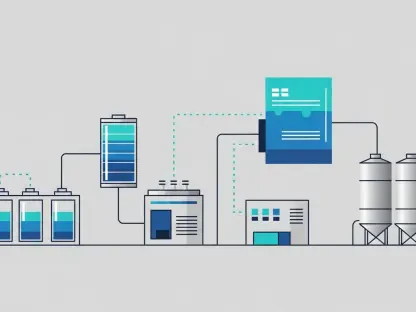
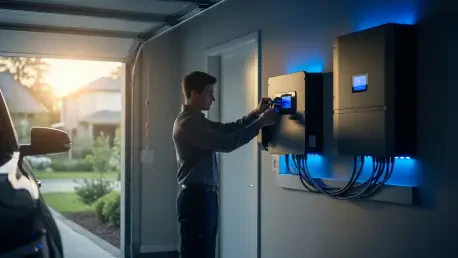
The shift from simple solar arrays to integrated battery systems has fundamentally transformed the rhythm and complexity of our field work. When our storage attachment rate jumped to 71%, we moved away from the “standard” installation into a world where every home requires a bespoke microgrid setup. Our technicians now spend significantly more time on site, dealing with the sensory reality of wiring heavy battery units and configuring complex software that must communicate perfectly with the local utility. Scaling this to our current 4 GWh of networked battery capacity involves clearing massive technical hurdles, particularly in ensuring that thousands of disparate systems can respond to a grid signal in unison. It’s no longer just about generating 216 MW of solar power; it’s about the precision of managing 371 MWh of storage so it stays synchronized across various local jurisdictions.
Providers are reducing reliance on affiliate channels by 40% to focus on direct sales. What specific compliance risks or complexities in utility rate structures triggered this pivot, and what training protocols are required to ensure direct sales teams can execute these sophisticated storage and tax credit requirements?
The decision to slash affiliate reliance by over 40% stems from the sheer density of the compliance landscape that third-party sales teams simply weren’t equipped to handle. We are seeing a move toward highly intricate utility rate structures and rigorous Investment Tax Credit compliance standards that demand an expert level of precision during the sales pitch. To bridge this gap, we have implemented intensive training protocols that focus on the nuances of the “One Big Beautiful Bill Act” and the specific technical requirements for battery storage integration. Our direct teams must now act as consultants who can explain exactly why a system qualifies for an average tax credit of 42.4% while navigating the “home-to-grid” enrollment process. This ensures that every contract is technically sound and legally compliant, which is something a generic affiliate often struggles to guarantee in such a high-stakes environment.
Net subscriber values have dropped by 30% while acquisition costs rose by 8% year-over-year. Beyond increasing upfront margins, what operational efficiencies can companies implement to stabilize these metrics, and how do you prioritize “customer quality” over sheer installation quantity in a competitive market?
When net subscriber value falls to $9,098—a 30% drop—we have to look beyond the surface of the sales numbers and focus on the lifetime efficiency of the asset. We are stabilizing these metrics by refining our supply chain and focusing on geographies where the regulatory environment is stable, rather than chasing every lead in volatile markets. Prioritizing “customer quality” means we are looking for homeowners who are ready to fully commit to the storage ecosystem, which leads to higher-margin opportunities despite the 8% rise in acquisition costs. We would rather see 25,475 high-quality subscriber additions who are deeply integrated into our Virtual Power Plant network than a higher volume of solar-only customers who offer less long-term grid value. This shift requires a disciplined approach to project management where we minimize the “truck rolls” and administrative friction that eat away at our gross subscriber value of $50,165.
Distributed power plants now span over 100,000 customers and deliver hundreds of megawatts during dispatches. Can you explain the mechanics of coordinating “home-to-grid” programs at this scale and describe the specific incentives that convince homeowners to share their stored battery capacity with the broader utility grid?
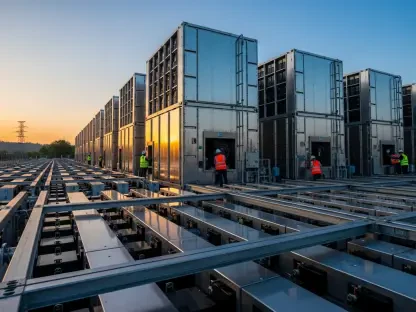
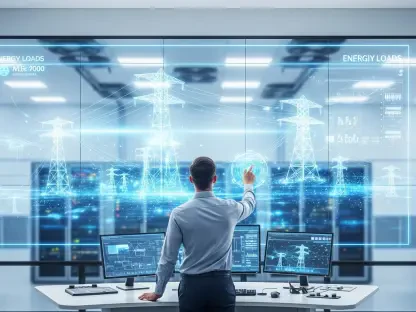
Coordinating a distributed power plant across more than 106,000 customers is a feat of modern software engineering that feels almost like conducting a silent, digital symphony. We are now active in 18 different utility programs where we can dispatch 425 MW of power to support the grid during periods of extreme heat or high demand. The primary incentive for the homeowner is a combination of financial credits on their utility bills and the pride of contributing to local grid stability, which prevents blackouts in their own neighborhoods. When we dispatch this stored energy, the homeowner often doesn’t even feel the change, but the collective impact of 4 GWh of capacity is massive for the utility. It transforms the home from a passive consumer into an active participant in the energy market, creating a resilient web of power that is much harder to knock offline than a single central plant.
Average investment tax credit values have reached 42.4%, yet tariff and budget uncertainties often stall sales in specific geographies. How should firms navigate these regulatory fluctuations while maintaining growth, and what role do third-party owned systems play in mitigating financial risks for the average homeowner?
Navigating the landscape where tax credits have climbed to 42.4% while tariff threats loom requires a strategy that is both agile and localized. We have seen how “budget bill” uncertainty can temporarily stall momentum, which is why we proactively shifted our sales routes to focus on regions with more predictable regulatory paths. Third-party owned systems are the linchpin of this strategy because they shift the financial and regulatory risk away from the homeowner and onto a company that has the scale to manage it. The average person doesn’t want to worry about whether a new tariff will impact their long-term ROI; they just want the lower energy bill and the backup power. By owning the system, we handle the complexities of the tax credits and the long-term maintenance, making the transition to solar a “frictionless” experience for the customer despite the macro-economic noise.
New joint ventures are being formed to finance over 300 MW of additional capacity across 40,000 homes. How do these partnerships diversify financing sources compared to traditional models, and what steps are involved in structuring these deals to ensure long-term value for both investors and residential subscribers?
These joint ventures, like our recent partnership aimed at 40,000 homes, allow us to tap into institutional capital markets that have a much longer horizon than traditional bank debt or equity. By structuring these deals to cover upwards of 300 MW of capacity, we create a diversified pool of assets that provides predictable cash flows for investors while lowering the cost of capital for the business. The process involves a rigorous audit of our subscriber quality and the projected energy output of our distributed power plants to prove the long-term reliability of the revenue. For the subscriber, these partnerships mean we have the staying power to provide 25 years of service, ensuring their battery and panels are always functioning at peak performance. This stability is crucial as we move toward more dispatchable generation capabilities, making the entire residential solar sector a more mature and attractive asset class for global financiers.
What is your forecast for the residential solar and distributed energy market?
I anticipate a year of “recalibration” where the industry moves away from the raw pursuit of installation volume and toward the deep integration of grid-interactive services. While we might see slight declines in overall installation volumes as we pivot away from affiliate channels, the actual energy capacity and “dispatchable” value of each home will grow significantly. We are moving toward a reality where residential storage isn’t just a luxury for backup power, but a critical infrastructure component that utilities rely on to balance the grid every single day. As the storage attachment rate continues to hover near or above 70%, the distinction between a “homeowner” and a “power producer” will continue to blur, creating a much more resilient and decentralized American energy landscape. Expect to see more massive partnerships that treat these 40,000-home clusters as single, reliable blocks of power that can be traded and dispatched with the same confidence as a traditional gas plant.