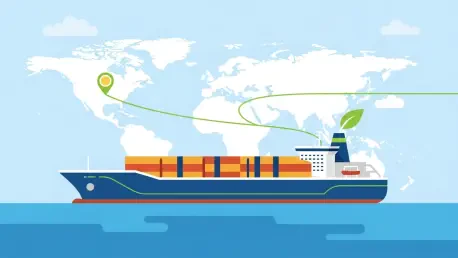

The global shipping industry, the backbone of international trade, now confronts its most significant challenge: charting a course toward a sustainable future amidst a sea of carbon-intensive traditions. In a decisive move that could ripple through the entire maritime sector, the dry bulk vessel Brave Pioneer has embarked on its maiden voyage, representing not just a new ship but a tangible test of green methanol’s viability as a mainstream marine fuel. This inaugural journey from the Philippines to Europe, chartered by global food and agriculture company Cargill, is a meticulously planned trial designed to answer critical questions about the practicalities of decarbonizing ocean freight. As the first of five green methanol dual-fuel vessels set to join the fleet, its performance, bunkering process, and commercial appeal are under intense scrutiny, potentially setting a new standard for how the world’s goods are transported across the oceans. This single vessel’s voyage symbolizes a broader industry shift from theoretical discussions to real-world application, marking a pivotal step in an ongoing, complex transition.
A Proving Ground for Green Technology
The Brave Pioneer, constructed by Tsuneishi Shipbuilding Co., Ltd. and owned by Mitsui & Co. Ltd., is engineered at its core for adaptability in this era of energy transition. Its dual-fuel engine technology grants it the flexibility to operate on conventional marine fuels while also being capable of running on green methanol, a low-carbon alternative projected to slash CO2 emissions by as much as 70% compared to fossil fuels. The vessel’s first trip is structured as a series of crucial operational tests. A planned bunkering stop in Singapore will provide invaluable data on the logistics and safety protocols of refueling with green methanol in a major global port, a process that remains novel for much of the industry. Furthermore, this journey will serve to validate advanced carbon accounting systems, ensuring that the emissions reductions achieved are accurately measured and verified. This initiative moves beyond mere compliance, actively seeking to gauge market demand for lower-carbon freight services and to demonstrate that environmental responsibility and commercial viability can coexist in modern shipping.
Cargill’s strategy extends far beyond the launch of a single vessel, reflecting a comprehensive and pragmatic approach to the complex challenge of maritime decarbonization. The company is actively pursuing a multi-solution portfolio, acknowledging that no single technology will serve as a universal fix. This approach involves investing not only in alternative fuels like green methanol and biofuels but also in other innovative technologies such as wind-assisted propulsion. Alongside these futuristic solutions, the company continues to implement immediate efficiency-gaining measures, including sophisticated voyage optimization software and energy-saving retrofits on its existing fleet. By chartering vessels like the Brave Pioneer, the company deliberately embraces its role as an industry leader, choosing to pilot and de-risk new technologies. This “future-proofing” strategy ensures its fleet remains best-in-class using conventional fuels today while being fully prepared to transition to greener alternatives as supply and infrastructure mature, fostering gradual but deliberate progress.
Shaping the Future of Maritime Commerce
The investment in this pioneering fleet of dual-fuel vessels was intended to resonate far beyond the operational sphere, acting as a powerful market signal to the broader maritime ecosystem. As one of the world’s largest charterers, Cargill’s commitment sent a clear demand signal for low-carbon shipping solutions, which was designed to encourage shipbuilders, fuel producers, and port authorities to accelerate their own investments in sustainable infrastructure and technologies. This proactive stance was crucial in helping to shape the nascent systems and standards required for the widespread adoption of alternative fuels like green methanol. The successful operational trials and commercial voyages of these vessels provided concrete proof-of-concept, which helped to de-risk similar investments for other stakeholders across the value chain. By demonstrating both the technical feasibility and the market appetite for greener freight, this initiative helped catalyze a more coordinated industry-wide transition away from a reliance on conventional fossil fuels, laying the groundwork for a more resilient and environmentally responsible shipping sector.