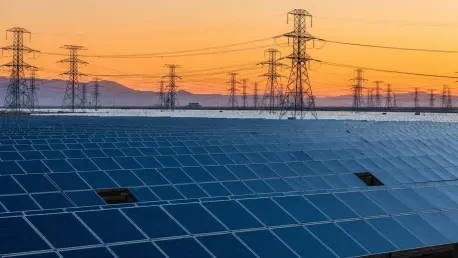

Nevada stands at a pivotal crossroads where the heat of the Mojave Desert meets the high-stakes world of energy economics, forcing state leaders to rethink how power flows through every home and business. The Nevada Public Utilities Commission (PUC) recently signaled a major shift in the state’s power strategy by greenlighting NV Energy’s plan to join the California Independent System Operator’s (CAISO) Extended Day-Ahead Market (EDAM). This transition is not merely a technical update; it represents a comprehensive commitment to a unified Western power grid. By choosing this path over competing regional options, Nevada has placed a significant bet on a future where electricity is managed with greater foresight and regional cooperation.
A High-Stakes Decision for Nevada’s Power Grid
The decision to join EDAM marks the end of a period of intense deliberation regarding which regional market would best serve the Silver State. As utility providers throughout the West faced a binary choice between CAISO’s platform and the Southwest Power Pool’s Markets+, Nevada’s regulatory body determined that the California-led market offered the most robust framework for growth. This move allows NV Energy—which includes both Nevada Power and Sierra Pacific Power—to integrate its operations into a vast, diverse energy footprint that stretches across state lines.
Transitioning to a day-ahead market allows the state to move away from a reactive, emergency-based approach to energy sharing. Instead of scrambling to find power during localized shortages, utilities can now participate in an optimized process that schedules electricity flow twenty-four hours in advance. This proactive strategy is essential for modernizing the grid, as it provides a buffer against volatile energy prices and ensures that reliability remains steady even during the extreme weather events that have become increasingly common across the Western landscape.
Why the Move Toward Regional Energy Markets Matters
Historically, the Western United States has functioned as a fragmented collection of individual power grids, a system that often led to expensive inefficiencies and wasted resources. When one state had a surplus of solar energy and another faced a shortage, the lack of a coordinated market frequently prevented the seamless transfer of that power. By moving toward a centralized market like EDAM, Nevada helps dismantle these regional silos, fostering a environment where electricity moves where it is needed most at the lowest possible price point.
This evolution is particularly critical as Nevada continues to integrate fluctuating renewable sources into its portfolio. The ability to balance the intermittent nature of solar and wind energy across a larger geographic area reduces the need for expensive, fossil-fuel-based backup plants. Furthermore, as the demand for electricity grows due to the expansion of data centers and electric vehicles, a unified grid provides the structural integrity required to maintain service without skyrocketing costs for the average ratepayer.
Analyzing the $93 Million Economic Windfall
Financial projections played a starring role in the PUC’s decision-making process, with the potential for massive savings serving as the primary motivator. NV Energy estimates that joining the EDAM framework will generate approximately $93.1 million in annual savings through reduced production costs and more efficient resource allocation. These savings are expected to be passed down to consumers, providing a much-needed reprieve from the inflationary pressures that have impacted utility bills in recent years.
Beyond simple cost reductions, the move is expected to turn Nevada’s transmission infrastructure into a significant revenue generator. The utility anticipates a surge in “wheeling” revenues—fees collected for moving power from other states across Nevada’s vast network of high-voltage lines. When compared to the alternative, the choice becomes even clearer; a study by the Brattle Group indicated that joining the rival Markets+ platform would have resulted in a net annual loss of $7.3 million. This represents a $100 million economic swing, making the EDAM integration a fiscally prudent maneuver.
Expert Perspectives and Stakeholder Support
A broad coalition of technology leaders, environmental advocates, and regulatory experts has lined up behind the decision, viewing it as a essential step toward a modernized economy. Major corporate players like Google, alongside trade groups such as Advanced Energy United, have voiced their approval, noting that a larger market footprint optimizes the use of natural resources. They argue that by pooling resources, the West can achieve a higher level of grid reliability while simultaneously lowering the carbon footprint of the entire region.
From a regulatory standpoint, the move ensures that Nevada remains in compliance with Federal Energy Regulatory Commission (FERC) Order 2222. This federal mandate is designed to allow distributed energy resources, such as residential solar panels and home battery storage, to participate more effectively in wholesale markets. By aligning with EDAM, Nevada provides a platform where small-scale energy producers can contribute to the state’s overall energy security, creating a more resilient and democratic power system for everyone involved.
Strategies for a Successful Transition by 2028
The road to full implementation, scheduled for the fall of 2028, requires a multi-year framework focused on physical and digital infrastructure. Central to this plan is the $4.2 billion Greenlink transmission project, which will serve as the backbone for moving renewable energy across the state. This project is vital for ensuring that Nevada can act as a hub, receiving wind power from Wyoming through the TransWest Express line and distributing it to load centers where demand is highest.
By the time the transition was finalized, officials had already begun the rigorous process of participating in CAISO’s stakeholder governance to protect Nevada’s specific interests. Engineers worked to balance the state’s 5 GW of renewable power purchase agreements with the real-time demands of the day-ahead market, ensuring that every megawatt produced would be utilized efficiently. This forward-looking approach sought to transform Nevada from a passive participant in the energy sector into a proactive leader of the Western grid, setting a precedent for how states can successfully navigate the complexities of modern energy regionalization.