
The sheer magnitude of electricity required to sustain a single generative artificial intelligence query is now roughly five times that of a traditional web search, creating a metabolic demand that threatens to outpace the existing capacity of the global power grid. As data centers evolve from simple storage hubs into high-density computational furnaces, the tech industry finds itself at a precarious crossroads. The digital gold rush of the mid-2020s has transformed energy from a secondary utility into the primary constraint on innovation. Without a fundamental shift in how electricity is stored and dispatched, the ambitious carbon-neutrality pledges of the world’s largest corporations may crumble under the weight of their own algorithms.
The Intersection of Generative AI Demand and Sustainable Power Infrastructure
The exponential growth of data center energy consumption is no longer a localized concern for grid operators but a systemic challenge for global energy stability. Machine learning models, particularly large language models, require specialized hardware that runs at near-constant peak capacity. This “always-on” nature creates a flat, high-intensity load profile that traditional renewable sources like wind and solar struggle to meet without backup. Consequently, the tech sector has become the unwitting vanguard of the energy transition, forcing a rapid re-evaluation of how industrial-scale power is managed.
Major players such as Google, Microsoft, and Amazon are leading the charge for 24/7 carbon-free energy solutions to mitigate their massive environmental footprints. While lithium-ion batteries have served as the standard for short-term balancing, their inability to provide cost-effective storage for longer than a few hours remains a critical bottleneck. As these companies expand their physical infrastructure, they are increasingly confronted by regulatory and environmental pressures to move away from fossil-fuel “peaker” plants. The shift toward long-duration energy storage is thus becoming a matter of both corporate compliance and operational survival.
The Technological Evolution of Long-Duration Energy Storage
Reversible Rusting and the Mechanics of Iron-Air Chemistry
At the heart of the next battery revolution is a surprisingly simple chemical reaction: the oxidation and reduction of iron. Iron-air batteries utilize a process often described as “reversible rusting” to enable discharge cycles that last for 100 hours or more. During the discharge phase, the battery breathes in oxygen from the ambient air, causing iron pellets to oxidize and release a steady stream of electrons. When the system is recharged using surplus renewable energy, the process reverses, stripping the oxygen from the rust and returning the material to its metallic state.
This chemistry offers a profound advantage in terms of resource security and cost-effectiveness. Unlike traditional lithium-ion systems, which rely on volatile supply chains for cobalt and nickel, iron-air technology utilizes one of the most abundant and recycled metals on Earth. Furthermore, these systems employ a water-based, non-flammable electrolyte, providing a safety profile that is vastly superior for utility-scale deployment near sensitive data center infrastructure. By removing the risk of thermal runaway, iron-air systems allow for denser, safer energy parks.
Market Projections and the Economics of 100-Hour Storage
The financial logic behind iron-air technology centers on a radical reduction in the cost per kilowatt-hour. Current projections suggest a path toward a $20 per kilowatt-hour target, which is roughly one-tenth the cost of lithium-ion for multi-day applications. This price point is the “holy grail” for grid-level adoption, as it allows renewable energy to compete directly with natural gas for baseload power. As the long-duration energy storage market prepares for a surge through 2030, the economic landscape is being reshaped by institutional confidence.
Venture capital interest has intensified, with firms like Breakthrough Energy Ventures pouring hundreds of millions into scaling these technologies from laboratory prototypes to industrial reality. Federal grants and strategic partnerships are also accelerating the timeline, providing the necessary cushion for early-stage commercialization. This influx of capital is not merely speculative; it is a response to the clear and present need for a storage solution that can bridge the gap during week-long periods of low wind or solar output, often referred to as “dunkelflaute” events.
Navigating Technical and Scalability Hurdles in Energy Storage
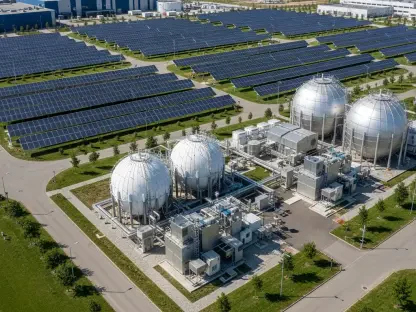
Transitioning from a successful pilot to a gigawatt-hour scale production line involves significant physical and logistical hurdles. One of the primary trade-offs for the low cost of iron-air systems is their lower energy density compared to lithium-ion. This means that an iron-air facility requires a larger physical footprint to store the same amount of energy. For data center operators, this necessitates integrated land-use planning where massive battery “farms” are co-located with computational hubs, potentially influencing where the next generation of digital infrastructure is built.
Manufacturing these systems at scale also requires a reimagining of the battery supply chain. Moving away from the precision-heavy requirements of thin-film lithium cells, iron-air production looks more like traditional heavy manufacturing or appliance assembly. While this simplifies certain aspects of the process, it demands a robust domestic manufacturing base capable of handling massive volumes of iron and air-breathing membranes. Strategies to integrate these batteries with intermittent wind and solar resources are currently being refined to ensure that “industrial-grade” reliability is maintained even during extended weather anomalies.
Regulatory Frameworks and Policy Incentives for Clean Energy Innovation
The policy environment has shifted dramatically to favor domestic battery manufacturing and long-duration storage projects. In the United States, the Inflation Reduction Act and specific Department of Energy grants have acted as catalysts for the development of new manufacturing hubs. These incentives are designed to lower the capital expenditure for companies willing to pioneer unproven but essential technologies. By subsidizing the initial “green premium,” the government is effectively de-risking the transition for both utilities and their heavy-industrial customers.
Innovative utility rate structures, such as the “Clean Energy Accelerator Charge,” are also emerging to protect residential consumers from the costs of this rapid expansion. Under these models, large-scale energy users like data center operators bear the financial responsibility for the grid upgrades and storage capacity they require. This regulatory evolution ensures that the push for AI-driven growth does not come at the expense of local communities, while simultaneously providing a clear framework for securing the necessary permits for massive carbon-free power projects.
The Future Landscape of Global Digital Infrastructure
As the technology matures, the structure of the energy grid is expected to move toward a “Capacity Connect” model, characterized by decentralized nodes of high-capacity storage. This shift will likely foster the rise of domestic manufacturing centers in regions previously known for heavy industry, creating a new “Battery Belt.” These regions will not only produce the storage hardware but will also become magnets for data center development, as proximity to reliable, low-cost, carbon-free power becomes the ultimate competitive advantage in the AI era.
Looking further ahead, iron-air technology is positioned to act as a direct baseload replacement for natural gas in high-demand regions. By providing 100 hours of continuous discharge, these systems can mitigate the risks associated with multi-day storms or heatwaves that would otherwise force a return to fossil fuels. The integration of long-duration storage into the core of digital infrastructure suggests a future where the virtual world of AI is grounded in a physical foundation of sustainable, earth-abundant materials, ensuring that the march of progress does not outrun the planet’s ability to support it.
The adoption of iron-air technology represented a decisive pivot in the strategy to de-carbonize high-performance computing. Decision-makers recognized that while lithium-ion solved the problem of the afternoon sun, only iron-air could solve the problem of the winter week. Stakeholders shifted their focus toward long-term grid resilience rather than short-term capacity fixes, acknowledging that the future of artificial intelligence was inextricably linked to the stability of the physical world. This transition provided a blueprint for other energy-intensive sectors to decouple growth from emissions. Strategically, the path forward required a commitment to scaling non-lithium chemistries to ensure that the infrastructure of the next decade remained both environmentally responsible and economically viable.