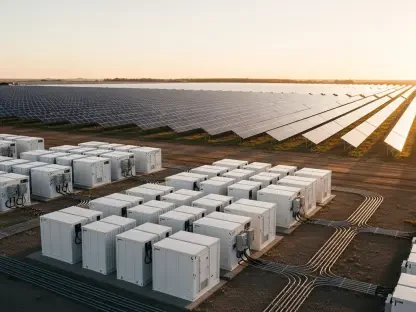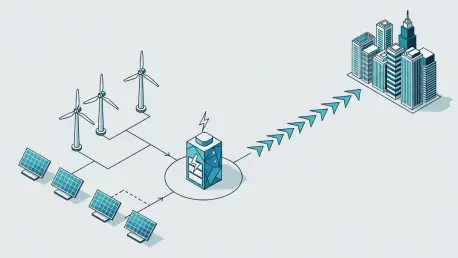

The fundamental challenge of renewable energy has always been its intermittent nature; the sun sets, and the wind dies down, creating a critical gap in power supply that has long been the primary obstacle to a fully decarbonized grid. This paradox has spurred a technological revolution, placing utility-scale battery storage at the forefront of the global energy transition. This technology is no longer a niche concept but a central pillar in reshaping power markets, designed to capture surplus clean energy and release it on demand. By acting as a massive reservoir of electricity, battery storage systems promise to smooth out the fluctuations inherent in solar and wind power, ensuring a consistent and reliable flow of energy to homes and businesses around the clock. The ability to provide grid stability without relying on fossil fuels is fundamentally altering the economic and logistical landscape of power generation, making the vision of a resilient energy sector more attainable than ever before. This rapid evolution is not just about environmental goals; it is a pragmatic response to the growing need for a flexible and efficient electrical grid capable of supporting a modern economy.
The Global Surge in Storage Capacity
The unprecedented global expansion of battery storage is primarily driven by a remarkable and steep decline in manufacturing costs. Over the last decade and a half, the price of lithium-ion batteries has plummeted by an astonishing 90%, a direct result of economies of scale achieved through a massive ramp-up in commercial production. This cost reduction has transformed battery storage from a prohibitively expensive technology into a commercially viable solution for grid operators worldwide. While China currently dominates the manufacturing landscape, its leadership is catalyzing a global response. Recognizing the strategic importance of energy independence and supply chain security, nations including the United States, various European countries, and India are aggressively expanding their own domestic production capabilities. This international push is creating a more competitive and diversified market, which is expected to further accelerate innovation and drive down costs, ensuring that battery storage becomes an even more accessible tool for integrating renewables.
The tangible impact of these economic shifts is evident in the record-breaking deployment of energy storage systems across the globe. Projections for 2025 indicate that annual installations, excluding the established technology of pumped hydropower, will reach an impressive 92 gigawatts. China is at the vanguard of this movement, set to contribute over half of this new capacity as it aggressively builds out its renewable infrastructure. The United States is also a major player, expected to account for approximately 14% of the new additions. The long-term outlook is even more transformative. Forecasts predict that cumulative global storage capacity will swell to an incredible 2 terawatts by 2035, representing a monumental eightfold increase from current levels. This explosive growth underscores a global consensus on the critical role of energy storage in stabilizing power grids, enabling deeper penetration of renewable sources, and ultimately facilitating the worldwide transition away from fossil fuels.
A Tale of Two Grids in the United States
Despite the strong national momentum, the rollout of battery storage across the United States has been a story of stark regional contrasts. In some areas, the path to adoption has been fraught with obstacles, primarily due to resistance from incumbent utilities and a lack of enthusiastic support from policymakers. This hesitation is often rooted in safety concerns, which, although frequently addressable through modern engineering and regulatory standards, have led to outright bans on new projects in certain localities. This patchwork of acceptance and opposition has resulted in a noticeably slower pace of deployment, particularly in regions like the Southeast, where regulatory frameworks have not kept pace with the technology’s potential. Consequently, these areas risk falling behind in the national energy transition, potentially missing out on the grid stability, economic benefits, and increased resilience that battery storage offers to regions that have more fully embraced the technology.
In sharp contrast to the hesitant regions, several states have become powerful showcases for the transformative impact of battery storage. California, in particular, has experienced a staggering thirty-fold increase in its battery capacity since 2018, a strategic investment that has been instrumental in stabilizing its grid, especially during periods of high demand and extreme weather. This rapid build-out has made the state a global leader in integrating renewables. Together, California, Texas, and Arizona now account for approximately 80% of the total battery capacity in the United States, forming a formidable core of energy innovation. This trend is not an anomaly but a clear indicator of the future direction of the nation’s energy infrastructure. Underscoring this shift, the number of planned battery storage projects in the nation’s grid interconnection queues now outpaces proposals for new natural gas plants by a significant factor of 6.5 to 1, a testament to the long-term planning and foresight of developers who anticipated this pivotal moment.
A Pathway to a Resilient Future
The trajectory of energy storage technology moved from a peripheral concept to a cornerstone of the modern electrical grid. The confluence of dramatically reduced battery costs and the proactive vision of developers created a powerful momentum that ultimately reshaped national energy planning. While regional disparities and regulatory hurdles initially presented significant challenges in the United States, the overwhelming success in pioneering states provided an undeniable blueprint for grid resilience and decarbonization. The data from interconnection queues definitively signaled a market pivot away from traditional fossil fuel peaker plants toward flexible, clean storage solutions. This transition was not merely an environmental victory but a strategic economic shift that strengthened energy security and fostered innovation across the supply chain, cementing battery storage’s role as the essential enabler of the renewable energy future.