
As the global energy transition accelerates, the narrative in Africa has evolved from a simple story of deploying generation capacity to a far more complex and critical undertaking centered on grid integration and operational stability. The rapid installation of solar energy across the continent has exposed a fundamental challenge: generating power is only half the battle. The true test lies in delivering that power reliably to homes, businesses, and industries. This is where battery energy storage systems (BESS) are fundamentally reshaping the landscape, moving from a supplementary technology to an indispensable component of Africa’s modern energy infrastructure.
Powering a Continent: The New Landscape of African Energy
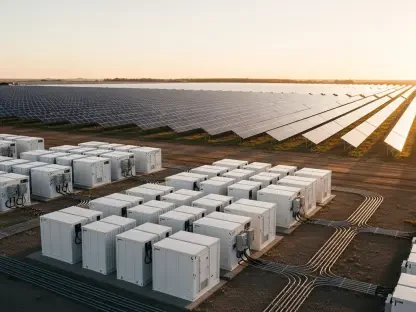
The focus within Africa’s energy sector is undergoing a pivotal reorientation. For years, the primary objective was to increase generation megawatts, but today, utilities and project developers are grappling with the consequential effects of intermittent renewables on already fragile grids. This shift has elevated battery storage from a niche application to a core strategic asset. BESS is now integral to stabilizing grid frequency, absorbing surplus solar power that would otherwise be curtailed, and ensuring a consistent supply of electricity where grids are underdeveloped or non-existent.
In this new paradigm, the motivation for deploying storage is driven less by the sophisticated financial incentives seen in mature markets, such as energy arbitrage, and more by the foundational need for reliability. Across the continent, battery systems are being deployed in hybrid microgrids to reduce reliance on expensive diesel generators, integrated into utility-scale solar farms to provide firm power, and installed at commercial facilities to guarantee operational continuity. This pragmatic approach underscores the technology’s role as a workhorse, performing essential services that underpin both economic development and energy access.
Catalysts for Change: Market Trends and Growth Projections
The Shift to Systemic Solutions: From Components to Comprehensive Platforms
A defining market trend is the strategic move away from procuring standalone hardware toward adopting fully integrated, turnkey energy storage solutions. Project developers and financiers now recognize that long-term performance and bankability are not guaranteed by high-quality battery cells alone. Instead, they depend on a holistic system architecture where hardware, intelligent software, and lifecycle support are cohesively designed and delivered. This maturing perspective is reshaping procurement strategies across the continent.
This demand for comprehensive platforms stems from an understanding that reliability is a product of system-level engineering. The interplay between the battery, the thermal management system, and the energy management software determines the asset’s efficiency, longevity, and safety. Consequently, solution providers who offer a complete, factory-integrated package—like the RelyEZ Venture Series, which standardizes modular solutions for different applications—are gaining a significant advantage by de-risking project execution and guaranteeing performance outcomes.
Sizing the Opportunity: Market Data and Future Forecasts
The trajectory for BESS in Africa is set for exponential growth, driven by the continent’s unwavering need for stable power. Market forecasts project a significant expansion of installed capacity from 2026 to 2028 and beyond, as storage becomes a standard component in energy infrastructure planning. This growth is anticipated across all major segments, from large-scale solar-plus-storage facilities designed to support national grids to decentralized hybrid microgrids electrifying remote communities.
This expansion is not merely a reflection of falling technology costs but a direct response to fundamental market needs. The deployment of integrated BESS, such as the 10 MW/30 MWh system in Burkina Faso, is becoming a blueprint for how to enhance grid stability in regions with high renewable penetration. Similarly, projects bringing solar-storage-diesel microgrids to remote villages in Kenya exemplify how storage can directly advance energy access goals, proving the technology’s versatility and essential role in Africa’s energy future.
Navigating the Terrain: Addressing Africa’s Unique Challenges
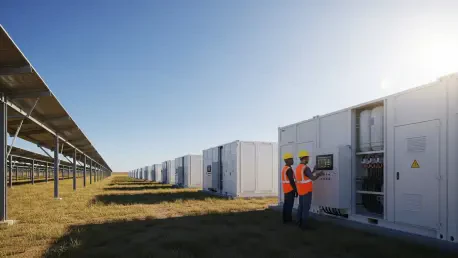
Deploying advanced energy infrastructure in Africa presents a distinct set of obstacles that demand purpose-built solutions. Technologically, systems must be engineered to withstand harsh environmental conditions, including high ambient temperatures and pervasive dust, which can severely degrade battery performance and lifespan. Logistical challenges, such as operating in remote locations with underdeveloped transport networks, further complicate installation and maintenance, requiring robust and low-maintenance designs.
In response, the industry is innovating with resilient technologies specifically tailored for these environments. Containerized BESS platforms featuring advanced liquid-cooling systems, such as the RelyEZ GridUltra, are becoming critical for ensuring thermal stability and safe, long-duration performance. These solutions are designed not just to survive but to thrive in demanding climates, demonstrating that overcoming Africa’s unique operational hurdles requires a commitment to specialized, climate-appropriate engineering rather than a one-size-fits-all approach.
Building Investor Confidence: The Crucial Role of Bankability and Governance
For large-scale energy storage projects to attract the necessary investment, technical viability must be matched by financial credibility and comprehensive risk management. Bankability has emerged as a key determinant of project success, with financiers increasingly scrutinizing the long-term reliability, safety, and performance guarantees of the underlying technology. This focus on de-risking investments is elevating the importance of independent validations and robust commercial assurances.
To meet these stringent requirements, solution providers are pursuing third-party certifications and securing strong, insurance-backed warranties. The attainment of a Tier-1 BESS classification or a BBB bankability rating, for example, provides financiers with a trusted benchmark of quality and reliability. Furthermore, product warranties underwritten by major insurers like Munich Re offer an additional layer of security, assuring investors of the asset’s long-term operational performance and safeguarding their capital against unforeseen technical failures.
The Blueprint for Tomorrow: Emerging Models and Technologies
The future of energy storage in Africa is being shaped by technologies that transform BESS from passive hardware into dynamic, intelligent grid assets. Advanced thermal management systems, particularly liquid cooling, are setting new standards for safety and longevity in hot climates. Simultaneously, modular product designs are enabling faster deployment and scalability, allowing developers to tailor solutions for specific applications while maintaining consistent quality.
At the heart of this evolution is the sophistication of the Energy Management System (EMS). This software layer acts as the system’s brain, enabling real-time monitoring, optimized charge and discharge strategies, and the provision of valuable grid services like peak shaving and frequency regulation. By unlocking the full capabilities of the hardware, the EMS turns a battery system into a controllable resource that can actively support grid stability, paving the way for greater renewable energy integration and a more resilient power infrastructure.
The Integrated Imperative: A Conclusion on Africa’s Energy Path
The analysis confirmed that as Africa’s renewable energy transition gained maturity, battery storage became the indispensable backbone for building resilient and modern power systems. The consensus view was that the future of successful energy projects on the continent depended on end-to-end delivery models that seamlessly combined robust, climate-appropriate hardware with intelligent control systems and comprehensive lifecycle support. This integrated approach emerged as the new standard, essential for ensuring the long-term performance, financial viability, and ultimate success of Africa’s renewable energy growth.