
In the vast, resource-rich expanse of Western Australia, a strategic partnership is poised to redefine the nation’s energy landscape by tackling one of the most persistent challenges of the renewable transition. The collaboration between Australian Vanadium Ltd (AVL) and Japan’s Sumitomo Electric Industries to develop the Kalgoorlie Vanadium Battery Energy Storage System (VBESS) represents a pivotal step toward achieving a stable, resilient power grid. This initiative is not merely about building another battery; it is about establishing a new industrial paradigm, one that leverages domestic resources to solve domestic energy problems and set a global benchmark for long-duration energy storage.
Setting the Stage for Australia’s Energy Revolution
Australia’s ambitious shift toward renewable energy sources hinges on a critical, often overlooked component: long-duration energy storage (LDES). As solar and wind power become more prevalent, the intermittency of these sources creates significant challenges for grid stability. LDES solutions are essential for storing excess energy during periods of high generation and dispatching it during lulls, ensuring a consistent and reliable power supply around the clock. Without this capability, the full potential of renewables cannot be realized, making large-scale storage a cornerstone of the nation’s energy future.
The grid-scale battery market is rapidly evolving beyond its early reliance on lithium-ion technology. While effective for short-duration storage, lithium-ion batteries face limitations in terms of scalability, lifespan, and safety for the kind of extended, high-capacity applications grids now require. This has opened the door for alternative chemistries, with Vanadium Flow Batteries (VFBs) emerging as a leading contender. VFBs offer distinct advantages, including a longer operational life, the ability to discharge fully without degradation, and inherent non-flammability, making them particularly suitable for large, stationary storage projects.
Charting the Course: Market Dynamics and Future Growth
The Vanadium Vanguard: Key Trends Driving a New Energy Era
A notable strategic shift is underway in the energy sector, with a growing preference for non-lithium technologies to meet the demands of grid-scale storage. This trend is driven by a need for solutions that offer greater safety, durability, and a more sustainable supply chain. Vanadium flow batteries perfectly align with this shift, providing a robust alternative that can handle the rigorous charge-discharge cycles required to support a renewable-heavy grid without the performance degradation associated with other battery types.
This demand is particularly acute in regions like Western Australia’s Goldfields, where the grid operates at its fringes and is susceptible to transmission faults and instability. For communities and industries in these areas, reliable power is not a luxury but a necessity. The Kalgoorlie VBESS is designed specifically to address this vulnerability, demonstrating how targeted LDES deployments can fortify weak points in the network and ensure energy security. The project serves as a clear market signal that advanced storage technologies are moving from niche applications to mainstream infrastructure solutions.
By the Numbers: Project Scale, Investment, and Economic Horizons
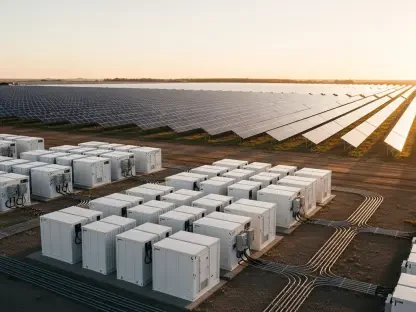
The Kalgoorlie VBESS is set to be a landmark project, with a planned capacity of 50 MW/500 MWh, enabling a continuous 10-hour discharge duration. This scale will make it the largest vanadium flow battery in Australia and one of the most significant LDES installations in the world. The project’s long-duration capability is its defining feature, providing a level of grid support that far exceeds typical short-duration battery systems.
Underpinning this ambitious project is a strategic investment of up to A$150 million from the Western Australian government, which recognizes the project’s potential to anchor a new domestic industry. The economic ripple effects are projected to be substantial, creating approximately 150 construction jobs and fostering a vertically integrated vanadium industry cluster in the region. The project timeline is on a clear track, with the submission of an Expression of Interest in early 2026 and the bidding stage commencing in March 2026, targeting a final commissioning by 2029.
Overcoming Hurdles in Grid-Scale Battery Deployment
One of the primary technical challenges the Kalgoorlie VBESS aims to solve is the issue of transmission faults on the Eastern Goldfields network. By providing up to 10 hours of backup power, the system will act as a buffer, absorbing shocks and maintaining supply continuity during disruptions. This capability is crucial for stabilizing the grid’s more remote and vulnerable sections, ensuring that homes and businesses remain powered even when the wider network experiences problems.
Beyond the technical aspects, establishing a new, localized vanadium electrolyte supply chain presents its own set of complexities. However, this is where AVL’s vertically integrated model provides a distinct advantage. By controlling the process from mine to battery, the company can ensure a reliable and cost-effective supply of the key material, de-risking the project and creating a self-sufficient ecosystem. This synergy, combined with Sumitomo Electric’s global expertise in VFB technology, forms a powerful partnership that is well-equipped to navigate the competitive bidding process and secure final approvals.
The Regulatory Blueprint for a Stable Energy Grid
The Kalgoorlie VBESS project is a direct outcome of the Western Australian government’s forward-thinking LDES strategy. This policy framework was designed to encourage and support the development of innovative storage solutions that can facilitate the state’s transition to renewable energy. By providing significant funding and a clear strategic direction, the government has created a fertile ground for projects that might otherwise be considered too high-risk for private investment alone.
Navigating the regulatory landscape is a critical component of any major energy project. The Kalgoorlie VBESS will require close collaboration and compliance with both the regional network operator, Western Power, and the Australian Energy Market Operator (AEMO), which oversees system-wide reliability. Government funding acts as a powerful catalyst in this process, signaling official endorsement and helping to accelerate the adoption of new technologies. The project exemplifies the importance of multi-stakeholder collaboration, bringing together government bodies, private industry, and network operators to achieve a common goal.
A Glimpse into Tomorrow’s Power Grid
The successful deployment of the Kalgoorlie VBESS could establish it as a replicable model for future LDES projects across Australia. As other states grapple with similar grid stability challenges, the project provides a tangible blueprint for integrating large-scale, long-duration storage into their energy systems. It demonstrates the technical viability and economic potential of vanadium-based solutions, paving the way for wider adoption.
Furthermore, the project’s emphasis on domestic mineral processing has the potential to disrupt traditional economic models. By manufacturing a high-value product like vanadium electrolyte locally, Australia can move up the value chain, capturing more economic benefit from its vast mineral resources. This heralds a future where the energy storage ecosystem is not dominated by a single technology but is a diverse mix of solutions, with VFBs playing a key role in ensuring grid stability and resilience.
Powering Forward: A New Benchmark for Australian Energy
The Kalgoorlie VBESS project represented a transformative moment for regional energy reliability in Western Australia. Its ability to provide a continuous 10-hour supply of power fundamentally altered the stability of the Goldfields grid, offering unprecedented security to a historically vulnerable network. This achievement underscored the critical role that long-duration energy storage plays in a modern, renewables-driven energy system.
The strategic importance of the collaboration between AVL and Sumitomo Electric extended far beyond a single project. It established a powerful precedent for the national industry, showcasing how local resource development and international technological expertise could be combined to create world-class energy infrastructure. This partnership not only de-risked a complex and ambitious undertaking but also laid the groundwork for a domestic vanadium battery industry.
This project’s role in securing Australia’s renewable energy future proved to be undeniable. It demonstrated a viable, scalable, and safe alternative to conventional storage technologies, directly addressing the intermittency challenges posed by wind and solar power. To build on this success, future policy and investment should continue to prioritize the development of diverse LDES technologies and support the creation of vertically integrated domestic supply chains, ensuring Australia remains at the forefront of the global energy transition.