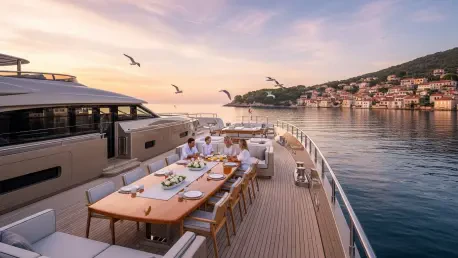

Imagine cruising through the pristine waters of the Mediterranean on a superyacht, the epitome of luxury, yet leaving behind nothing but a whisper of clean energy instead of diesel fumes. This vision isn’t just a dream—it’s becoming a tangible goal as the yachting industry grapples with mounting environmental pressures and stricter regulations. The sector, historically tied to fossil fuels, is at a turning point where alternative fuels like methanol, hydrogen, liquefied natural gas (LNG), and biofuels promise to redefine sustainability on the high seas. But the question lingers: can these options truly power the future of yachting, or are they merely a hopeful distraction from deeper challenges? As yachts are built to endure for decades, today’s choices must anticipate tomorrow’s innovations. Drawing on insights from industry veterans, this exploration dives into the potential and pitfalls of these emerging solutions, weighing whether they can transform yachting into a beacon of green progress.
Exploring Alternative Fuel Options
Methanol: A Promising but Challenging Contender
Methanol is carving out a notable place in the push for cleaner yachting, with prominent builders like Sanlorenzo and Lürssen adopting it through innovative reformers paired with hydrogen fuel cells, as demonstrated in projects like the Cosmos. Its appeal lies in being a liquid at ambient temperatures, simplifying storage compared to gases, while delivering a cleaner burn that slashes sulfur oxide emissions and particulates. This makes it a compelling fit for an industry under scrutiny for its environmental footprint. However, methanol’s lower energy density demands larger fuel tanks, which can eat into the sleek design and space that define luxury yachts. This trade-off forces builders to rethink traditional layouts, balancing aesthetics with functionality in ways diesel never required. Moreover, the fuel’s integration into yachting hubs remains limited, with bunkering infrastructure still playing catch-up to commercial shipping where methanol already powers dozens of dual-fuel vessels.
Beyond design constraints, methanol brings a darker side with significant safety risks that cannot be ignored. Its toxicity and the near-invisible flame it produces when burning in pure form create hazards that demand stringent precautions, such as nitrogen-inerted tanks and advanced detection systems to alert crews of leaks or fires. Retrofitting costs also sting, often running 20-30% higher than conventional diesel setups, a hefty price tag for owners considering a switch. Compounding the issue is the scarcity of refueling options at leisure ports, where yachts typically roam, unlike the industrial hubs supporting commercial fleets. These hurdles paint methanol as a fuel with immense potential but a steep climb to widespread acceptance. Until infrastructure expands and safety protocols become second nature, its role in yachting might remain more of a bold experiment than a universal solution.
Hydrogen: Zero-Emission Dream with Storage Nightmares
Hydrogen often steals the spotlight as the ultimate zero-emission fuel, producing only water and heat when used in PEM fuel cells, a technology showcased in visionary concepts like Sinot’s Aqua and practical applications by Sanlorenzo. This silent, clean power source aligns perfectly with the luxury ethos of yachting, where noise and pollution detract from the experience of open water. The environmental payoff is undeniable—eliminating emissions at the point of use offers a direct answer to regulatory demands and growing owner interest in green credentials. Yet, while the end result dazzles, getting there reveals a maze of technical challenges. Hydrogen’s promise hinges on overcoming barriers that, for now, keep it tethered to the realm of innovation rather than everyday reality in yacht design.
The most daunting obstacle with hydrogen lies in storage, a puzzle that complicates its adoption on vessels where space is a premium. Whether compressed at extreme pressures of 350-700 bar or chilled to a cryogenic liquid at -423°F, it requires heavy, bulky systems that encroach on interior layouts and add weight, countering the elegance yachts strive for. Safety concerns loom large too—hydrogen’s wide flammability range means a small leak could spell disaster without sophisticated ventilation and detection setups. Add to that the high costs of implementation, a shortage of trained technicians, and minimal refueling infrastructure at typical yachting destinations, and the barriers multiply. Despite pioneering efforts, such as Monaco’s hydrogen yacht pontoon, these gaps suggest hydrogen remains a distant horizon for most, a dream fuel awaiting the right conditions to fully ignite in the industry.
Liquefied Natural Gas (LNG): Proven but Space-Hungry
Liquefied Natural Gas, or LNG, enters the conversation with a track record of success in commercial shipping, where it cuts emissions and stores efficiently as a liquid at -260°F. Its ability to reduce greenhouse gases compared to diesel makes it an attractive contender for yachting’s sustainability goals, promising a bridge between current systems and a cleaner future. Efficiency in volume also helps—LNG takes up less space per energy unit than some alternatives, a boon for long-range voyages. Yet, translating this proven technology to the yachting world isn’t a straightforward swap. The unique demands of luxury vessels, where every inch of design matters, clash with the practicalities of adopting a fuel that’s more at home in industrial fleets than leisure crafts.
The infrastructure needed for LNG poses a significant hurdle, starting with the insulated tanks and gas-handling systems required to manage inevitable boil-off, all of which devour onboard space. This can disrupt the sleek lines and spacious interiors that define high-end yachts, forcing designers into tough compromises. Initial costs also bite, running 15-20% higher than diesel setups, though potential long-term savings on fuel efficiency could offset this if access improves. The real sticking point, however, is the near absence of bunkering facilities at leisure ports frequented by yachts, unlike the commercial hubs where LNG thrives. Until refueling networks expand to match yachting’s playgrounds, LNG risks being a powerful solution sidelined by logistical mismatch, unable to fully flex its muscle in this niche but demanding market.
Biofuels: A Practical Stepping Stone
Biofuels stand out as the most accessible option for yachting’s green transition, derived from renewable sources and often functioning as drop-in replacements for diesel with little to no system overhaul. Trials with blends like B20 on superyachts have yielded impressive results, slashing lifecycle CO₂ emissions by up to 90%, a figure that resonates with owners eager to lower their environmental impact without sacrificing performance. This ease of adoption offers a low-friction entry point, sidestepping the radical redesigns other fuels demand. For an industry where change can feel daunting, biofuels present a comforting middle ground—familiar enough to implement now, yet progressive enough to signal commitment to sustainability. Their immediate viability keeps them in the spotlight as a practical first step.
However, biofuels aren’t without complications, especially when viewed through the lens of supply and stability. Global production struggles to keep pace with demand across transport sectors, leaving yachting to compete for limited stock, a challenge that could throttle scalability. Additionally, biofuels degrade faster than diesel, particularly during the long idle periods common for luxury yachts, risking clogged systems if not managed with proper additives and tank care. These operational quirks require diligence, a burden that might deter less committed owners. Still, as a near-term solution, biofuels bridge the gap to more radical alternatives, buying time for infrastructure and technology to mature. Their role as a stepping stone underscores a broader truth: no single fuel may dominate yet, and pragmatic choices could pave the way for bolder leaps.
Industry Trends and Key Challenges
The Shift Toward Sustainability
The yachting industry finds itself swept up in a broader wave of environmental consciousness, where aligning with global sustainability goals isn’t just a choice but increasingly a mandate. Regulatory frameworks are tightening, and owner demand for eco-friendly vessels grows louder, pushing alternative fuels from fringe experiments to center stage. This isn’t a passing trend—it’s a fundamental shift, driven by the recognition that yachts, as symbols of opulence, bear a responsibility to lead rather than lag in reducing carbon footprints. Projects integrating methanol, hydrogen, and beyond signal a readiness to experiment, even if full adoption remains elusive. The momentum reflects a shared belief that cleaner energy is inevitable, a belief tempered by the reality of navigating uncharted waters where every step forward tests the balance between ambition and practicality.
This shift also reveals a deeper tension within the industry, as sustainability clashes with entrenched traditions of design and operation. Yachts aren’t just vehicles; they’re statements of status, often prioritizing luxury over utility in ways that complicate green retrofits. The push for change, however, gains urgency from external pressures—think international emission targets and port policies favoring cleaner vessels. Inside the sector, progressive builders and owners champion the cause, seeing eco-credentials as a competitive edge. Yet, the pace of transformation varies, with smaller yards or less regulated regions slower to adapt. This uneven progress highlights a critical point: while the destination of sustainability is clear, the journey involves trade-offs—environmental gains versus operational ease and upfront costs—that keep the industry in a state of dynamic, if sometimes uneasy, evolution.
Infrastructure and Safety Barriers
One of the most stubborn roadblocks to embracing alternative fuels in yachting is the glaring lack of supporting infrastructure, a gap that feels especially wide at the leisure ports where these vessels typically roam. Unlike commercial shipping hubs equipped for methanol, hydrogen, or LNG, many yachting destinations offer little beyond diesel, stranding owners who dare to innovate. This scarcity of bunkering facilities isn’t just an inconvenience—it’s a fundamental barrier, stifling the practicality of fuels that otherwise show promise. Efforts to expand refueling networks are underway, with initiatives like Monaco’s hydrogen pontoon pointing to progress, but the scale remains woefully short of what’s needed. Until this logistical puzzle is solved, the dream of widespread alternative fuel use risks stalling at the dock, no matter how compelling the technology.
Safety adds another layer of complexity, casting a long shadow over adoption as each alternative fuel introduces risks far beyond diesel’s familiar profile. Methanol’s toxicity, hydrogen’s flammability, and LNG’s cryogenic handling demand rigorous protocols, from specialized equipment to intensive crew training, all of which inflate costs and operational burdens. The concern deepens over a yacht’s decades-long lifespan, where future owners might neglect maintenance or lack access to qualified technicians, heightening the chance of mishaps. Past oversights in complex systems serve as a cautionary tale—neglect can turn innovation into liability. Addressing this means embedding safety as a core design principle, not an afterthought, and ensuring that long-term care matches the initial zeal for cutting-edge fuels. Only then can the industry navigate these waters without courting disaster.
Charting the Path Ahead
Looking back, the yachting industry wrestled with a pivotal moment where alternative fuels emerged as both a lifeline and a challenge, stirring excitement with their environmental promise while exposing tough practical limits. Methanol, hydrogen, LNG, and biofuels each carved out a niche, revealing a landscape where no single solution reigned supreme but all contributed to a broader mosaic of innovation. The journey reflected a delicate dance between bold experimentation and the sobering realities of cost, infrastructure, and safety that often tempered early enthusiasm.
Moving forward, the focus shifted to actionable strategies—prioritizing modular propulsion systems that could adapt to future breakthroughs, ensuring yachts wouldn’t be locked into soon-obsolete tech. Stakeholders recognized that bridging infrastructure gaps demanded collaboration, urging ports and fuel providers to expand networks tailored to yachting’s unique geography. Safety, too, emerged as a non-negotiable, with calls for standardized training and maintenance protocols to safeguard vessels across ownership cycles. These steps, grounded in lessons from initial forays, offered a blueprint to steer yachting toward a sustainable horizon, balancing green ambition with the grit of execution.