
The pursuit of creating truly sustainable, zero-energy buildings has long been hampered by a fundamental disconnect between architectural vision and the real-world performance of complex energy systems. This review explores the evolution from static design blueprints to dynamic, AI-powered simulations, focusing on the VEEM-ZEB model as a case study. It covers its key features, its performance in modeling complex systems like Task-Ambience Air Conditioning, and its impact on designing the next generation of intelligent buildings. The purpose of this analysis is to provide a thorough understanding of this technology, its current capabilities in balancing energy efficiency with occupant comfort, and its potential to revolutionize architectural practice.
Introduction to VEEM-ZEB: A New Paradigm in Architectural Design
The VEEM-ZEB model represents a significant departure from traditional architectural methods, shifting the paradigm from static analysis to dynamic, real-time simulation. Conventional design tools, while useful for basic modeling, fall short in the context of zero-energy buildings. They cannot adequately predict the complex interplay between design modifications, energy consumption, and occupant comfort in a fluid, evolving environment. This limitation often leads to inefficiencies that are only discovered post-construction, resulting in costly retrofits and suboptimal performance.
This new technology emerges at a critical time, as the global need for sustainable urban development becomes increasingly urgent. By enabling designers to test and refine their concepts in a virtual, data-rich environment, VEEM-ZEB addresses a core challenge in sustainable architecture. It provides the means to create buildings that are not just theoretically efficient but are proven to perform under a multitude of real-world conditions, thereby accelerating the transition toward greener, more resilient cities.
Core Architecture and Key Functionalities
The effectiveness of the VEEM-ZEB model stems from a sophisticated three-layer architecture that integrates a transparent, rule-based AI with an intuitive user interface. Each technological component is designed to work in concert, providing a holistic and powerful tool for designing energy-efficient buildings. This structure moves beyond simple modeling to create a comprehensive decision-support system, empowering architects and engineers with immediate, actionable feedback on their design choices.
Rule-Based Symbolic AI for Granular Climate Modeling
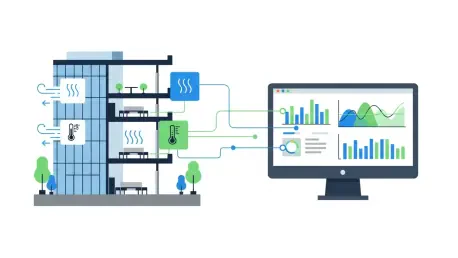
A central innovation of the VEEM-ZEB model is its use of rule-based symbolic AI to deconstruct a building’s interior into distinct “task” and “ambient” environments. Rather than treating an entire room as a single climate zone, the system analyzes the localized air around individual workstations separately from the broader room’s atmosphere. This granular approach allows the AI to simultaneously evaluate the often-competing metrics of overall energy consumption and localized thermal comfort, a feat that was previously unachievable with conventional tools.
This detailed modeling capability is particularly crucial for simulating complex, energy-saving systems that have historically been difficult to integrate into early designs. By providing a clear picture of how microclimates behave within a larger space, the AI enables designers to optimize layouts and climate control strategies with a high degree of precision, ensuring that both energy and comfort goals are met.
Real-Time Performance Metrics and Simulation
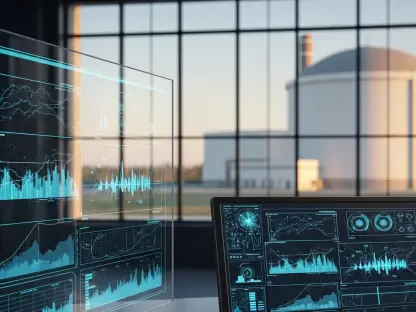
To provide quantifiable, evidence-based data, the model integrates industry-standard comfort indicators, including the Predicted Mean Vote (PMV) and Predicted Percentage of Dissatisfied (PPD). These metrics translate subjective feelings of comfort into objective data points, allowing designers to move beyond guesswork and make decisions based on reliable performance analytics. The system’s ability to run tens of thousands of scenarios based on variables like climate, occupancy, and occupant behavior is a testament to its robustness.
This high-throughput simulation capacity allows designers to confidently identify optimal configurations that balance various factors. By testing a building’s performance against diverse conditions, from seasonal weather changes to varying numbers of occupants, the model ensures that the final design is resilient and efficient. This data-driven process provides a strong foundation for creating buildings that perform as intended from day one.
Integrated Virtual Reality Interface for Intuitive Visualization
A key feature that makes the VEEM-ZEB model accessible is its integrated Virtual Reality interface. This component provides an intuitive and immediate visual representation of complex simulation data, translating abstract numbers into a tangible experience. Through the VR interface, architects and engineers can directly observe how design modifications affect critical factors like heat distribution, airflow patterns, and thermal comfort across a space.
This visualization tool fundamentally changes the design process by making the consequences of decisions instantly apparent. It allows stakeholders to understand trade-offs more clearly and fosters more effective collaboration between different disciplines. By seeing the direct impact of a change, teams can make more informed choices, leading to more refined and successful building designs.
Shifting Complex Analysis to the Early Design Phase
The VEEM-ZEB model exemplifies a broader industry trend of moving complex system analysis from the post-construction phase into the initial design stage. This “front-loading” of evaluation allows for the identification and correction of potential inefficiencies at the earliest possible moment, when modifications are least costly and most impactful. This proactive approach de-risks projects and prevents the common scenario where performance issues are only discovered after a building is operational.
By embedding sophisticated analysis directly into the blueprinting process, this technology fosters a more integrated and holistic approach to building design. It encourages a deeper understanding of the relationships between architectural form, material selection, and system performance. The result is buildings that are not just assemblies of efficient components but are cohesively designed systems optimized for both energy savings and human well-being.
Real-World Applications in Zero-Energy Building Design
The primary application of this technology lies in the design of zero-energy buildings, where the balance between low energy consumption and high occupant comfort is paramount. The model proves particularly valuable in optimizing Task-Ambience Air Conditioning (TAAC) systems, which use microclimates to deliver personalized comfort while significantly reducing overall energy use. The complexity of TAAC has traditionally made it difficult to model effectively during the planning phase.
The VEEM-ZEB digital twin empowers architects to overcome this hurdle by allowing them to test and compare various TAAC layouts and control strategies in a virtual environment. They can simulate different occupant densities and work patterns to find the ideal configuration that minimizes energy consumption without compromising comfort. This capability transforms a highly efficient but challenging technology into a viable and predictable solution for modern sustainable architecture.
Addressing Critical Challenges in Sustainable Architecture
The VEEM-ZEB digital twin is specifically engineered to solve some of the most persistent problems hindering the widespread adoption of advanced, energy-efficient building technologies. It directly confronts the technical hurdles and limitations of current practices, which often force designers to rely on outdated methods and assumptions when working with innovative systems. By providing a practical and data-driven platform, it bridges the gap between ambition and execution in sustainable design.
Overcoming the Limitations of Static Simulation Tools
A significant challenge addressed by this technology is the inadequacy of traditional design software, which largely relies on static simulations. These tools lack the ability to provide dynamic, real-time feedback as a design evolves, leaving architects without a clear understanding of how their choices impact energy performance and comfort levels. This disconnect often leads to designs that are less efficient than anticipated.
The VEEM-ZEB model confronts this limitation by creating a living simulation that responds instantly to changes. This dynamic feedback loop allows designers to experiment freely, explore novel solutions, and gain an intuitive grasp of the complex physics governing their designs. It transforms the design process from a linear progression into an iterative cycle of refinement and optimization.
Simplifying the Complexity of Advanced HVAC Systems
The model provides a practical and effective method to test, compare, and validate the performance of sophisticated systems like TAAC during the planning stage. Historically, the absence of such a tool has forced engineers to rely on estimations and best-guess scenarios, introducing a significant element of risk and uncertainty into projects. This has been a major barrier to the adoption of more advanced and efficient HVAC solutions.
By offering a data-driven foundation for system selection and configuration, the digital twin removes this reliance on assumption. It provides concrete evidence to support design decisions, giving architects and clients the confidence to invest in cutting-edge technologies. This capability is essential for unlocking the full potential of advanced HVAC systems and advancing the state of the art in sustainable building design.
Future Outlook and Potential for Widespread Adoption
The trajectory for this technology points toward its integration as an indispensable decision-support system in everyday architectural practice. As the demand for verifiably sustainable buildings grows, tools that provide clear, data-driven insights will become standard. The VEEM-ZEB model is well-positioned to become a cornerstone of this new design workflow, enabling firms of all sizes to tackle the complexities of zero-energy building design with greater confidence and creativity.
Future developments could see the integration of additional building systems, such as lighting, water management, and structural analysis, into the digital twin platform. This would create an even more comprehensive simulation environment, allowing for holistic optimization across all aspects of a building’s performance. In the long term, such technologies are poised to have a profound and lasting impact on sustainable architecture, fundamentally changing how buildings are conceived, designed, and constructed.
Conclusion: A Definitive Step Toward Intelligent Building Design
The development of the VEEM-ZEB model marks a definitive step forward in the evolution of intelligent building design. It offers a powerful and practical solution to the long-standing challenge of balancing energy efficiency with occupant well-being. By shifting complex analysis to the front end of the design process and providing intuitive, real-time feedback, the technology empowers architects and engineers to create a new generation of zero-energy buildings. Its current state demonstrates that it is more than a theoretical concept; it is a robust tool poised to facilitate buildings that are intelligently optimized for both planetary health and human experience.