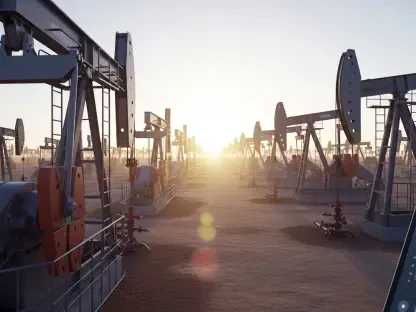

The transition from volatile combustion-based energy to the stabilized precision of lithium-ion technology is no longer a distant industrial goal but a present-day reality transforming the backbone of our infrastructure. As modern society grapples with an increasingly erratic climate and an aging electrical grid, the reliance on diesel generators—long the gold standard for emergency power—is rapidly eroding. This shift is driven by a fundamental realization that mechanical systems, while once sufficient, lack the responsiveness and intelligence required for the high-efficiency demands of the late 2020s.
Evolution of Energy Storage: From Combustion to Battery Systems
The move away from traditional diesel backup generators represents a critical pivot toward operational autonomy and environmental responsibility. For decades, municipal and residential sectors accepted the loud, vibrating, and polluting nature of combustion engines as a necessary evil for security. However, the rise of advanced battery energy storage systems (BESS) has introduced a paradigm shift where power is not just generated on-demand but curated and managed. This transition is less about replacing a fuel source and more about modernizing the philosophy of power.
Modern BESS units function as the “brain” of local infrastructure, offering a silent and automated alternative that requires a fraction of the maintenance associated with mechanical engines. While a generator requires physical fuel delivery and frequent oil changes, a lithium-ion setup integrates directly into the digital landscape, providing instantaneous response times. This evolution reflects a broader technological trajectory where simplicity and reliability are prioritized over the raw, unrefined output of fossil fuels.
Technical Capabilities and System Integration
High Inrush Management and Operational Longevity
One of the most significant technical hurdles for battery systems has been managing the “inrush” current—the massive surge of electricity required to jumpstart heavy industrial machinery like water pumps or HVAC systems. Advanced battery architectures now utilize sophisticated power electronics to buffer these spikes, ensuring that the initial load does not trip the system or degrade the cells. This capability allows for a seamless transition from grid power to battery storage without the flickering or momentary outages common in older setups.
Beyond the initial surge, the longevity of these systems under continuous load has reached a level of maturity that challenges traditional expectations. By carefully managing discharge depths and thermal conditions, modern high-capacity units can sustain critical operations for days. This reliability is not just about the chemistry inside the cells; it is about the engineering of the discharge curves, ensuring that power remains consistent even as the stored energy begins to deplete.
Hybrid Integration and Tertiary Backups
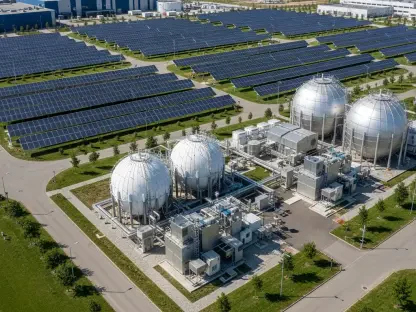
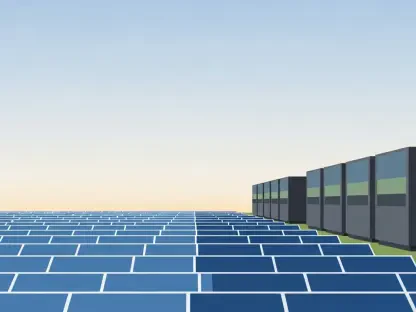
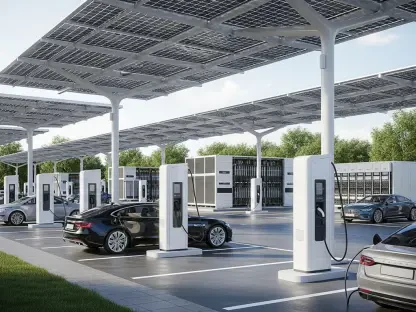
The modern energy landscape rarely relies on a single source of power, favoring instead a “solar-first” strategy that blends various inputs for maximum resilience. In this architecture, battery storage acts as the central hub, absorbing excess energy from solar photovoltaics during the day and discharging it when the sun sets. This synergy reduces the reliance on the external grid, allowing facilities to operate in an “islanded” mode during regional emergencies.
In high-stakes environments, combustion engines have been relegated to a tertiary role, serving only as a final fail-safe. If solar production is hampered by extreme weather or prolonged cloud cover, a gas-grid generator can engage briefly to top off the batteries. This hybrid approach ensures that the generator runs only at its peak efficiency point, significantly reducing wear and tear while extending the overall survival window of the facility during a prolonged blackout.
Intelligent Control Systems and Automation
What truly differentiates 2026-era storage from its predecessors is the level of automation embedded in the control frameworks. These systems utilize predictive algorithms to switch between power sources based on real-time pricing, weather forecasts, and historical usage patterns. This intelligence removes the need for manual intervention, which was a significant point of failure in older emergency protocols.
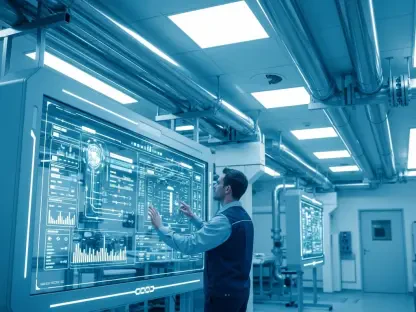
Remote monitoring has transformed from a luxury feature into a core requirement for utility-scale deployments. Operators can now oversee an entire network of distributed batteries from a single dashboard, identifying potential cell degradation or thermal issues before they lead to a system failure. This level of oversight reduces the labor costs associated with physical inspections and ensures that the system is always ready to perform when the grid goes dark.
Financial Incentives and Economic Viability
The economic argument for advanced storage has been bolstered by significant federal policy shifts, such as the Inflation Reduction Act. These initiatives provide substantial tax credits for domestic content, effectively slashing the initial capital expenditure for municipal and industrial projects. By lowering the entry barrier, these incentives have accelerated the adoption of technology that was previously considered cost-prohibitive for smaller districts.
When examining the long-term return on investment, the savings extend far beyond the initial purchase price. By eliminating the logistics of fuel management—ordering, storing, and testing diesel—operators can redirect millions of dollars toward other infrastructure needs. Furthermore, the 20-year lifespan of modern lithium systems provides a predictable cost structure that is immune to the volatility of global oil prices, making them a stabilizing force for municipal budgets.
Real-World Applications in Infrastructure and Housing
In practical application, these systems are proving their worth in the most demanding environments, such as municipal wastewater pumping stations. These facilities are critical for public health, and the transition to high-capacity lithium-ion setups has provided a level of reliability that diesel simply could not match. Case studies show that battery systems can maintain pump operations for up to 90 hours, providing a massive buffer for repair crews during major storms.
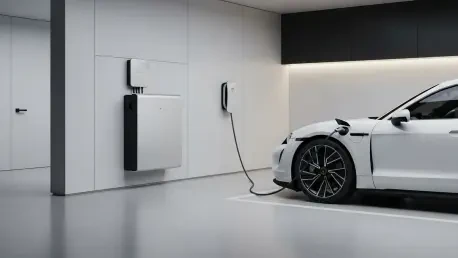
The utility of these systems is equally evident in wildfire-prone regions, where water districts must maintain pressure even when the grid is de-energized to prevent further fires. Similarly, in the residential sector, homeowners are moving away from loud, polluting backups in favor of integrated solar-battery-generator setups. These residential microgrids allow for a quiet, fuel-efficient lifestyle during outages, proving that energy resilience is becoming a standard feature of modern American housing.
Implementation Challenges and Technical Hurdles
Despite the rapid progress, the technology is not without its limitations. The initial cost of entry, though mitigated by subsidies, remains a hurdle for organizations without immediate access to capital. Additionally, the reliance on lithium-ion chemistry means that performance can be affected by extreme temperatures if thermal management systems are not properly maintained. Safety also remains a paramount concern, as high-capacity systems require specialized installation and fire suppression protocols.
Furthermore, total reliance on solar charging can be problematic during prolonged periods of low sunlight or heavy atmospheric obstruction, such as smoke from distant fires. In these scenarios, the battery is only as good as its last charge, reinforcing the need for the hybrid models previously discussed. Balancing these technical realities with the desire for a “zero-emission” footprint requires careful engineering and a realistic assessment of local environmental risks.
Future Outlook and Technological Trajectory
The trajectory of energy storage points toward a complete decoupling from the centralized grid. As battery chemistry continues to improve—with solid-state and flow batteries on the horizon—the energy density and safety profiles of these systems will only increase. This will lead to a decentralized energy landscape where every building acts as a small power plant, contributing to the overall stability of the national grid rather than just drawing from it.
We are witnessing the beginning of the end for combustion-only backup systems. As the infrastructure for renewable microgrids becomes more robust, the necessity for a tertiary gas backup will likely fade, replaced by even larger and more efficient storage arrays. This shift will fundamentally change how we design our cities and homes, placing energy independence at the forefront of urban planning.
Conclusion: The New Standard for Energy Resilience
The review of advanced battery storage confirmed that the era of “dumb” backup power ended as the integration of intelligent, high-capacity lithium systems became the industry benchmark. The transition demonstrated that modern energy needs require more than just a motor and a fuel tank; they demand a sophisticated, automated response capable of managing complex loads and fluctuating inputs. This shift away from mechanical reliance significantly improved the reliability of critical infrastructure while simultaneously lowering long-term operational costs for both municipalities and private homeowners.
Moving forward, the focus must shift toward optimizing the life-cycle management of these systems and expanding the domestic supply chain for battery components. Stakeholders should prioritize the implementation of hybrid architectures that maximize solar utilization, ensuring that energy resilience is not dependent on a single failure point. As these technologies matured, they provided a definitive solution for a more stable and autonomous energy future, effectively setting a new standard for how society powers its most vital services.