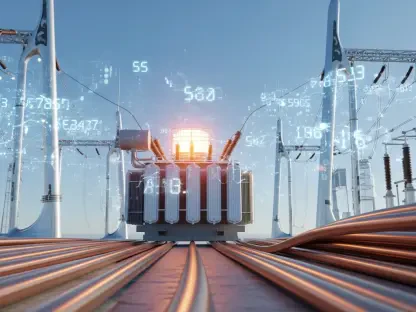

The global push toward renewable energy consistently confronts a fundamental challenge: the sun does not shine at night, and clouds can obscure it during the day, creating an inherent mismatch between when solar power is generated and when it is most needed. This intermittency has long been the Achilles’ heel of solar adoption, necessitating complex and often costly battery storage systems to bridge the gap between energy production and consumption. While separate battery banks have served as a functional, if imperfect, solution, researchers have been tirelessly pursuing a more elegant and integrated alternative. A recent development in energy science now points toward a future where the acts of capturing and storing solar energy are no longer two distinct steps but a single, seamless process, potentially rewriting the rules for how we harness the power of the sun and paving the way for a more reliable and efficient clean energy grid. This innovation, while still in its nascent stages, represents a significant leap in our thinking about energy storage.
The Dawn of Direct Solar Storage
Unveiling Solar Redox Flow Batteries
The emerging technology at the heart of this new energy paradigm is the solar redox flow battery, or SRFB, a device that fundamentally reimagines the relationship between sunlight and storable power. Unlike the ubiquitous photovoltaic panels that convert sunlight into electricity, which must then be used immediately or channeled into a separate battery, SRFBs perform a dual function. They employ a sophisticated photochemical process to convert solar energy directly into chemical energy, which is then stored within the battery’s liquid electrolyte. This direct-to-storage pathway eliminates the energy loss and complexity associated with transferring power from a panel to a conventional battery system. By integrating the capture and storage mechanisms into a single device, SRFBs offer a streamlined and potentially more efficient method for managing solar resources. This novel approach addresses the core issue of solar intermittency at its source, promising a future where stored solar power could be as readily available as the grid itself, transforming our ability to rely on clean energy around the clock.
A Promising but Nascent Technology
While the concept of SRFBs holds immense potential, the technology remains in the early phases of development, with practical, widespread application still on the horizon. A team of scientists recently marked a significant milestone in this field, demonstrating a new SRFB device that achieved a solar-to-chemical energy conversion efficiency of 4.2%. Although this figure is modest compared to the efficiencies of modern photovoltaic panels, it represents a critical proof of concept and a substantial improvement in the performance of this specific technology. The researchers noted that this achievement clears a path for continued innovation in the solar-to-chemical energy conversion space. However, it also underscores the considerable research and engineering challenges that must be overcome before SRFBs can become a commercially viable option for homeowners or utility companies. The journey from this laboratory breakthrough to a market-ready product will require further advancements in material science, system design, and manufacturing scale, a process that will likely unfold over several years.
Empowering Homeowners in the Present
The Accessibility of Modern Solar Solutions
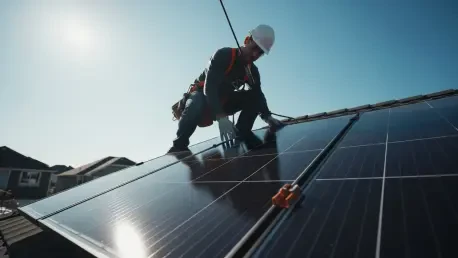
For consumers seeking to embrace clean energy today, the most effective and financially sound options remain the established technologies of rooftop solar panels and community solar programs. The landscape for residential solar has matured significantly, with a clear trend toward greater affordability and accessibility. Homeowners are no longer navigating an obscure market but can leverage a variety of services and programs designed to simplify the adoption process. Platforms that facilitate competitive bidding from pre-vetted, trusted installers have become invaluable tools, empowering consumers to compare offers and secure the best possible terms. This competitive environment has driven down costs substantially, with potential savings reaching upwards of $10,000 on a new system installation, depending on location and system size. This combination of technological maturity and market competition has effectively democratized solar power, making it a practical and attainable investment for a growing number of households looking to reduce their carbon footprint and gain control over their energy costs.
A Holistic Approach to Home Energy
Beyond the falling price of installation, financial innovations have further lowered the barrier to entry for residential solar. The availability of $0-down leasing and power purchase agreements allows homeowners to benefit from solar energy with no upfront capital investment. Under these arrangements, a third-party company owns and maintains the system, while the homeowner pays a fixed monthly rate for the power it generates, which is typically lower than their previous utility bill. This model provides immediate monthly savings and removes the long-term responsibilities of system ownership. To maximize these benefits, a holistic approach to home energy management is recommended. Pairing a solar installation with other high-efficiency electric appliances creates a powerful synergy. For instance, upgrading an aging HVAC system to an energy-efficient heat pump can dramatically reduce a home’s overall electricity consumption, allowing the solar panels to cover a larger percentage of the energy load and leading to even greater financial and environmental returns over the long term.
The Evolving Energy Landscape
The recent advancements in solar redox flow battery technology illuminated a clear, albeit distant, future for integrated energy solutions. Simultaneously, the present market for residential solar has solidified, offering accessible and financially viable pathways for homeowners. The journey from laboratory innovation to widespread consumer adoption was a long one, but the persistent progress in both cutting-edge research and the refinement of existing technologies demonstrated a collective and unwavering commitment to a sustainable energy future. The practical steps taken by homeowners to adopt mature solutions like rooftop panels and efficient home appliances created an immediate impact, while the pioneering work of scientists laid the groundwork for the transformative systems that would eventually redefine the grid. This dual-track evolution ensured that the momentum of the clean energy transition was not only maintained but consistently accelerated.