
The American electricity landscape is currently weathering a seismic shift as a once-stagnant utility sector transforms into a high-growth engine driven by industrial resurgence and digital expansion. This transition, often described as a load-growth supercycle, marks the first time in decades that the national power grid has faced a sustained surge in demand from multiple fronts simultaneously. From the rapid proliferation of artificial intelligence data centers to the massive reshoring of domestic manufacturing, the traditional infrastructure is being stretched to its physical and economic breaking point. Understanding this shift is vital because the cost of electricity is no longer just a utility concern; it has become a central pillar of the modern cost-of-living crisis, influencing everything from household budgets to the global competitiveness of American business.
The Historical Context of Utility Planning and the Current Cost Crisis
For the better part of the last half-century, the United States operated under a predictable “flat-demand” paradigm, where electricity consumption grew at a marginal pace that allowed for slow, steady infrastructure updates. This era of stability provided a sense of security for regulators and consumers alike, but that foundation has essentially vanished. In the current market, utilities are facing a deluge of rate cases, with requested increases for the 2026 fiscal year reaching levels nearly double what was seen only two years prior. This financial pressure is not an isolated event but a systemic reaction to a grid that was never designed for the rapid-fire interconnection of gigawatt-scale loads.
Historically, the utility business model has been built around “peak-driven planning,” a strategy that prioritizes the construction of massive, centralized assets to ensure reliability during the few hottest hours of summer or coldest hours of winter. While this ensured the lights stayed on during extreme weather, it resulted in a national grid that often remains 50% underutilized throughout the rest of the year. As large industrial players demand more power, the old method of passing the bill for these idle assets down to the average ratepayer is reaching a point of diminishing returns. The current crisis is therefore a clash between twentieth-century regulatory habits and twenty-first-century industrial requirements.
Rethinking Infrastructure through Smart Management and Innovation
The Limitations of the Conventional Gas-First Reflex
When sudden demand spikes occur, the instinctive reaction for many utilities is to propose the construction of new natural gas-fired power plants and high-voltage transmission corridors. While natural gas provides a reliable baseload, this “gas-first” reflex carries heavy economic and temporal baggage that the current market can ill afford. These projects are notorious for their long lead times, often taking the better part of a decade to move from the drawing board to full operation. Consequently, relying solely on new construction fails to address the immediate needs of the AI sector, which moves at a pace far exceeding the speed of traditional utility permitting.
Moreover, the multi-billion-dollar price tags associated with these centralized plants are typically recovered through broad rate hikes. This means that residential consumers often find themselves subsidizing the infrastructure required for massive corporate campuses. The inherent inefficiency of building for the “hottest hour” remains the primary flaw; it creates a cycle where more concrete and steel are poured to solve a problem that could be addressed through more sophisticated operational logic. Without a change in strategy, the pursuit of new generation alone will likely lead to a decade of sticker shock for the average American family.
Maximizing Existing Assets with Grid-Enhancing Technologies
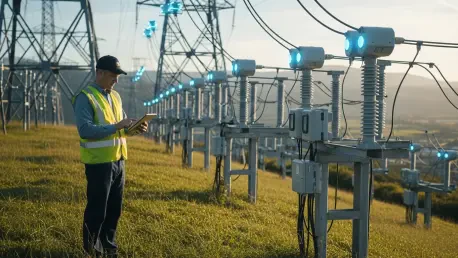
To bridge the widening gap between supply and demand without bankrupting the ratepayer, the focus is shifting toward Grid-Enhancing Technologies, or GETs. These innovations offer a way to squeeze more capacity out of the wires already hanging on poles across the country. By utilizing advanced conductors, power flow controls, and dynamic line ratings, utilities can adjust the capacity of a line in real-time based on environmental factors like wind speed and ambient temperature. This approach allows for a more granular and efficient use of the existing footprint, providing a much faster path to interconnection for new industrial customers than building a new corridor from scratch.
Regulators are increasingly viewing these technologies as a prerequisite for approving new capital spending. The logic is simple: a utility should be required to prove it is “using better” before it is allowed to “build more.” This shift in perspective transforms the grid from a static set of assets into a dynamic, responsive network. By unlocking the latent capacity within the current system, the energy sector can support significant industrial growth while deferring the massive costs of new transmission projects, thereby maintaining a semblance of price stability in an otherwise volatile market.
The Rise of Virtual Power Plants and Flexible Load
Another transformative element of the modern roadmap involves the integration of Virtual Power Plants, which aggregate decentralized resources to serve the grid. By coordinating smart thermostats, electric vehicle chargers, and home battery systems, utilities can create a “dispatchable” resource that rivals the capacity of a traditional peaker plant. Instead of firing up an expensive gas turbine for a few hours of high demand, the grid can essentially “buy back” power from consumers by incentivizing them to shift their usage. This distributed approach not only improves reliability but also keeps the financial benefits of grid management within the local community.
Furthermore, the industry is moving away from the rigid requirement that every new large-scale customer must have “fully firm” power at all times. By introducing flexible or interruptible service classes, utilities can connect data centers and factories much more quickly. In these arrangements, the customer agrees to reduce their load during times of extreme grid stress or provides their own onsite backup capacity. This flexibility reduces the immediate need for system-wide upgrades and allows for a more equitable distribution of the risks and rewards associated with rapid industrial expansion.
Emerging Trends Shaping the Future of the American Power Grid
The landscape is currently defined by a growing insistence that grid affordability be treated as a performance metric rather than an incidental outcome. One of the most significant trends is the push for “measurable and enforceable” utilization targets, where utilities must publicly report how efficiently they are using their substations and feeders. This level of transparency is designed to prevent “gold-plating,” a practice where utilities over-invest in infrastructure to maximize their guaranteed returns. As more states adopt these reporting requirements, the era of opaque utility planning is gradually coming to an end.
Additionally, the rise of “pro-fairness” tariffs is recalibrating how the costs of the energy transition are shared. New regulatory models are emerging that require large-load customers—those primarily responsible for the need for new substations and transmission lines—to pay a larger share of the upfront costs. This prevents a scenario where a local community sees their monthly bills soar to pay for a data center that employs only a handful of people. These trends suggest a future where the utility profit model is increasingly tied to operational efficiency and the successful integration of new technology rather than the mere volume of capital deployed.
Strategic Recommendations for Achieving Lasting Grid Stability
Navigating the complexities of the current supercycle requires a multi-pronged approach centered on optimization and equity. Policymakers must move to mandate that utilities integrate Virtual Power Plants and Grid-Enhancing Technologies into their long-term resource plans as primary options, not secondary considerations. This shift ensures that expensive, traditional builds are only authorized once all technological avenues for optimization have been exhausted. Furthermore, establishing clear, standardized metrics for grid utilization will provide regulators with the data needed to hold utilities accountable for the performance of their existing assets.
For large industrial energy users, the strategy must involve a commitment to “bring your own capacity” or accept flexible service terms. By investing in onsite storage or microgrids, these entities can mitigate their impact on the broader system and accelerate their own timelines for power access. On the consumer side, advocacy for modernized rate designs that protect small businesses and low-income households is essential. Organizations and professionals should stay engaged with local regulatory commissions to ensure that the drive for technological progress does not come at the cost of social equity.
Conclusion: Securing a Resilient and Affordable Energy Future
The analysis of the American power grid revealed that the traditional “build-first” mentality was no longer compatible with the speed and scale of modern electricity demand. Industry leaders recognized that the path to maintaining affordability required a fundamental shift toward maximizing existing infrastructure through advanced conductors and dynamic line ratings. It became clear that the integration of Virtual Power Plants allowed for a more responsive and cost-effective method of managing peak loads than the construction of idle standby plants. Furthermore, the implementation of pro-fairness tariffs ensured that the financial burden of industrial growth was distributed equitably, protecting residential ratepayers from undue strain. Ultimately, the transition focused on treating grid utilization as a measurable performance target, ensuring that every kilowatt of existing capacity was exhausted before new, expensive projects were authorized. This strategic pivot toward a management-focused model provided a viable blueprint for supporting economic expansion while safeguarding the financial health of American families.