
The global energy landscape underwent a seismic transformation this year, demonstrating with unprecedented clarity that the transition away from fossil fuels is not just a future possibility but a present-day reality unfolding at an accelerated pace. Across multiple sectors, from power generation to personal transportation, key milestones were reached that collectively signal a powerful and potentially irreversible shift toward a sustainable economy. These developments are not isolated incidents but interconnected trends, creating a positive feedback loop where advancements in renewable technology drive down costs, spur electric vehicle adoption, and ultimately reshape long-term climate projections for the better. The data from 2025 provides compelling evidence that the concerted efforts of the past decade have begun to yield substantial results, offering a narrative of progress in a field often dominated by dire warnings and moving the world onto a tangibly different trajectory.
1. A Turning Point for Fossil Fuels
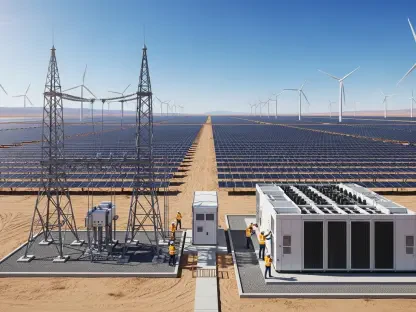
A landmark analysis of the global electricity sector revealed that for the first three quarters of the year, all new demand for power was met entirely by wind and solar energy. According to the energy consultancy Ember, this remarkable achievement effectively means that the growth of fossil fuels for electricity generation flatlined. As global electricity demand rose by 2.7%, or 603 terawatt-hours, renewable sources expanded to cover this increase and then some, leaving no room for new coal or natural gas power. This signals a potential turning point, suggesting that the world may have reached “peak fossil fuels” in the power sector. The implication is profound: if renewables can consistently meet all new growth in energy consumption, the gradual retirement of existing fossil fuel plants will lead to a definitive and sustained decline in emissions from electricity generation, which has historically been one of the largest sources of greenhouse gases. This shift redirects investment, restructures energy markets, and builds a powerful case for accelerating the clean energy transition.
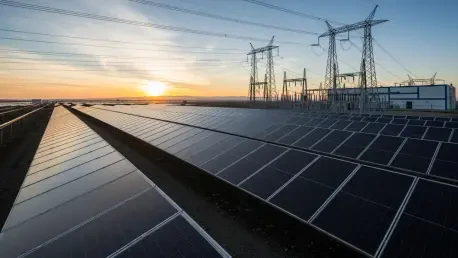
The engine behind this historic achievement was the unprecedented expansion of solar power, which saw its generating capacity surge by an astonishing 31% compared to the same period in 2024. In absolute terms, this translated to an increase of 498 terawatt-hours, a figure so large that the electricity produced by solar panels worldwide in the first nine months of this year surpassed the total for all of 2024. This exponential growth highlights solar’s journey from a niche technology to a dominant force in the global energy mix, driven by plummeting manufacturing costs and widespread policy support. Wind power also posted strong gains, with its generating capacity growing by 7.6%, or 137 terawatt-hours, a rate nearly three times that of the overall economy. Combined, the 603 terawatt-hours of new clean energy from wind and solar perfectly matched the world’s new electricity needs. This one-to-one replacement of new demand with renewables demonstrates that the technological and economic capacity to decarbonize the grid is now firmly in place.
2. The Electric Vehicle Revolution Accelerates
The transition to clean energy extended robustly into the transportation sector, as electric vehicles (EVs) claimed a remarkable 25% of all new car sales globally in 2025. This rapid adoption rate is reshaping the automotive industry and making a significant dent in the 12% of global carbon emissions attributed to road transport. The most dramatic shift occurred in China, the world’s largest car market, where nearly half of all new vehicles purchased were electric, encompassing both hybrid and pure battery-electric models. This incredible statistic underscores China’s role as a global leader in EV manufacturing and consumer adoption, propelled by strong government mandates, extensive charging infrastructure, and a competitive domestic market. The ripple effects of this boom are being felt worldwide, as it drives down battery costs, increases the variety of available EV models, and pressures legacy automakers to accelerate their own electrification strategies to remain competitive in a rapidly evolving market.
Furthermore, the narrative of EV adoption being confined to China, Europe, and the United States became outdated this year, as the trend expanded significantly into the Global South. Analysis from the Ember energy think tank highlighted that the EV revolution is now a truly global phenomenon, with developing nations playing an increasingly important role. This expansion is crucial for a comprehensive global climate strategy, as transportation needs and vehicle ownership are projected to grow substantially in these regions. The increasing availability of more affordable EV models, coupled with local policy initiatives aimed at reducing air pollution and oil dependency, has made electric mobility a viable option for a wider range of consumers. The broadening of the EV market beyond wealthy nations marks a critical step toward democratizing access to clean transportation and ensures that the benefits of reduced emissions and lower running costs are shared more equitably across the world.
3. Recalibrating Global Climate Projections
Reflecting the cumulative impact of these positive trends, the world’s long-term climate outlook saw a significant improvement. A decade of concerted policy action following the 2015 Paris Agreement on climate change has successfully bent the curve of projected global heating. Before this international milestone, the planet was on a devastating trajectory toward an average temperature increase of 3.5°C or more by 2100 compared to pre-industrial levels. However, based on the continuation of current policies, a recent United Nations assessment concluded that the world is now on a path toward 2.8°C of warming. While still far from the ideal target, this 0.7°C reduction in projected warming represents genuine and hard-won progress. It is a testament to the fact that global cooperation and national policies, however imperfect, can enact meaningful change on a planetary scale. This revised forecast should not be a cause for complacency but rather a powerful validation that the levers to control climate change are in hand and are already working.
The progress achieved in 2025 solidified a new foundation for climate action, proving that rapid, large-scale change was not only possible but already underway. Analysis indicated that if the world’s nations simply fulfilled their existing commitments under the Paris Agreement, known as Nationally Determined Contributions (NDCs), another half a degree of warming could be averted, bringing the projection down to 2.3°C. Yet this figure still remained well above the 1.5°C threshold that scientists identified as critical for avoiding the most catastrophic and irreversible climate impacts. The year’s successes in renewables and EVs were therefore not viewed as an endpoint but as a powerful demonstration of the world’s capacity to innovate and mobilize. They provided the essential momentum and validated the technologies needed to pursue the more aggressive policies required to close the remaining gap, turning a year of historic wins into a catalyst for the decisive decade of climate action that lay ahead.