
The End of An Era: Clean Energy Outpaces New Electricity Demand
The age of powering global growth with fossil fuels is reaching its end. In the first half of 2025, the world has passed a milestone: for the first time, the expansion of solar and wind generation surpassed all new global electricity demands. This isn’t a forecast, but a realized event that breaks the century-old link between economy and a carbon-intensive, environmentally damaging energy.
For decades, the equation remained a simple one. A growing economy requires more energy. That meant, until recently, burning coal, oil, and natural gas to keep the world running.
Today, that equation is broken. The data from early 2025 confirms that clean energy is mature and scalable enough to power global operations, limiting the potential of fossil fuel electricity.
And for many leaders across the energy sector, the conversation has widely shifted. The challenge is no longer about proving renewable viability but mastering the complex reality of a grid dominated by clean, variable power.
The Surge That Redefined Grid Perfection
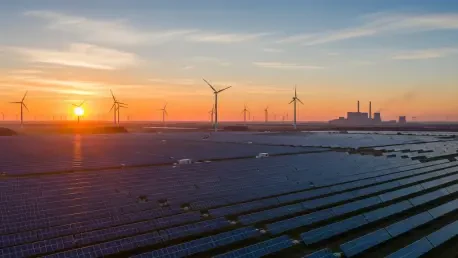
What drives this transformation? The record-breaking expansion of solar power in 2025. This sector advancement was transformative for the vision of a greener future. In just the first six months of 2025, solar generation surged by an astonishing 31%, adding 306 terawatt-hours (TWh) to the global grid. This increase alone was enough to meet most of the world’s new electricity demands, shifting solar opportunities from emerging technology to a significant source of sustainable generation, driven by falling costs and rapid deployment.
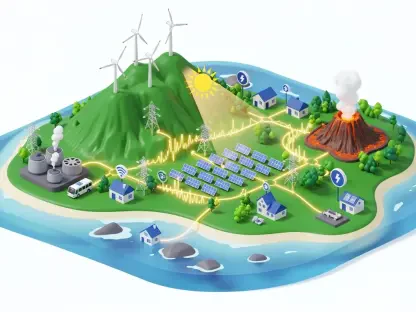
But while solar led the charge, wind energy also played a critical supporting role. Wind added an additional 137 TWh (+7.6%). Together, they supplied 635 TWh of new clean electricity, beating out the 603 TWh rise in demand (+2.7%). This created a surplus, allowing the power sector to begin actively displacing fossil fuels instead of just supplementing them. Additionally, the shift proves that a diversified renewable portfolio has the power to get ahead of demand growth, setting a new standard for a structural and amplified decline in emissions.
The Great Divergence: Why Asia Leads, The West Lags
Beneath the global trend lies a sharp regional divergence. China and India, two of the world’s largest energy consumers, drove a significant outcome. In both nations, the deployment of new clean power dramatically outpaced increases in electricity demand, a shift that enabled them to reduce their reliance on fossil fuels even while their economies continued to grow rapidly.
China’s performance is a particularly structural one. A massive, sustained industrial policy in solar and wind manufacturing has created a momentum that consistently beats demand. Through these advancements, China is demonstrating that emerging economies can successfully leapfrog traditional development pathways and lead global decarbonization goals.
As a stark contrast, fossil fuel generation increased in both the European Union and the United States. In the U.S., solar and wind projects failed to keep pace with rising electricity expectations, forcing utilities to rely on natural gas and coal in order to fill the gap. As such, it’s more clear than ever that the transition to a greener reality isn’t a linear one, containing persistent challenges driven by grid integration, permitting delays, and a constant need for a resilient energy mix.
Beyond Capacity: The New Bottlenecks Emerge
Achieving the renewable milestone comes with a new set of challenges that were once a secondary, distant afterthought. A central problem is no longer about being capable of generating clean energy; but related to delivering it reliably where and when it is needed.
The industry’s next frontier is defined and held back by three bottlenecks.
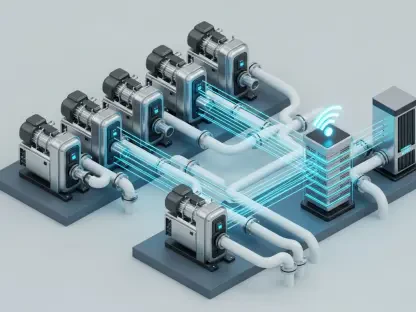
First, there’s the matter of grid modernization. Existing transmission and distribution networks were built for a centralized, one-way flow of power from large fossil fuel plants. They are ill-equipped for the distributed, intermittent, and two-way flows from renewable power sources. A faster and more efficient level of decarbonization must be enabled by an infrastructure upgrade that creates a smarter, flexible, future-focused grid.
Second, energy storage is becoming non-negotiable. The sun does not always shine, and the wind does not always blow. The consistency of production can be highly unpredictable, even more so in a time of climate change. Here’s a solution: deploying vast amounts of battery storage for short-duration needs and investing in long-duration technologies like pumped hydro or green hydrogen are essential to ensure grid stability and reliability. Without it, renewable curtailment will rise, and reliance on gas peaker plants will remain.
Finally and thirdly, supply chain resilience remains a constant concern. The transition relies on a massive increase in the mining and processing of critical minerals like copper, lithium, and cobalt. Geopolitical concentration of these supply chains presents significant risk. According to some analyses, demand for lithium could increase rapidly by 2030, with the number of GWh going from about 700 GWh in 2022 to around 4.7 TWh.
In Closing
2025 is a year that moves beyond just being a statistical achievement to signal a fundamental shift in how humanity powers its progress. For the first time, clean energy has proven it can do more than coexist with fossil fuels. It can outpace demand, bend emissions downward, and reshape the trajectory of global growth.
The global divergence highlighted in the past years also carries an important lesson. Clean energy leadership is not predetermined by wealth alone, but by policy clarity, industrial strategy, and long-term commitment. Nations that treat the energy transition as a structural transformation are already reaping economic and environmental benefits.
But the battle isn’t over. While enterprises can’t afford to lag behind on innovation, the era of fossil energy isn’t yet over. Demand might fluctuate and shift, putting providers into a tough spot: bet on a green-focused infrastructure and potentially lose an advantageous spot in today’s market, or cater to short-term goals and operate with prolonged emissions.
Ultimately, those that will succeed can find the best balance between what matters today and what comes next for the sector, marking the beginning of a new era: one where innovation, resilience, and sustainability define economic strength.