
Christopher Hailstone is a veteran in energy management and global infrastructure with a keen eye for how geopolitical shifts vibrate through international markets. As a leading expert on utilities and grid security, he has spent decades analyzing the intersection of state policy and resource reliability. Today, we sit down with him to decode the recent cooling of Brent crude prices, the delicate diplomatic dance occurring in Geneva, and the domestic pressures—both judicial and social—that are shaping the strategic maneuvers of both Washington and Tehran.
Brent crude recently hit a six-month high of $71 per barrel, with analysts identifying a significant risk premium embedded in the price. How do diplomatic announcements in Geneva specifically trigger these market pullbacks, and what metrics indicate whether this risk premium will permanently dissipate or suddenly return?
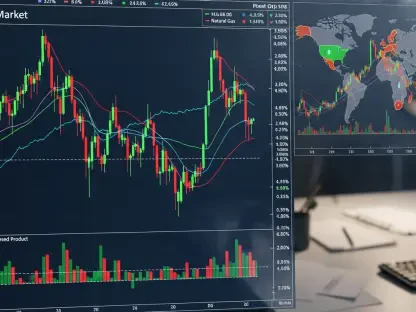
The energy market is essentially a nervous beast that feeds on uncertainty, and right now, we are seeing a “fear factor” that Goldman Sachs estimated at roughly $6 per barrel. When Brent surged to that $71 peak, it was reacting to the visceral threat of a direct military strike on Iranian soil, which could have thrown the entire region into a chaotic tailspin. The announcement of a third round of indirect talks in Geneva, mediated by Oman, acts as a cooling mechanism because it signals that both sides are still choosing the conference table over the cockpit. We saw a distinct sense of calm return when reports clarified that any potential U.S. strike would likely be limited to military or government sites rather than energy infrastructure, which lowered the immediate threat of a protracted conflict. For this premium to permanently dissipate, we would need to see a sustained move away from the “high alert” status we’ve endured for weeks, but as long as those military assets remain in striking distance, the market will keep that $6 cushion tucked away just in case.
Indirect negotiations are resuming in Geneva with Omani mediation to address disputes over uranium enrichment and nuclear intentions. What specific practical proposals could bridge the gap between U.S. demands and Iran’s civilian claims, and how does the nearby presence of a carrier strike group impact the leverage at the table?
The gap remains massive because the U.S. has maintained a rigid “zero enrichment” stance since withdrawing from the JCPOA in 2018, while Tehran insists its nuclear program is strictly for civilian power and medical research. To bridge this, the “practical proposals” mentioned by President Pezeshkian likely involve enhanced IAEA oversight or perhaps a cap on enrichment levels in exchange for the freezing of certain economic sanctions. However, the diplomatic atmosphere is heavy with the scent of jet fuel, especially with the USS Abraham Lincoln positioned just 150 miles off the coast of Oman in the Arabian Sea. The presence of a second carrier strike group is a blunt instrument of leverage designed to remind Iranian Foreign Minister Abbas Araghchi that while the U.S. is talking, it is also locked and loaded. It creates a high-stakes environment where one wrong move in Geneva could be met with an overwhelming kinetic response, making these “indirect” talks feel incredibly direct and urgent.
Renewed student protests are occurring in Tehran, following a history of significant casualties during previous government crackdowns. How does this domestic instability influence the Iranian leadership’s flexibility in international talks, and what are the specific risks to the diplomatic process if these internal clashes escalate further?
Domestic instability is a double-edged sword for the Iranian leadership; it can either force them to the table to seek sanction relief or cause them to retreat into a defensive, hardline shell. We cannot forget the staggering human cost of previous crackdowns, with the Human Rights Activists News Agency reporting at least 7,015 people killed, a tragedy that still haunts the streets of Tehran as students clash with pro-regime demonstrators. If these protests escalate, the Iranian government might feel compelled to project strength abroad to mask vulnerability at home, potentially hardening their stance against U.S. envoy Steve Witkoff. There is a real risk that the Supreme Leader, who has already blamed the U.S. for the unrest, might decide that a “diplomatic solution” looks too much like a surrender under pressure. This internal friction limits President Pezeshkian’s ability to offer concessions, as any move seen as “weak” could embolden the protesters or trigger a backlash from the regime’s own security apparatus.
Recent judicial rulings against executive trade policies and the constitutional requirement for Congressional approval create potential obstacles for unilateral military action. In what ways do these domestic legal setbacks limit the administration’s strategic options, and how might they shift the current focus toward economic or diplomatic alternatives?
The recent Supreme Court ruling, which found several sweeping tariffs to be illegal, has dealt a significant blow to the administration’s ability to use economic warfare as a unilateral tool. This legal setback suggests that the path to aggressive action is no longer seamless, forcing the executive branch to navigate a much tighter corridor of power. Furthermore, with both Republicans and Democrats reminding the White House that the U.S. Constitution gives Congress the sole power to declare war, the “military option” becomes a much harder sell for anything beyond a very limited strike. These legal and constitutional “checks” essentially act as a drag on the administration’s momentum, making diplomatic channels like the Omani mediation more attractive by default. When the “big stick” of military action or illegal tariffs is trimmed by the courts and Congress, the administration has to rely more heavily on the “carrot” of negotiations and legitimate international trade policy.
What is your forecast for U.S.–Iran relations?
I expect we will see a period of “managed tension” rather than a definitive breakthrough or a full-scale war in the immediate future. While Iranian officials have spent considerable time on American news networks like MS Now’s Morning Joe to signal they are “prepared to talk,” there is still quite a lot of gap between the two sides on the fundamental issue of uranium enrichment. The fact that Iran is “still working on” a proposal suggests they are stalling for time while they gauge the true extent of U.S. military resolve. We should look for a “draft-heavy” diplomatic cycle where small, incremental wins—perhaps around humanitarian aid or minor sanction waivers—are used to prevent the current friction from igniting. Ultimately, the presence of those carrier groups and the memory of the 7,015 lives lost in domestic protests will keep both administrations extremely cautious, leading to a stalemate that keeps oil prices volatile but prevents a total regional collapse.