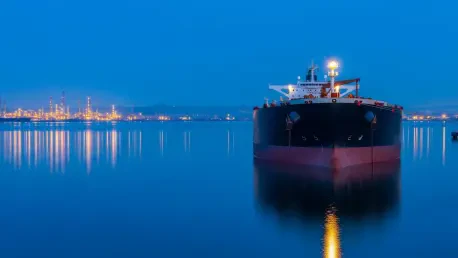

The global economy is currently balanced on a knife-edge as military tensions between the United States, Israel, and Iran threaten to dismantle international energy security. This volatile geopolitical environment has placed the Strait of Hormuz at the center of a potential financial catastrophe, given that this narrow maritime passage facilitates the transit of approximately one-fifth of the world’s total oil supply. With the waterway effectively paralyzed by escalating military engagement, the international community is facing a transformative shock that could redefine the global financial landscape in a matter of weeks. Current assessments suggest that the window for a managed recovery is closing rapidly, as the physical absence of crude oil begins to outweigh the speculative maneuvers of paper markets. This is not merely a regional skirmish but a fundamental challenge to the global supply chain, forcing a reckoning between optimistic political rhetoric and the harsh, immutable realities of energy logistics and maritime safety.
This blockade is a logistical nightmare that is rippling across every continent with increasing speed and severity. While land-based pipelines offer some secondary routes for crude, they lack the mechanical capacity to replicate the massive volumes typically carried by ultra-large crude carriers. Energy shortages that initially paralyzed distribution hubs in South Asia have already migrated through Southeast and Northeast Asia and are expected to hit European markets with full force by early April. This progression signals a definitive shift from a localized logistics issue to a systemic global supply emergency that threatens to halt industrial production in the West. As shipping companies reroute vessels around the Cape of Good Hope, the added transit time and insurance premiums are driving up the landed cost of every barrel. This delay effectively removes millions of barrels from the immediate supply pool, creating a vacuum that storage facilities at the destination ports are increasingly unable to fill, leading to a visible deterioration of regional energy stability.
A deceptive calm currently exists in some financial markets because of a widening gap between “paper” oil prices and physical reality. While futures contracts are being held down by White House rhetoric and optimistic “jawboning” intended to prevent consumer panic, the price for actual, immediate delivery is skyrocketing to unprecedented levels. This disconnect suggests that while stock investors are hoping for a best-case scenario fueled by diplomatic breakthroughs, the companies actually moving and refining crude are paying a massive premium for a resource that is becoming physically scarce. Refiners in the Mediterranean and the Pacific Rim are reporting that the “Dubai” physical benchmark is trading at a significant premium over Brent futures, a technical indicator known as backwardation that signals extreme immediate demand. This market fragmentation creates a dangerous blind spot for general investors, who may be caught off guard when the true cost of energy finally filters through the supply chain and manifests as a sharp correction in corporate earnings and consumer spending power.
The Mechanics of the Impending Oil Cliff
To prevent an immediate collapse, the U.S. government has deployed aggressive stopgap measures, including the largest strategic reserve release in history and temporary sanction waivers on rival producers. However, these interventions have an incredibly short shelf life and are described by experts as temporary buffers rather than permanent structural solutions. Analysts warn that by mid-April, specifically around the April 19 threshold, these reserves will lose their effectiveness as the physical volume of oil available for release dwindles. This creates a looming “oil cliff” where the global supply deficit could double from its current level of five million barrels per day. Once the strategic buffers are exhausted, the market will be forced to find an equilibrium based solely on current production and interrupted shipping lanes. This transition is expected to be violent, as the sudden withdrawal of government-subsidized supply leaves a hole that cannot be filled by simply increasing production elsewhere, given the long lead times required for the activation of mothballed wells or the construction of new infrastructure.
The crisis is expanding far beyond the gas pump, infecting the broader commodity market and high-tech industrial supply chains. Liquified Natural Gas prices in major Asian markets have surged by nearly 50%, forcing power utilities to reconsider load-shedding protocols that could impact manufacturing output. Simultaneously, the costs of jet fuel and specialized materials like helium, which is vital for semiconductor fabrication and medical imaging, are spiraling out of control. This energy-driven inflation is dragging down major stock indices, as the reality of a physical supply crunch begins to outweigh political promises of a quick diplomatic or military resolution. When energy prices rise this sharply, they act as a regressive tax on both households and corporations, stripping away discretionary income and capital expenditure budgets. The ripple effects are already being seen in the automotive and aerospace sectors, where production schedules are being revised downward due to the soaring costs of energy-intensive raw materials like aluminum and high-grade steel.
Global financial stability is further threatened by rising bond yields, with the 10-year Treasury note climbing to levels that signal long-term inflationary pressure. This shift likely forces central banks to abandon planned interest rate cuts, which in turn increases borrowing costs for businesses and consumers alike. As the cost of capital rises alongside the cost of energy, the risk of a sustained global recession becomes an increasingly likely outcome for the remainder of the current year. Financial institutions are now repricing risk, assuming that the era of cheap energy and low interest rates has ended abruptly. This tightening of credit conditions, occurring simultaneously with a supply-side shock, creates a “pincer movement” on the economy that historically precedes deep contractions. Investors are increasingly seeking shelter in defensive assets, but even these are not immune to the gravitational pull of a potential energy-induced downturn. The interplay between energy scarcity and monetary policy is now the primary driver of market volatility, overshadowing traditional corporate performance metrics.
Military Strategy and Industrial Realities
The current administration is banking on a strategy of heavy military pressure to resolve the crisis and restore market confidence. By deploying additional carrier strike groups and preparing for potential strikes on Iranian energy infrastructure, officials hope to force the reopening of the Strait of Hormuz through sheer diplomatic and kinetic leverage. The official view is that these maneuvers, coupled with temporary boosts in exports from other regions such as Russia or the North Sea, will provide enough breathing room to stabilize the global economy. This high-stakes gamble assumes that the opposing side will de-escalate when faced with overwhelming force, rather than engaging in asymmetric warfare that could further damage energy infrastructure. Military planners are focused on securing the shipping lanes, but the mere presence of warships does not necessarily guarantee the safety of civilian tankers. Insurance underwriters remain hesitant to cover vessels entering the region, effectively keeping the blockade in place despite the presence of naval protection, which complicates the White House’s attempts to restore normalcy.
Despite this political optimism, the energy industry remains profoundly skeptical of a quick fix or a seamless return to pre-conflict production levels. Oil executives point out that even if the conflict ended today, the damage to global production cycles is already substantial and cannot be reversed by a simple ceasefire. Because producers have limited storage for oil that cannot be shipped through the Strait, many have been forced to “shut in” their wells to prevent environmental hazards or mechanical damage. Industry leaders warn that it could take several months to return to full production capacity once the physical blockades are finally removed and the wells are safely restarted. Furthermore, the specialized workforce and equipment needed to repair damaged platforms or refineries are currently unable to enter the conflict zone, suggesting that the “tail” of this supply disruption will be much longer than politicians are willing to admit. This industrial reality creates a floor for oil prices that will likely persist well after the headlines of military engagement have faded from the daily news cycle.
The coming weeks represent a high-stakes race against time that will determine the trajectory of the global economy for years to come. If the Strait of Hormuz remains closed past the mid-April threshold, the world will likely face a supply shock of unprecedented proportions that no amount of rhetoric can mask. The growing divide between optimistic military strategy and the hard data of physical scarcity suggests that the global energy infrastructure is reaching a breaking point. To navigate this crisis, policymakers should prioritize the diversification of energy transport routes and accelerate the integration of alternative energy sources to reduce the strategic weight of a single maritime chokepoint. Businesses must prepare for a period of sustained volatility by stress-testing their supply chains against permanent high-cost energy scenarios. Ultimately, the resolution of this crisis will require a sober assessment of physical supply constraints rather than a reliance on temporary financial maneuvers. The transition to a more resilient energy framework has become an urgent necessity rather than a long-term goal, as the current fragility of the global system has been laid bare by the events of the past few months.