
Assessing the Paradox of Market Calm in a Time of Conflict
The global energy market currently sits at a precarious crossroads where the threat of immediate military action must contend with robust supply-and-demand fundamentals. In the early weeks of the year, the international community is watching a high-stakes standoff between the United States and Iran, a situation that historically would trigger a massive surge in crude prices. However, the current landscape reveals a surprising degree of resilience that defies traditional expectations of volatility. This analysis explores the delicate equilibrium maintaining oil price stability, examining why the “war premium” has not yet led to a price explosion and what the coming weeks may hold for global economies. Readers can expect an in-depth look at how military posturing, strategic stockpiling, and domestic political pressures are currently outweighing the fear of immediate supply disruptions.
Historical Context and the Evolution of Geopolitical Risk
To understand the current state of the market, one must look at the long-standing friction between Washington and Tehran, which has frequently dictated the rhythm of global energy costs. Historically, any threat to the Strait of Hormuz—a vital chokepoint for a fifth of the world’s oil—was enough to send Brent and West Texas Intermediate (WTI) into a dramatic tailspin. However, the landscape has shifted significantly over the last several years. The rise of American shale production and more diversified global supply chains have fundamentally altered the market’s sensitivity to Middle Eastern volatility.
These past developments have created a “buffer” mindset among traders, where foundational concepts of supply now compete more aggressively with geopolitical headlines. Understanding this history is vital because it explains why today’s market reacts with cautious observation rather than immediate panic. The institutional memory of past price spikes has led to more sophisticated hedging strategies, allowing the market to absorb shocks that would have been catastrophic a decade ago. Consequently, the threshold for a true price breakout has moved significantly higher, requiring more than just rhetoric to rattle seasoned investors.
The Friction Between Diplomacy and Deterrence
The Failure of Swiss Talks and the Trump Ultimatum
A critical aspect of the current tension is the recent collapse of diplomatic efforts in Switzerland. While there was initial hope for a breakthrough regarding Iran’s nuclear program, the U.S. administration quickly pivoted to a more hawkish stance, claiming Tehran failed to address core security concerns. President Trump has since established a strict 10-to-15-day timeline for a resolution, effectively utilizing “deadline diplomacy” to force concessions. This ultimatum introduces a specific window of risk that adds depth to market calculations, as analysts must now weigh the probability of a limited military strike against the possibility of a last-minute diplomatic pivot. The challenge for the market is pricing in this binary outcome—war or peace—within a very narrow timeframe.
Military Posturing and the Strait of Hormuz
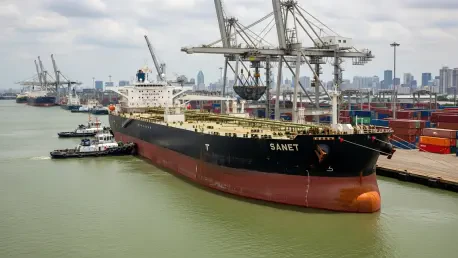
Building upon the diplomatic stalemate, the physical manifestation of these threats has become impossible to ignore. The U.S. has significantly increased its naval and aerial presence in the Middle East, while Iran has responded with aggressive military drills in the Strait of Hormuz. These exercises, which included joint maneuvers with Russia in the Gulf of Oman, serve as a clear signal of Iran’s intent to defend its interests decisively. This regional escalation creates a floor for oil prices, preventing them from dropping despite high global supply. The risk of a miscalculation during these high-tension drills remains a primary concern for commodity strategists, as any kinetic engagement could instantly disrupt maritime logistics and spike freight rates across the globe.
Supply Buffers and the Role of Chinese Stockpiling
Beyond the immediate military threats, several market-specific factors are adding complexity to the price equation. While the world is currently well supplied, the presence of Iranian tension is offset by unusual buying patterns from China. Beijing has engaged in significant stockpiling, absorbing excess global supply and preventing a surplus from dragging prices down toward lower supports. This overlooked aspect of the market provides a cushion; even if Middle Eastern flows are briefly interrupted, global inventories are currently robust. Experts suggest that this strategic hoarding, combined with high maritime freight costs, has created a temporary equilibrium where prices remain stable despite the looming threat of kinetic action on the geopolitical stage.
Emerging Trends and the Strategic Shift Toward Limited Engagement
As the market looks toward the immediate horizon, a significant trend is emerging: the preference for surgical, time-limited interventions over prolonged conflict. With the midterm elections approaching, the U.S. administration is highly sensitive to the domestic cost of living and gasoline prices at the pump. Consequently, any potential military action is predicted to target specific high-value assets, such as nuclear or ballistic missile facilities, rather than broad infrastructure. This limited strike strategy is an innovation in geopolitical risk management, aimed at projecting strength without triggering a long-term economic shock. Furthermore, the increasing integration of energy security with technological surveillance suggests that future conflicts may be managed with more precision, potentially minimizing their impact on global trade flows.
Strategic Implications for Global Stakeholders
The analysis of the current landscape offers several major takeaways for businesses and investors. First, the stability of oil prices is not a sign of indifference but a calculated bet that any upcoming conflict will be brief. For professionals in the energy and logistics sectors, the best practice is to maintain a wait-and-see approach while hedging against short-term volatility. Actionable strategies include monitoring freight rate fluctuations and keeping a close eye on Chinese inventory levels, as these are more reliable indicators of price direction than political rhetoric alone. For consumers, the current stability suggests that while gasoline prices may remain elevated, a catastrophic spike is unlikely unless the conflict escalates beyond a limited scope.
Navigating a Landscape of Calculated Tension
The investigation into the energy sector revealed that the correlation between conflict and cost has become increasingly non-linear. Market participants moved away from reactive selling, instead favoring a model that accounted for diverse supply sources and strategic reserves. This shift proved that geopolitical tension no longer served as a guaranteed catalyst for sustained inflation in the energy sector. Stakeholders prioritized the observation of physical movement over verbal threats, which resulted in a more tempered pricing environment. Ultimately, the stability observed during this period of high-stakes diplomacy redefined how global markets valued security in an era of abundant, yet contested, resources. Industry leaders focused on long-term infrastructure resilience, ensuring that the economy remained insulated from the immediate volatility of a single geographic region.