
The global energy landscape is currently grappling with a jarring paradox where crude oil futures have climbed to heights not seen since the summer of 2022 despite high-level efforts to stabilize the Middle East through direct negotiations. While diplomatic channels between Washington and Tehran have recently produced a ten-day extension for the opening of the Strait of Hormuz and a temporary pause on infrastructure strikes, the financial markets remain unconvinced of any lasting peace. On Friday, West Texas Intermediate crude surged by over five percent to settle just under the one-hundred-dollar threshold, while the international benchmark Brent crude established a firm position above one hundred and twelve dollars. This volatility persists because investors are weighing the optimistic rhetoric coming from the executive branch against the harsh physical realities of energy logistics. Although official statements characterized the recent passage of ten tankers as a symbolic gesture of goodwill, the broader energy sector interpreted these individual events as insufficient to offset the profound structural risks.
Contradictions in Regional Shipping and Security
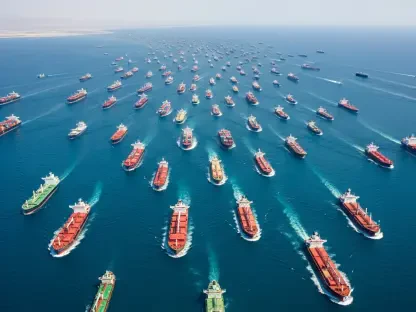
The primary cause for skepticism within the global trading community stems from the stark contrast between political announcements and the actual conditions faced by commercial vessels. A pivotal moment occurred when COSCO, the massive state-owned Chinese shipping enterprise, attempted to navigate through the Strait of Hormuz only to be forced into a retreat despite China’s long-standing diplomatic ties with the regional power. This failure marks a significant escalation in regional uncertainty, as it represents the first instance where a major global carrier was unable to secure safe passage through the waterway since the current tensions began. If a vessel representing a strategic ally of the region cannot ensure safe transit, the insurance and risk profiles for neutral western tankers become nearly impossible to manage. Consequently, the maritime industry has largely discounted the political gifts mentioned in official briefings, choosing instead to focus on the tangible inability of the most prominent logistics providers to maintain their scheduled routes.
Beyond the immediate physical blockages, the persistent threat of renewed hostilities has created a risk premium that refuses to dissipate regardless of how many temporary extensions are granted. Shipping companies are increasingly reluctant to commit their fleets to a region where a ten-day window of safety can be revoked at any moment, leading to a massive rerouting of global supply chains. This shift has forced cargo to take much longer, more expensive paths around the Cape of Good Hope, adding significant fuel costs and delaying the delivery of millions of barrels to critical markets in Europe and Asia. The financial burden of these logistical workarounds is being directly passed on to consumers, further cementing high prices even when the guns are momentarily silent. Until a permanent and verifiable maritime security framework is established, the market will likely treat any diplomatic progress as a fragile pause rather than a genuine resolution. This cautious approach by shippers ensures that the supply side remains constrained, keeping prices elevated despite the veneer of political success.
Depletion of Global Energy Reserves and Future Outlook
Market analysts from Rystad Energy have pointed out that the global energy system has undergone a fundamental transformation, moving from a well-buffered state to one of extreme fragility. During the early stages of the current crisis, the impact on prices was somewhat mitigated by a surplus of crude-on-water and high levels of commercial inventory that had been built up throughout the prior year. However, weeks of sustained supply losses have effectively drained these reserves, leaving the global economy with almost no margin for error in the event of further disruptions. Current estimates suggest that nearly 17.8 million barrels per day have been impacted by the ongoing instability, resulting in a cumulative loss of approximately 500 million barrels of liquid from the global supply chain. This massive inventory drawdown means that the system can no longer absorb even minor shocks, making the current high prices a reflection of a world that is running on a just-in-time delivery model with no remaining safety net.
The energy sector eventually realized that diplomatic gestures were insufficient to replace the physical security of global trade routes, leading to a strategic pivot toward long-term resilience. Policymakers and energy corporations shifted their focus toward accelerated investments in alternative energy infrastructure and the construction of new pipelines that bypassed traditional maritime chokepoints. This period proved that relying on temporary geopolitical truces offered no real protection against systemic supply shocks, prompting a renewed emphasis on rebuilding strategic petroleum reserves to levels seen before the current volatility. Financial institutions and energy traders adopted more sophisticated risk-modeling tools that prioritized real-time satellite tracking of vessel movements over political statements. By moving away from a dependence on a single waterway, the global market began to insulate itself from the erratic nature of regional conflicts. These actions provided a roadmap for future energy security, suggesting that the path to lower prices lay in structural diversification rather than hoping for the success of fragile negotiations.