
Christopher Hailstone is a leading voice in global energy management and utility infrastructure, renowned for his deep understanding of grid reliability and the complex geopolitical forces that drive oil markets. With years of experience navigating the technicalities of electricity delivery and energy security, he provides a critical lens through which we can view the current volatility in the Middle East. As prices fluctuate wildly between diplomatic hope and military reality, Hailstone joins us to break down the implications for global production and the strategic maneuvers required by today’s investors.
Brent crude recently dropped 11% to $99 before rebounding above $104. How do conflicting reports regarding negotiations between Washington and Tehran impact short-term trader sentiment, and what specific metrics should investors watch to determine if a de-escalation is genuine?
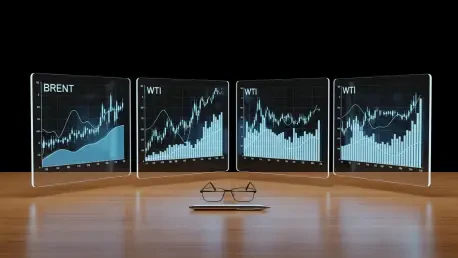
The immediate 11% drop we saw, which took Brent down to that $99 mark after it had been as high as $112, was a classic “buy the rumor” reaction to claims of a diplomatic breakthrough. When traders hear about “productive conversations” and a complete resolution of hostilities, they instinctively de-risk, but the subsequent rebound to $104.49 shows just how thin that optimism really is. To see if a de-escalation is actually taking root, investors need to look past social media headlines and monitor the official responses from Tehran, which has already denied these weekend negotiations took place. We also have to watch the physical price gap between Brent and West Texas Intermediate, which recently traded at $92.35, because that spread tells us exactly how much of a “war premium” is being baked into international versus domestic supply. Sentiment will remain erratic and jumpy as long as the market is forced to choose between official government statements and the reality of a denied dialogue.
With military strikes against Iranian energy infrastructure currently being postponed for a five-day window, what are the long-term risks to global production capacity?
A five-day postponement is essentially a blink of an eye in the world of energy infrastructure, leaving the market in a state of high-alert paralysis. If these military strikes eventually move forward against Iranian power plants and refineries, we aren’t just looking at a temporary dip in output; we are looking at the potential for multi-year recovery timelines. High-tech energy facilities require specialized components and precision engineering that cannot be replaced quickly, especially under the cloud of an extended conflict. The nervousness we see today stems from the fear that even a “limited” strike could permanently cripple regional capacity, forcing global markets to find alternatives for millions of barrels that simply don’t exist elsewhere. This looming threat keeps costs significantly higher than they were at the start of the year because the risk of a total infrastructure collapse is now a tangible part of the price equation.
The Strait of Hormuz traditionally handles 20% of global seaborne oil, yet flows have virtually stopped due to regional hostilities. If transit is permitted only for specific nations, how will this selective access reshape global shipping routes and transportation costs?
When you choke off a waterway that handles 20% of the world’s seaborne oil, the logistical shockwaves are felt in every corner of the globe. Tehran’s suggestion that they might permit “safe transit” for everyone except their “enemies” creates a fractured, two-tier shipping market that is a nightmare for insurers and logistics coordinators. Ships associated with “enemy” nations will be forced to take massive detours, likely around the Cape of Good Hope, which adds weeks to transit times and sends fuel and labor costs through the roof. This selective access also drives up insurance premiums for every vessel in the region, as the definition of an “enemy” can change overnight during an active conflict. Ultimately, even if some oil moves through the Strait, the added complexity and risk ensure that transportation costs remain a heavy burden on the final price of a barrel.
Market skepticism remains high even after official statements regarding a potential resolution of hostilities. What step-by-step strategy should energy-intensive businesses use to hedge against this volatility, and why might costs stay higher than early-year levels despite diplomatic progress?
Energy-intensive businesses can no longer afford to wait for a return to “normal” and must immediately look at locking in prices using futures contracts, even if they seem high relative to last year. A smart strategy involves layering in hedges—buying a portion of their needs at current Brent or WTI levels to protect against a sudden spike if the five-day window closes without a deal. Skepticism is the dominant force right now because the history of repeated attacks on critical energy infrastructure has shattered the market’s sense of security. Even if a diplomatic deal is signed tomorrow, the “fear premium” will linger because the physical vulnerability of these assets has been exposed. This underlying anxiety over capacity and transportation disruptions is exactly why costs are staying stubbornly higher than they were in January, regardless of what is said at the negotiating table.
What is your forecast for oil prices and Middle Eastern energy stability?
I expect Brent crude to remain highly volatile, likely oscillating in a wide band between $95 and $115 as the market reacts to every headline regarding the five-day strike postponement. True stability in the Middle East is unlikely in the short term, as the fundamental trust between the involved nations has eroded to the point where even “good news” is met with immediate denial. If the current pause in military action doesn’t transition into a verifiable, long-term treaty, we could see oil prices test new highs as the threat to the Strait of Hormuz remains the ultimate wild card. For now, the “wait and see” approach is dead; the market has already moved into a “protect and survive” phase where high prices are the new baseline.