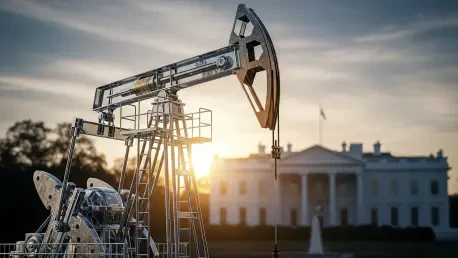

The geopolitical landscape shifted dramatically following the recent military operations aimed at removing Nicolás Maduro, yet the expected surge of private investment into the Venezuelan oil fields has failed to materialize as major energy corporations prioritize fiscal discipline over high-stakes political gambles. While the White House issued a massive $100 billion call to action to revitalize the nation’s crumbling energy sector, the response from global industry leaders remained notably lukewarm. Despite the promise of government-backed security and a clear path for American-led energy dominance, CEOs from TotalEnergies to Exxon Mobil signaled that the risks outweighed potential rewards. This friction highlighted a fundamental disconnect between a presidency focused on swift recovery and a corporate sector prioritizing environmental standards and financial stability.
A High-Stakes Collision: Geopolitical Ambition and Corporate Reality
The administration’s vision for a revitalized Venezuela required a massive infusion of private capital to restore a nation holding some of the world’s largest proven crude reserves. However, years of nationalization and systemic mismanagement left the industry in a state of decay that policy mandates could not fix. The tension lay in whether the government could convince cautious shareholders that a volatile transition was a safe bet for long-term growth.
Investors looked at the situation through a lens of risk management rather than national interest. While the political rhetoric emphasized energy security, the corporate world remained focused on the bottom line. This misalignment created a stalemate where the state’s desire for rapid production conflicted with the industry’s need for predictable returns.
The Fallout of Intervention: The Dream of an Energy Rebirth
Following the military operations, the administration framed the region as the next great frontier for global energy production. This strategy depended on enticing oil majors to return to fields they once abandoned. Yet, the physical reality of the infrastructure proved more daunting than the political landscape. Underinvestment resulted in a network of pipelines and refineries that required billions in repairs before a single barrel could be exported.
The challenge was compounded by the current corporate trend of prioritizing share buybacks and liquidating high-risk assets. For many boards of directors, the prospect of entering a post-conflict zone appeared to be a step backward into the volatility of previous decades. Consequently, the dream of an immediate energy rebirth faced the cold reality of modern financial cautiousness.
The Triple Threat: Infrastructure, Sulfur, and Sunken Costs
Oil majors did not merely avoid the region due to politics; they rejected the physical nature of the assets. Modern energy strategies shifted toward high-efficiency projects, making the high-sulfur, heavy crude of the Orinoco Belt an unattractive prospect for firms like TotalEnergies. This type of oil required complex refining processes that clashed with the global push for lower carbon intensity.
Furthermore, the sheer level of infrastructure degradation meant that even a successful transition would only result in modest production gains. Analysts from Barclays warned that output would likely hit a ceiling far below the administration’s ambitious targets. The massive capital expenditure required to modernize these facilities represented a sunken cost that few companies were willing to absorb in a competitive global market.
Voices from the Boardroom: Why Industry Leaders Call Venezuela Uninvestable
The rhetoric from the private sector was blunt and uncompromising. Exxon Mobil CEO Darren Woods explicitly labeled the market “uninvestable” despite public pressure and the threat of rebukes from Washington. TotalEnergies CEO Patrick Pouyanné echoed this sentiment, describing the local crude as too expensive and too polluting to fit into a modern, streamlined portfolio.
These perspectives were backed by financial institutions that recognized the technical hurdles involved in extracting heavy oil from a neglected basin. The unified front of corporate skepticism suggested that political pressure alone failed to move the needle. Industry leaders remained firm in their stance that the era of pursuing production at any cost had ended, replaced by a strict adherence to ESG metrics and capital efficiency.
Navigating the Divide: A Framework for Future Energy Stability
Progress toward stabilizing the region required a bridge between geopolitical goals and the rigorous requirements of global investors. A successful framework demanded ironclad legal guarantees and a radical overhaul of environmental protocols to handle the specific challenges of heavy crude. Stakeholders recognized that until the regulatory environment addressed the expensive nature of these assets, the giants stayed on the sidelines.
The industry favored fiscal discipline over the high-stakes gamble of a Venezuelan oil rush, prioritizing long-term stability over immediate political expansion. Ultimately, the transition moved toward a model where infrastructure restoration preceded any significant capital commitments. The divide between the White House and the boardroom highlighted that in the modern energy landscape, profit margins and environmental standards dictated the flow of capital more than any government mandate.