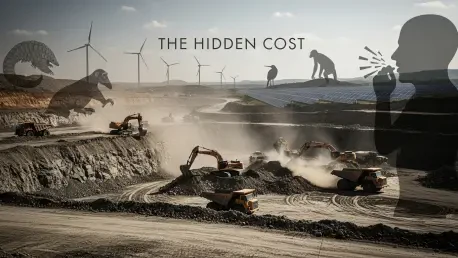

The gleaming solar panels and silent electric vehicles powering the global shift toward sustainability are built upon a foundation dug deep from the earth, and a comprehensive new study reveals this foundation is quietly cracking under immense, unregulated pressure. While public attention focuses on the contentious development of new mines, a far more pervasive trend is unfolding largely out of sight: the massive expansion of existing mining operations. This shift, driven by an insatiable demand for the minerals of the green economy, is concentrating environmental and social harm in the world’s most vulnerable corners and creating long-term liabilities that current oversight systems are failing to address. This is the central challenge of the clean energy transition, a high-stakes trade-off that pits decarbonization goals against the very real, on-the-ground costs of extraction.
The Green Paradox: Our Clean Future and Its Dirty Secret
A startling connection exists between the surging demand for renewable energy and the overlooked risks of intensifying mining operations at existing sites. This dynamic presents a profound paradox: the technologies designed to save the planet from one environmental crisis may be fueling another. The global race toward decarbonization is predicated on a mineral-intensive infrastructure that requires extracting more resources from the earth than ever before.
This reality forces a critical question. As society accelerates its move away from fossil fuels, is it inadvertently creating sacrifice zones where the environmental and social burdens of clean energy are disproportionately borne by specific communities and ecosystems? The pursuit of a “clean” future built on a foundation of “dirty” extraction methods raises complex ethical and practical dilemmas that demand immediate attention from policymakers, industry leaders, and consumers alike.
Fueling the Transition with Critical Minerals
The transition to a low-carbon economy is fundamentally a transition to a high-mineral economy. The technologies at the heart of this shift—electric vehicles, advanced power grids, and large-scale battery storage—are all critically dependent on a steady supply of specific metals. Copper, essential for all electricity-related infrastructure, forms the backbone of green energy systems. Likewise, cobalt and lithium have become household names as the indispensable components of the rechargeable batteries that power everything from cars to grid-scale storage facilities.
The sheer scale of this mineral hunger is staggering. To meet global climate targets, demand for these key resources is projected to skyrocket. A landmark analysis from the International Energy Agency projects a potential sixfold increase in the overall demand for critical minerals by 2040. This unprecedented boom places immense pressure on the global mining industry to ramp up production at a speed and scale previously unseen, pushing operations into more challenging and sensitive territories.
The Under-the-Radar Shift to Brownfield Mining
In response to this demand, the mining industry is increasingly favoring the expansion of existing “brownfield” mines over the development of new “greenfield” projects. Greenfield sites involve building a mine from scratch, a process that can take over a decade and requires navigating rigorous public and governmental reviews. In contrast, brownfield expansions—intensifying and extending the life of a current operation—often follow a much faster and less scrutinized permitting process, presenting a path of least resistance for companies eager to meet market demand.
This strategic shift, however, comes with significant consequences. Expanding an existing site means digging deeper, processing lower-grade ore, and operating for longer periods. This intensification amplifies the mine’s environmental footprint, generating substantially more waste rock and tailings, consuming greater quantities of land and water, and concentrating decades of social and ecological disruption in a single location. While economically efficient for the industry, this model allows for the quiet accumulation of environmental liabilities with far less oversight.
Mapping the Global Convergence of Risk
A detailed analysis of 366 brownfield sites worldwide reveals a disturbing pattern of concentrated and overlapping threats. The data shows a direct collision course between expanding mining operations and the planet’s most sensitive environments. More than half of the expanded mines analyzed are located within 20 kilometers of protected areas or designated biodiversity hotspots. Furthermore, over one-fifth of these sites directly threaten fragile ecosystems, such as Arctic tundra and high-mountain environments, where recovery from industrial damage can take centuries, if it happens at all.
The human toll is equally alarming. The study identified a significant number of brownfield sites operating in nations plagued by high structural inequality and ongoing conflict, where local communities lack the political power to defend their rights and environment. Compounding this, the analysis concluded that nearly 80% of these mines are situated in regions struggling with multiple, intersecting crises. These include severe water scarcity, weak governance, corruption, and a lack of press freedom, creating a perfect storm where risks are amplified and regulatory oversight is rendered ineffective.
Expert Voices on This Hidden Expansion
The core issue, according to researchers, is a critical mismatch between public perception and industrial reality. Deanna Kemp, the study’s lead researcher, emphasizes that while political and public debate remains fixated on approving new mines, the more profound and impactful trend of brownfield expansion continues largely unchecked. This has allowed a massive industrial shift to occur without a corresponding evolution in governance and accountability.
This trend is made even more challenging by technological advancements. The increasing use of sophisticated underground mining techniques means that the true scale of an expansion can be concealed from view, making it difficult to monitor using traditional methods like satellite imagery. According to Kemp and her colleagues, this “hidden” expansion makes effective regulation and monitoring more difficult than ever. The study’s conclusion was a stark warning: current regulatory frameworks, designed for a different era of mining, are failing to keep pace with the reality of today’s larger, deeper, and longer-lasting mines.
Forging a Responsible Path Forward
The findings necessitate a fundamental reform of how the world sources the materials for its green future. It is understood that continuing with business as usual would mean trading one set of environmental disasters for another. The first step is to move beyond the routine approval of mine expansions, treating them instead with the same rigorous scrutiny and comprehensive environmental and social assessments applied to entirely new projects.
This has led to calls for implementing cumulative impact assessments—frameworks designed to evaluate the full, long-term consequences of decades-long mining operations on a region’s water, biodiversity, and communities. Finally, a global push for greater transparency and accountability was initiated, developing strategies to ensure the mining industry properly manages the accumulating liabilities at its ever-expanding sites. By rethinking the governance of mineral extraction, a more just and truly sustainable path toward a clean energy economy can be forged.