
Intensifying enforcement of United States sanctions has plunged Venezuela’s state-run oil company, PDVSA, into a deepening logistics crisis, forcing it to use its own tankers for floating storage as onshore facilities reach their breaking point. This costly and inefficient measure is a direct consequence of a growing backlog of oil cargoes unable to leave Venezuelan ports. A climate of fear has paralyzed the maritime industry, as shipping companies, spooked by aggressive U.S. interdictions, become increasingly reluctant to service the sanctioned nation, creating a bottleneck that threatens to halt the country’s primary economic engine. The situation highlights the potent impact of targeted sanctions on the physical supply chain of global energy, where the risk of seizure now outweighs the commercial incentive for many operators.
The Anatomy of a Crisis
Aggressive US Enforcement and Maritime Interdictions
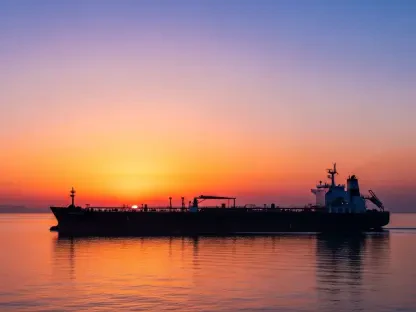
The catalyst for the current shipping paralysis stems from a series of assertive actions by the United States designed to sever Venezuela’s access to international oil markets. The U.S. Coast Guard recently took the dramatic step of intercepting and seizing two fully loaded tankers, the Skipper and the Centuries, as they transported Venezuelan crude through the Caribbean Sea. This decisive action was not an isolated incident; reports quickly followed that the Coast Guard was actively pursuing a third, empty vessel that was en route to Venezuela’s coastline. These interventions are a tangible component of a broader American strategy aimed at dismantling a so-called “shadow fleet” of tankers that have been instrumental in moving oil for sanctioned countries. The pressure was further amplified by a public announcement from U.S. President Donald Trump regarding a formal blockade of all vessels subject to U.S. sanctions, a declaration that sent shockwaves through the global maritime community and solidified the high-stakes environment for anyone dealing with Venezuelan crude oil.
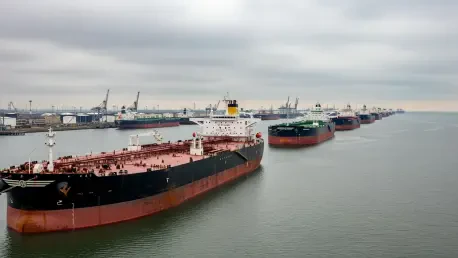
The direct consequence of these aggressive enforcement measures has been the rapid emergence of a climate of profound fear and uncertainty among ship owners, operators, and maritime insurers. The seizure of vessels on the high seas has transformed the theoretical risk of sanctions non-compliance into a concrete financial and operational threat. As a result, a chilling effect has descended upon the shipping lanes leading to and from Venezuela, causing a significant operational paralysis. More than a dozen tankers, fully loaded with Venezuelan oil, now find themselves trapped in the nation’s territorial waters, unable to secure final clearances or willing crews to begin their voyages. This logistical gridlock is not merely a delay but a complete breakdown in the export chain, leaving millions of barrels of crude stranded at sea with no clear destination or departure date. The reluctance of international shipping partners to engage has effectively created a de facto maritime blockade, isolating PDVSA from its global customers and triggering a cascade of problems upstream.
Swelling Inventories and Onshore Bottlenecks
The shipping backlog at sea is creating a severe and rapidly escalating problem on land, as crude and fuel oil inventories are accumulating at an alarming rate. With PDVSA maintaining a production rate of approximately 1.1 million barrels per day (bpd), every vessel that fails to depart exacerbates an already critical storage situation. The pressure is most acute at the Jose terminal, the nation’s primary export hub and the main destination for extra-heavy crude produced in the prolific Orinoco Belt. According to intelligence from the analytics firm Kpler, onshore oil stocks at the Jose facility, which had been maintained at a manageable level of between 9 and 11 million barrels since September, have now swelled to a staggering 12.6 million barrels. This dramatic surge at a single terminal has pushed the country’s total oil inventory to 22 million barrels, the highest level recorded since August and a clear indicator that the nation’s storage infrastructure is being overwhelmed by the inability to export its primary commodity.
In a desperate effort to prevent a complete shutdown of its oil fields, PDVSA has been forced to resurrect a costly and logistically complex strategy: transferring crude from its overflowing onshore tanks onto its own fleet of tankers. This measure, employed in previous years during periods of similar export distress, converts valuable transport vessels into temporary floating storage facilities. Over the past weekend, the state oil company initiated these transfers to free up space and allow production to continue, even without buyers to take immediate delivery. While this tactic provides a temporary reprieve from having to slash oil production—a move that would have devastating economic consequences—it is an inherently unsustainable solution. It ties up a significant portion of PDVSA’s tanker fleet, incurs substantial operational costs, and introduces additional environmental and security risks. This stopgap measure underscores the severity of the crisis, demonstrating that the company has run out of conventional options and is now resorting to emergency procedures to stay afloat.
Economic and Political Fallout
PDVSA’s Commercial Struggles and Customer Resistance
The logistical gridlock has rapidly translated into significant commercial challenges for PDVSA, which now finds itself in a precarious negotiating position with its international clients. The state oil company has been actively trying to persuade its customers to continue lifting their scheduled cargoes, a task that has become exceedingly difficult as news of the U.S. vessel seizures spreads through the industry. The primary focus of these efforts has been on buyers with cargoes destined for China, which has accounted for roughly 80% of Venezuela’s crude exports this year. However, these attempts are being met with increasing resistance. The heightened risk of cargo seizure, along with the potential for secondary sanctions on any entity involved, has made lifting Venezuelan crude a far less attractive proposition. This customer hesitation is crippling PDVSA’s ability to generate revenue, forcing the company to fight not only a logistical battle at its ports but also a commercial battle to retain its few remaining reliable buyers in a hostile global market.
To salvage its dwindling sales, PDVSA is being compelled to negotiate highly unfavorable terms, effectively subsidizing the increased risk its customers are taking. These concessions include offering substantial price discounts that cut deeply into already thin margins and making significant modifications to existing contracts to favor the buyer. The situation has become so dire that some customers are reportedly attempting to reverse their transactions and return their purchased cargoes to the terminals, an almost unprecedented move in the oil trade that signals a complete loss of confidence. Internally, PDVSA’s leadership faced a critical decision and contemplated declaring force majeure on certain export contracts. Such a declaration would have legally released the company from its delivery obligations due to circumstances beyond its control. However, after careful consideration, they ultimately decided against this sweeping measure, fearing it could permanently damage customer relationships. Instead, they have opted for a more painstaking approach: negotiating with each customer on an individual, case-by-case basis to find a workable path forward.
Chevron’s Exemption and Venezuela’s Dual Response
In a notable exception to the widespread disruption crippling Venezuela’s oil sector, the operations of U.S. oil major Chevron, PDVSA’s most significant joint-venture partner, have continued without interruption. Chevron’s sustained exports provide a crucial, albeit limited, outlet for Venezuelan crude, helping to alleviate some of the immense pressure on the nation’s storage capacity. This is particularly vital in Venezuela’s western region, where onshore storage facilities are severely limited. The company’s share of production amounts to approximately 130,000 bpd, which represents about a quarter of the crude processed at the critical blending stations and upgraders located in the Orinoco Belt. This ongoing activity serves as a lifeline for PDVSA, allowing a portion of its production to consistently reach international markets despite the broader sanctions regime. Chevron has publicly maintained that its Venezuelan operations remain in full compliance with all applicable laws and regulations, navigating a complex legal landscape to continue its long-standing presence in the country.
Faced with escalating pressure, the Venezuelan government has adopted a carefully calibrated, two-pronged approach to manage the crisis. In a televised address, President Nicolas Maduro issued a defiant public assurance, specifically aimed at its American partner, stating, “(Under) rain, thunder, or lightning, and regardless of any conflicts, the contract with Chevron will be fulfilled.” This statement was a clear signal of the government’s intention to protect its last major partnership with a U.S. oil company, recognizing its strategic importance. Simultaneously, the government has adopted a hardline domestic posture to quell any internal dissent or perceived cooperation with foreign powers. The ruling-party-controlled National Assembly swiftly passed a new law designed to punish any perceived complicity with the U.S. sanctions. This legislation introduces severe criminal penalties, including prison sentences of up to 20 years, for anyone found guilty of promoting or financing what the government has defined as acts of piracy or blockades against the nation’s vital oil cargoes.
Navigating a Sanctioned Future
The events that unfolded created a stark illustration of how targeted sanctions could cripple a nation’s core industry not just financially, but logistically. The crisis forced PDVSA into a reactive stance, resorting to costly floating storage and unfavorable contract renegotiations simply to keep oil flowing. While Chevron’s continued operations provided a partial release valve, the broader shipping paralysis underscored the vulnerability of Venezuela’s export-dependent economy. The government’s dual response—protecting its key international partnership while legislating harsh domestic penalties—revealed a strategy aimed at survival in an increasingly isolated environment. The path forward for Venezuela’s oil industry was left contingent on navigating a complex geopolitical landscape, where every tanker departure represented a high-stakes gamble against a backdrop of aggressive international enforcement.