
A New Era of Maritime Sanctions Enforcement
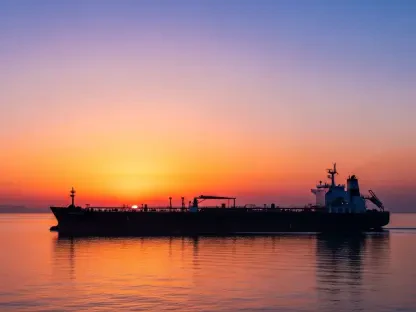
The dramatic interception of the tanker Centuries in the Caribbean on December 20, 2025, signals a profound shift from diplomatic pressure to direct maritime action in the U.S. economic campaign against Venezuela, opening a potent new front in its geopolitical rivalry with China. This move represents a sharp escalation, transforming the high seas into a theater for sanctions enforcement and signaling a new willingness in Washington to employ direct intervention to achieve its foreign policy objectives. While ostensibly aimed at crippling the Maduro regime by cutting off its oil revenue, this aggressive strategy is strategically designed to disrupt a critical energy supply line to Beijing, thereby applying direct economic pressure on a primary global competitor.
This analysis explores the multi-layered objectives behind this bold new policy. It examines the specific legal mechanisms that provide the foundation for these seizures, the significant economic consequences for both Venezuela and its principal buyer, China, and the broader context of U.S.-China competition for influence in Latin America. By deconstructing this approach, it becomes clear that the physical seizure of tankers is not an isolated tactic but a calculated component of a much larger and more confrontational geopolitical strategy. The implications of this policy shift are far-reaching, introducing a new dimension of risk into global energy markets and reshaping the dynamics of international maritime law.
The Shadow Fleet and the Sanctions Showdown
For years, the United States has imposed a comprehensive sanctions regime on Venezuela’s state-owned oil industry in an effort to destabilize the government of Nicolás Maduro. Despite these measures, the flow of Venezuelan crude has persisted, facilitated by a clandestine network of vessels known as the “shadow fleet.” This opaque collection of tankers, often operating with obscured ownership structures, falsified documentation, and deceptive navigational practices, has proven remarkably resilient in circumventing international sanctions. These vessels serve as a crucial lifeline for sanctioned regimes, enabling their crude oil to reach willing buyers around the globe and undermining the effectiveness of economic pressure campaigns.
Within this illicit trade, China has emerged as the undisputed primary destination for sanctioned Venezuelan oil. Beijing’s advanced refineries have become increasingly dependent on the discounted, heavy-grade crude that Venezuela supplies, a specific type of oil that is well-suited for their processing capabilities. This has created a symbiotic economic relationship: Venezuela secures a consistent source of revenue to sustain its government, while China gains access to a cheap and reliable energy source that fuels its industrial economy. This arrangement directly contravenes U.S. foreign policy goals, effectively neutralizing the intended impact of the sanctions. Past American efforts focused on blacklisting individuals, companies, and vessels involved in this trade, but the physical interdiction of tankers on the high seas represents a fundamental and far more confrontational evolution of this enforcement strategy.
Anatomy of a Geopolitical Strategy
Leveraging Legal Loopholes: The Panama Connection
The recent U.S. strategy hinges on a little-known but powerful legal instrument: the 2002 Salas-Becker agreement, a bilateral treaty with Panama. Maritime intelligence analysts note that this agreement grants U.S. authorities a uniquely streamlined pathway to board and inspect Panamanian-flagged vessels in international waters, often with as little as two hours’ notice to the Panamanian government. This provision effectively removes many of the diplomatic and legal hurdles that would typically complicate such an operation, providing a legal justification that is difficult to challenge under international law. The choice to intercept the Panama-flagged Centuries was therefore no accident; it was a calculated and deliberate move to exploit this specific legal vulnerability.
This approach signals a repeatable and scalable tactic for dismantling the shadow fleet one ship at a time. Maritime intelligence firms have already identified a “higher-risk enforcement category” of at least three other Panama-flagged tankers—the Ragnar, the Balsa, and the Larko—that have recently loaded Venezuelan crude and are now considered prime targets for similar interdictions. By focusing on vessels registered in Panama, a nation whose flag is carried by a significant portion of the global tanker fleet, the United States has developed a methodical approach to disrupt these illicit supply chains. This targeted legal strategy allows Washington to project maritime power under the guise of cooperative law enforcement, creating a powerful precedent for future actions against sanctions evasion.
Squeezing China’s Energy Supply Chain
While the seizures directly choke off vital revenue for the Venezuelan government, their most profound strategic impact is felt thousands of miles away in Beijing. Strategic consultants and retired military officials explain that by “squeezing Venezuelan oil,” the U.S. is directly pressuring China’s economy at a sensitive juncture. According to industry data, China purchases approximately 76% of Venezuela’s current output of 900,000 barrels per day. This supply is not just voluminous; it is also critical in nature, providing a consistent source of discounted heavy crude that is essential for the optimal functioning of China’s specialized coastal refineries.
Disrupting this flow forces Chinese refiners to seek more expensive alternatives from other suppliers, such as Russia or nations in the Middle East, thereby increasing the country’s overall energy import costs. This economic leverage is a valuable tool in Washington’s arsenal, creating what foreign policy experts term “negotiating space” for the United States in its broader and more complex diplomatic, trade, and security disputes with the People’s Republic. The tanker seizures, therefore, function as a tactical economic weapon, transforming a regional sanctions policy into a point of direct leverage against a global strategic rival and demonstrating how maritime enforcement can be deployed to achieve far-reaching geopolitical objectives.
Exposing a Pattern of Deception
The perceived legitimacy of the U.S. actions is significantly bolstered by the overtly illicit and deceptive behavior of the targeted vessels. The case of the Centuries is emblematic of the sophisticated evasion techniques employed by the shadow fleet. The tanker was found to be “spoofing” its Automatic Identification System (AIS), broadcasting a false location near Curaçao to mask its true activities. In reality, satellite imagery analysis confirmed its actual position at Venezuela’s Jose Oil Terminal, where it loaded approximately two million barrels of crude oil. Further obfuscating the operation, official Venezuelan port records attempted to hide the vessel’s identity by listing it under the alias “Crag.”
This is not an isolated incident but part of a well-documented pattern. Another tanker seized under similar circumstances, the Bella 1, has a long and documented history of delivering sanctioned Venezuelan and Iranian oil to various ports across China. This consistent pattern of deception, from falsifying location data to using shell companies and aliases, provides Washington with a strong justification for its enforcement actions. It allows the U.S. to frame these interdictions not as unilateral acts of aggression or piracy, but as necessary policing actions against a clandestine and illicit global trade that thrives on violating international norms and sanctions regimes. This narrative is crucial for maintaining international support and deflecting criticism of the more aggressive maritime posture.
The Panama Canal: A New Geopolitical Flashpoint
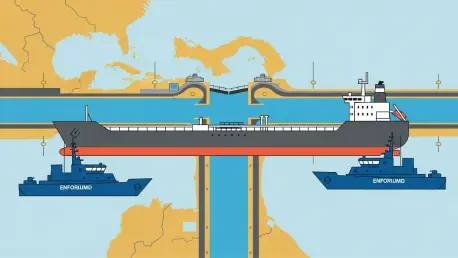
These targeted maritime seizures are not occurring in a vacuum; they are deeply intertwined with a pre-existing and intensifying geopolitical struggle for influence over the Panama Canal. Recent U.S. political rhetoric about “taking the Panama Canal back” from supposed Chinese control reflects deep-seated American concerns over the operation of its two key ports, Balboa and Cristóbal. These crucial maritime hubs, situated at either end of the canal, are currently managed by the Hong Kong-based company CK Hutchison, which Washington views as a potential vector for Chinese state influence in a strategically vital waterway.
Tensions are currently high over a stalled deal for a consortium led by the U.S. investment firm BlackRock to acquire the port operations. Reports indicate that Beijing is actively pushing for the state-owned shipping giant Cosco to take a controlling stake instead—a move the Trump administration vehemently opposes, fearing it would grant China significant control over a critical global chokepoint. Consequently, the U.S. decision to leverage its legal agreement with Panama to seize tankers is perceived by China not as a simple law enforcement action, but as another calculated maneuver in this larger contest for strategic dominance over one of the world’s most important maritime passages.
Strategic Takeaways for a New Maritime Reality
The primary takeaway from these recent events is that the United States has developed and successfully deployed a potent, legally defensible, and repeatable strategy to disrupt sanctioned oil flows, with China as the ultimate strategic target. This new enforcement model fundamentally alters the risk calculus for any entity involved in the shadow fleet ecosystem. Shipping companies, insurers, flag registries, and the refineries that purchase the sanctioned crude now face the tangible threat of asset seizure, a far more immediate and costly consequence than being added to a sanctions list. This introduces a significant new layer of geopolitical risk into global energy markets that must now be priced into every transaction involving nations under U.S. sanctions.
This strategy also places Panama in an exceptionally delicate diplomatic position. Supply chain risk management experts highlight the complex balancing act the nation must perform. On one hand, maintaining close security cooperation with the U.S. is a “strategic imperative.” On the other hand, Panama must preserve the trust of its Asian trading partners, who are essential to the commercial viability of its canal and maritime services sector. The seizures force Panama to navigate these competing interests carefully. For global supply chains, the implication is clear: the politicization of maritime law enforcement is increasing, and critical chokepoints like the Panama Canal are becoming arenas for great-power competition, with the potential for sudden and costly disruptions.
Conclusion: A High-Stakes Gambit
The U.S. policy of seizing oil tankers was ultimately revealed to be more than a simple sanctions enforcement action; it was a calculated gambit in its long-term strategic competition with China. By leveraging its unique bilateral relationship with Panama, the United States effectively weaponized maritime law to exert direct and tangible economic pressure on Beijing. This new front in the U.S.-China rivalry transformed the waters of the Caribbean into a stage for a global power struggle, with the iconic Panama Canal serving as its symbolic and strategic epicenter. The immediate consequences of this policy were clear in the disruption of oil flows and the heightened risk for illicit shippers. However, the long-term outcome remained profoundly uncertain, hinging on a question that energy market analysts noted had yet to be answered: how, and when, China would choose to respond.