
The sudden and dramatic collapse of Nicolás Maduro’s government has sent powerful shockwaves from Caracas to Wall Street, thrusting the immense but broken promise of Venezuela’s oil wealth back into the global spotlight. This seismic political shift has created a high-stakes environment where the world’s largest proven crude reserves are once again in play. For U.S. oil majors, this moment presents a complex calculus, pitting the allure of unparalleled opportunity against a legacy of expropriation, infrastructural collapse, and profound political uncertainty. The central question now is whether this new dawn is the beginning of a prosperous chapter or merely another mirage in the nation’s turbulent history. This analysis synthesizes perspectives from the White House, financial markets, and industry experts to dissect the immense financial, political, and logistical hurdles that stand between American energy companies and Venezuela’s black gold.
A New Dawn or a Familiar Mirage The Promise and Peril of a Post-Maduro Venezuela
The hypothetical ousting of Nicolás Maduro has redrawn the geopolitical map of the Western Hemisphere, creating a power vacuum and an unprecedented opening for international re-engagement. This dramatic shift away from years of authoritarian rule and economic disintegration has ignited hope for a national revival, with the country’s dilapidated oil sector at the very heart of any potential recovery. For Washington and U.S. corporations, the development represents a chance to reassert influence and reclaim assets in a nation that has long been a source of strategic frustration.
However, the path forward is fraught with peril. The central conflict for any prospective investor is reconciling the sheer scale of the opportunity with the monumental challenges ahead. Venezuela sits atop an estimated 303 billion barrels of proven oil reserves, the largest on the planet. Yet, this geological bounty is buried beneath layers of mismanagement, corruption, and decay. The immense potential is shadowed by historical grievances, including the nationalization of foreign assets nearly two decades ago, creating a landscape where optimism must be tempered with extreme caution.
This complex scenario demands a granular analysis of the interlocking factors that will determine success or failure. The financial commitment required to rebuild the industry is staggering, the political landscape remains dangerously volatile, and the logistical task of reviving moribund oil fields presents a technical challenge of epic proportions. Navigating this environment requires a deep understanding of the competing interests and formidable obstacles that U.S. companies must overcome to turn Venezuela’s potential into tangible production.
Navigating the Labyrinth Opportunity Legacy and the Path Forward
The White House Gambit Trumps Rallying Cry and Wall Streets Immediate Bet
From his Mar-a-Lago residence, President Trump has issued a powerful and unambiguous directive, urging U.S. oil companies to spearhead the economic redevelopment of Venezuela. Framing the opportunity as a corrective to past injustices, he characterized the 2007 nationalizations under Hugo Chavez as “one of the largest thefts of American property” and called for billions in new investment to “fix the badly broken infrastructure.” This aggressive political backing from the executive branch signals a clear U.S. policy aimed at cementing American corporate presence in a post-Maduro energy landscape.
Wall Street’s reaction to this political green light was immediate and decisively optimistic. Investors, betting on a future where U.S. majors could reclaim lost assets and tap into vast new production, drove a significant rally in the markets. The share prices for Chevron, Exxon Mobil, and ConocoPhillips all surged, reflecting a belief that the potential rewards in Venezuela outweigh the considerable risks. This market enthusiasm extended to oil services companies like Slb, Halliburton, and Baker Hughes, whose expertise would be indispensable in any large-scale rebuilding effort.
Despite the bullish signals from both the White House and the stock market, the oil majors themselves have adopted a far more cautious public stance. Behind the scenes, sources indicate that formal talks to re-enter the country have not yet begun. This divergence highlights a critical tension: while political rhetoric can open doors and fuel market speculation, the corporations on the front lines are weighing the practical realities of a still-unstable environment, underscoring that a presidential endorsement alone is not enough to trigger massive capital commitments.
Beneath the Surface The Colossal Scale of Venezuelas Potential and Its Decay
The geological wealth of Venezuela is difficult to overstate. According to the U.S. Energy Information Administration (EIA), the nation’s 303 billion barrels of proven reserves account for roughly 17% of the global total, a resource base that dwarfs that of many other major oil-producing nations. This immense underground treasure has long been the theoretical foundation for the country’s economic prosperity, representing an unparalleled long-term prize for any company with the capacity to develop it.
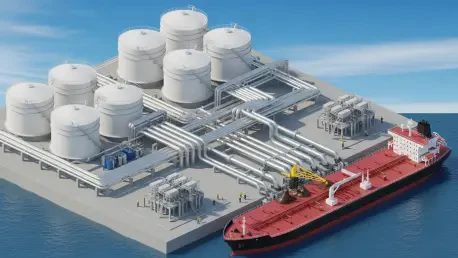
This extraordinary potential stands in stark contrast to the grim reality of its current state. Data from the energy consulting firm Kpler shows a catastrophic decline in output, with production plummeting from a peak of 3.5 million barrels per day in the late 1990s to a mere 800,000 barrels per day. The infrastructure is in a state of advanced decay, with pipelines, refineries, and export terminals all suffering from years of underinvestment and neglect. Reviving this system is not merely a matter of turning on the spigots; it requires a comprehensive and costly overhaul of the entire industrial apparatus.
Compounding the challenge is the specific nature of Venezuela’s reserves. The majority of the country’s oil, concentrated in the Orinoco Belt, is extra-heavy crude. This type of petroleum is more difficult and expensive to extract and process than lighter grades, requiring specialized technology and significant capital investment in upgraders or diluents to make it marketable. This technical complexity adds another layer of cost and risk to an already daunting revitalization effort, ensuring that only the most well-capitalized and technologically advanced firms can realistically undertake the task.
A Tale of Three Titans Chevrons Foothold Versus its Rivals Long Standing Grievances
Among the U.S. oil giants, Chevron occupies a uniquely advantageous position. It is the only major American producer with an active, albeit circumscribed, presence in Venezuela, operating through joint ventures with the state oil company PDVSA. These operations, which account for 23% of the country’s current output, provide Chevron with invaluable on-the-ground experience and existing infrastructure. Industry analysts at both JPMorgan and Morgan Stanley identify Chevron as the company best poised to rapidly scale up production should a stable and favorable investment climate emerge.
In sharp contrast, ConocoPhillips and Exxon Mobil face a much more complicated path to re-entry. Both companies ceased operations in Venezuela following the 2007 nationalizations and their primary connection to the country is now through the courts. They hold multi-billion-dollar legal claims in arbitration against Caracas for the seizure of their assets, with ConocoPhillips’s claims approaching $10 billion and Exxon’s around $2 billion. For these firms, resolving these long-standing grievances and securing compensation for past losses is a critical precondition for any discussion of future investment.
The differing circumstances of the three companies are reflected in their official communications. Chevron’s statements have focused on operational continuity and the safety of its personnel, acknowledging its role as an existing producer governed by U.S. licenses. Conversely, a spokesperson for ConocoPhillips has stated that it is “premature to speculate on any future business activities,” a cautious sentiment that clearly signals the primacy of its legal claims. This divergence illustrates that while the opportunity is universal, the starting line for each company is vastly different.
The Ten Billion Dollar Question Can Stability Be Bought and Chaos Averted
There is a broad consensus among industry experts that the single most critical factor for reviving Venezuela’s oil sector is not geology or even the lifting of sanctions, but the establishment of a stable and reliable governing framework. Analysts at Morgan Stanley have noted that without deep confidence in a new government’s commitment to the rule of law and the sanctity of contracts, major international investment will remain on the sidelines. Prospective investors need to see a clear and credible path to recovering past claims and protecting future capital before committing to a long-term presence.
The financial scale of the required revitalization is staggering. Helima Croft, a global commodity strategist at RBC Capital Markets, estimates that turning around Venezuela’s production decline would necessitate an annual investment of approximately $10 billion. This capital is needed not only for drilling new wells but for rebuilding the entire support infrastructure, from pipelines and power generation to ports and processing facilities. Securing this level of financing will depend entirely on the perceived stability and security of the operating environment.
This uncertainty gives rise to a dual-scenario forecast. In an optimistic case, an orderly transition of power combined with full sanctions relief could pave the way for a production increase of several hundred thousand barrels per day within a year. However, a more pessimistic outlook, articulated by Croft, envisions a chaotic power vacuum akin to what transpired in Libya or Iraq. In such a scenario, where competing factions vie for control and security collapses, she warns that “all bets are off,” and the prospect of a meaningful recovery in the oil sector would become vanishingly small.
The Strategic Playbook for a Volatile Landscape
The convergence of political will, market optimism, and geological opportunity in Venezuela is a powerful combination, but it cannot by itself overcome the deep-seated realities on the ground. The overarching takeaway from the current analysis is that pronouncements from Washington are insufficient to erase decades of infrastructural decay and the deep scars of expropriation. The primary obstacles are not political but practical: a broken industrial base and a legacy of unresolved, multi-billion dollar legal disputes. These foundational issues must be addressed before any sustainable recovery can begin.
For industry players, this environment demands a disciplined, risk-adjusted strategy. The immediate priority must be the resolution of past claims. For companies like ConocoPhillips and Exxon Mobil, securing a binding and enforceable settlement for their nationalized assets is a non-negotiable first step. Only after establishing a new legal and financial baseline can these firms contemplate committing new capital. This approach prioritizes mitigating legacy risk before taking on the immense operational risks inherent in rebuilding the nation’s energy sector.
Consequently, investors should adopt a patient and observant posture, monitoring key indicators of genuine progress. The most crucial signal will be the formation of a stable, unified government capable of enforcing the rule of law across the country. Following that, the establishment of a transparent and reliable legal framework for foreign investment will be paramount. Only when these foundational elements of governance and stability are securely in place can the long-term potential of Venezuela’s oil industry be considered a viable and attractive investment.
Beyond the Barrel Venezuelas Future at the Crossroads of Politics and Petroleum
Ultimately, Venezuela represents the quintessential high-risk, high-reward venture in the modern global energy sector. The scale of the geological prize is matched only by the scale of the political and operational challenges. The path to transforming its immense reserves into sustainable production and national wealth is not a sprint but a marathon, one that will test the resilience of any new government and the patience of its international partners.
A true revival of the nation’s oil industry is a multi-decade project, not a short-term fix. Its success is contingent on a complex interplay of factors that extend far beyond the oil fields, requiring sustained domestic peace, a consistent inflow of massive foreign investment, and constructive international cooperation. Any misstep in navigating this delicate balance could easily plunge the country back into chaos, rendering its vast resources inaccessible once more.
In the end, the fate of Venezuela’s oil wealth is not a matter of geology but of governance. The crude will remain under the ground, its potential undiminished. The ultimate test lies in the ability of a new government to rebuild not just an industry, but an entire nation’s credibility, to foster an environment of stability and trust, and to prove that it can be a reliable steward of one of the world’s most significant natural endowments.