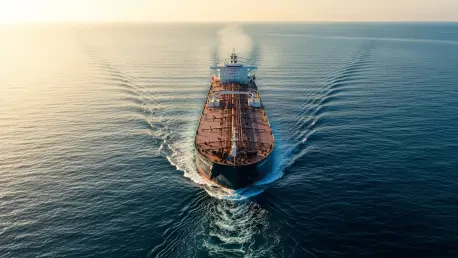

The delicate machinery of the global economy often hinges on the movement of massive tankers across volatile waters, where a single geopolitical tremor can send energy prices into a chaotic upward spiral. Recently, the U.S. Department of the Treasury introduced a tactical shift by issuing a 30-day waiver for Russian oil currently stranded at sea. This move is designed to alleviate the immense pressure on a market that saw crude prices flirt with $120 per barrel following threats to block the Strait of Hormuz. By targeting a specific volume of transit-bound cargo, policymakers are attempting to engineer a soft landing for energy costs without dismantling the broader sanctions framework intended to isolate the Kremlin.
Balancing Economic Security and Geopolitical Pressure
The current energy landscape is defined by an intense tug-of-war between the need to penalize international aggression and the imperative to protect domestic consumers from runaway inflation. For months, the G7 and European Union have maintained a strict price cap of $44.10 per barrel, yet recent escalations in the Middle East have disrupted the equilibrium of supply and demand. This waiver represents a calculated retreat from absolute restrictions to ensure that a sudden shortfall does not paralyze industrial production or transportation networks.
The Volatile Context of Global Energy Sanctions
Understanding this policy requires a look at how the global community has tightened the noose around energy exports over the past few years. While a total ban on Russian imports was the standard, the emergence of new chokepoints in maritime trade forced a reassessment of the situation. Market participants have remained on edge as regional conflicts threaten vital transit routes, creating a scenario where even a minor supply disruption can lead to a significant spike in the cost of living for millions.
Pragmatism in the Face of Supply Disruptions
Mitigating the Impact of Stranded Sea Cargo
At the heart of the Treasury’s decision is the fate of approximately 124 million barrels of crude currently in maritime limbo. This volume constitutes nearly a week’s worth of global supply, a critical buffer that can prevent localized shortages from becoming a systemic crisis. By allowing the offloading of these specific shipments until April 11, the administration is effectively performing a controlled release of inventory into a thirsty market.
Debating the Financial Windfall for the Kremlin
A primary concern regarding this waiver is whether it provides an unintended lifeline to the Russian state. However, analysis of the fiscal structure suggests that the bulk of the revenue was already collected via extraction taxes at the wellhead before the tankers ever left port. While any transaction involving these assets is viewed with skepticism, the immediate risk of a domestic economic shock is currently judged to be a far greater threat than the marginal gains Russia might realize from these specific barrels.
Navigating Geopolitical Risks and Market Perception
The psychological impact of this 30-day window is just as important as the physical oil it releases. There is an inherent danger that traders might view the move as a sign of weakening resolve, potentially undermining the long-term effectiveness of energy sanctions. Consequently, the administration has been careful to frame this as an emergency “micro-period” rather than a permanent change in direction, emphasizing that the underlying restrictions remain firmly in place.
Future Outlook: Technological and Regulatory Shifts
As we move forward, the use of data-driven adjustments to trade barriers will likely become a standard tool for economic diplomacy. Advanced satellite tracking and real-time maritime analytics allow regulators to monitor supply chains with unprecedented precision, enabling them to open and close specific valves of commerce as volatility dictates. This evolution suggests that future sanctions will be less like a blunt instrument and more like a surgical tool, reacting dynamically to the shifting realities of global production.
Strategies for a Shifting Energy Landscape
For industries heavily dependent on fuel, the current environment demands a high degree of agility and foresight. This 30-day reprieve offers a brief window to shore up inventories and re-evaluate hedging strategies before the window closes. Businesses that diversify their supply sources and invest in efficiency measures today will be much better positioned to handle the inevitable fluctuations of a world where energy security is no longer a given.
Conclusion: A Necessary Tactical Retreat
The decision to implement a temporary waiver was a pragmatic response to an immediate threat of global instability. By prioritizing market liquidity over absolute isolation for a brief period, officials managed to prevent a catastrophic surge in energy-driven inflation. This maneuver highlighted the complexity of managing a modern economy where geopolitical goals and domestic stability are often in direct conflict. Ultimately, the strategy provided a vital lesson in the importance of flexibility when navigating the unpredictable currents of international trade.