
A deep chasm is forming between diplomatic assurances and commercial realities on the high seas, threatening to upend the delicate strategic balance between Washington and New Delhi. While Indian diplomats lobby for relief from punitive U.S. tariffs, the nation’s state-owned oil refiners continue their steady consumption of discounted Russian crude, creating a complex and volatile standoff with significant implications for global energy markets and international alliances.
The New Geopolitical Oil Map: India’s Role as a Pivotal Swing Buyer
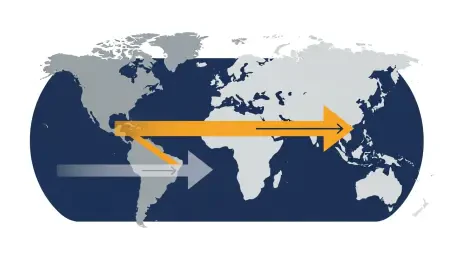
The global energy landscape has been fundamentally reshaped since the conflict in Ukraine began, redirecting vast flows of crude oil from West to East. In this new paradigm, India has emerged as a crucial swing buyer, strategically increasing its intake of Russian oil to take advantage of significant price discounts. This decision has positioned it at the center of a geopolitical tug-of-war, balancing its own pressing energy security needs against the diplomatic objectives of its Western partners.
This dynamic involves a complex web of actors, including U.S. policymakers intent on curbing Russian revenue, Indian state-owned refiners like Indian Oil Corporation (IOC) and Bharat Petroleum Corporation (BPCL) driven by domestic demand, and private giants such as Reliance Industries navigating a precarious regulatory environment. All operate under the shadow of G7 price caps and the constant threat of U.S. secondary sanctions, which aim to penalize third-party entities doing business with sanctioned Russian firms.
Deciphering the Demand: A Story of Divergence and Data
A Tale of Two Refiners: Private Caution vs Public Consumption
A critical trend has emerged within India’s oil market: a stark divergence in purchasing behavior between public and private sector refiners. This split is central to understanding the current impasse with the United States. State-owned undertakings (PSUs) remain the bedrock of India’s demand for Russian crude, motivated by a combination of robust domestic fuel consumption and the compelling economics of discounted barrels, which they procure through non-sanctioned intermediaries.
In contrast, private refiners have grown increasingly cautious. The decision by the U.S. to impose direct sanctions on major Russian energy suppliers, including Lukoil and Rosneft, has prompted companies like Reliance Industries to significantly scale back their purchases. This risk-averse approach from the private sector has become a key factor in the recent fluctuations of India’s overall import volumes, highlighting a clear rift in how different segments of the Indian economy are responding to international pressure.
Reading Between the Barrels: Import Data and Future Projections
Market data from leading energy analytics firms like Kpler and Rystad Energy reveals the tangible effects of this split. India’s total imports of Russian crude saw a noticeable drop in December, a development initially seen as a win for U.S. sanctions policy. However, a deeper analysis shows this decline was driven almost exclusively by the pullback from private refiners, not a nationwide shift in strategy.
Consequently, the consensus view among analysts is that the market is witnessing a “redistribution rather than a collapse in demand.” The resilient purchasing from state-owned refiners has offset a significant portion of the private sector’s drop. Projections for the coming months indicate a modest recovery in overall import volumes, underscoring the unwavering appetite of the public sector and suggesting that India’s fundamental demand for Russian oil remains firmly intact.
Walking a Tightrope: India’s Diplomatic and Economic Dilemma
For New Delhi, this situation presents a formidable challenge: how to maintain its critical energy security without irrevocably damaging its strategic partnership with the United States. The disconnect between the government’s official diplomatic narrative of reduced imports and the persistent purchasing patterns of its state-controlled entities has created a credibility gap that complicates negotiations with Washington.
This dichotomy also places Washington in a difficult position. The U.S. must find a way to enforce its sanctions regime effectively and diminish Russia’s oil revenue, but doing so too aggressively risks alienating India, a key partner in its Indo-Pacific strategy. The challenge lies in calibrating its pressure to influence India’s behavior without triggering a broader diplomatic rupture that could undermine shared strategic goals.
The Sanctions Playbook: Washington’s Strategy to Curb Russian Oil Revenue
The regulatory landscape is largely defined by Washington’s assertive actions. The U.S. has deployed a multifaceted strategy that includes not only direct sanctions on Russian oil companies but also the imposition of a 25% “secondary” tariff on certain Indian goods, a measure designed to create economic leverage and compel compliance. This approach signals a willingness to penalize partners who are seen as undermining the international sanctions effort.
India’s official response has been to push back diplomatically. India’s ambassador to the U.S. has reportedly appealed directly for tariff relief, arguing that New Delhi has already taken steps to curtail its Russian oil intake. This plea, however, clashes with market data showing continued, robust demand from state-owned firms, creating friction and fueling skepticism in Washington about India’s commitment to the sanctions regime.
What Lies Ahead: A Test of Resolve for Both Nations
The potential for an escalation of tensions remains high. Should India’s import volumes rebound as projected, the U.S. could respond by increasing tariffs or expanding the scope of its secondary sanctions, further straining the bilateral economic relationship. This creates a high-stakes test of resolve, with each nation weighing its core interests against the value of their partnership.
Beyond direct policy actions, the situation is vulnerable to a range of market disruptors. The emergence of new sanction-evasion tactics, sudden shifts in global oil pricing, or unforeseen geopolitical events could all alter the current calculus. Ultimately, how this conflict unfolds will not only determine the future of U.S.-India relations but could also set a precedent for global energy trade routes in an increasingly fragmented world.
A High-Stakes Impasse: The Final Analysis
The ongoing friction reveals a fundamental clash between U.S. foreign policy objectives and India’s non-negotiable economic and energy imperatives. Washington’s goal of isolating Russia and cutting off its revenue streams is in direct opposition to New Delhi’s pragmatic pursuit of affordable energy to fuel its growing economy. This impasse is more than a simple trade dispute; it is a symptom of a shifting global order where national interests are increasingly reasserted.
This situation exposes a critical divergence between diplomatic rhetoric and commercial reality, testing the very limits of the U.S.-India strategic partnership. The prospects for a swift resolution appear slim, as both nations are locked into positions dictated by deeply entrenched domestic and geopolitical priorities. The economic and strategic stakes are immense, and the outcome of this standoff will undoubtedly shape the contours of their alliance and the flow of global energy for years to come.