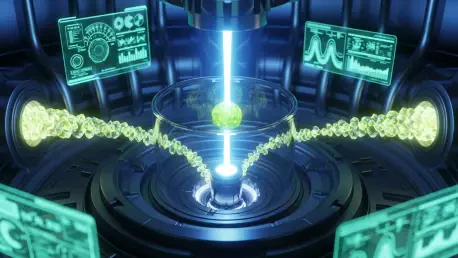

In a remarkable fusion of nuclear science and cutting-edge medicine, a landmark UK initiative is set to repurpose a legacy of the atomic age into a powerful new weapon against cancer. This ambitious project, built on a 15-year collaboration between the Nuclear Decommissioning Authority (NDA), the United Kingdom National Nuclear Laboratory (UKNNL), and the biotech firm Bicycle Therapeutics, will transform hundreds of tons of reprocessed uranium from historic nuclear fuel into a critical component for highly targeted cancer therapies. This venture represents a paradigm shift in how nuclear materials are viewed, moving from a decommissioning challenge to a source of life-saving medical isotopes. By harnessing a by-product of past energy generation, the United Kingdom is pioneering a sustainable and innovative supply chain for next-generation radiopharmaceuticals, potentially providing hope to thousands of patients with hard-to-treat diseases and establishing a new model for environmental stewardship and public health synergy.
From Nuclear Legacy to Medical Lifeline
The foundation of this groundbreaking program lies in the vast stockpiles of reprocessed uranium managed by the Nuclear Decommissioning Authority. This material, a remnant of the UK’s early nuclear energy programs, is now being seen through a new lens, not as waste but as a uniquely valuable resource. Under the terms of the 15-year agreement, Bicycle Therapeutics will gain access to up to 400 tons of this specific uranium. This long-term arrangement is crucial as it secures a stable and predictable supply chain for the production of advanced medical treatments. The sheer volume of the material ensures that the initiative is not a small-scale experiment but a robust, industrial-level operation capable of meeting significant future demand. This strategic repurposing addresses a key challenge in nuclear decommissioning by finding a high-value application for legacy materials, thereby creating a positive outcome from what was once considered solely a management liability, turning a historical artifact into a modern medical asset.
The process of transforming this uranium into a medical tool is a feat of precision engineering developed by the United Kingdom National Nuclear Laboratory. The core of the innovation is a proprietary technique for extracting lead-212, a rare and highly potent medical isotope. From the large quantities of uranium, scientists are able to harvest an infinitesimally small amount of source material that contains the necessary precursors for lead-212. A remarkable quality of this source material is its ability to naturally regenerate the required isotopes over time, effectively creating a self-sustaining production cycle. This ensures a reliable and continuous supply without rapidly depleting the parent material. This elegantly designed process is projected to generate tens of thousands of patient doses annually, a scale that could fundamentally alter the availability and accessibility of advanced radiopharmaceutical therapies and cement the UK’s role as a global hub for their production.
A New Era of Precision Oncology
The lead-212 extracted through this process is the essential warhead for a new class of drugs known as radiopharmaceuticals, which are at the forefront of precision oncology. These therapies work by attaching a radioactive isotope, in this case, lead-212, to a targeting molecule that seeks out and binds to cancer cells within the body. Once attached to a tumor, the isotope releases a highly localized and potent dose of alpha radiation, which effectively destroys the cancer cells’ DNA and triggers their death. The primary advantage of this approach, known as targeted alpha therapy, is its incredible precision. The radiation’s energy is deposited over a very short range, typically only a few cells, which significantly minimizes damage to surrounding healthy tissues and reduces the debilitating side effects often associated with traditional radiation treatments. This targeted mechanism makes it a particularly promising strategy for treating cancers that have spread throughout the body or are resistant to other forms of therapy.
Bicycle Therapeutics will integrate the UK-sourced lead-212 into its proprietary Bicycle® platform technology, creating what are known as Bicycle Radio-Conjugates (BRCs). These innovative molecules are synthetic short-chain peptides structurally constrained to form two loops, mimicking the stability and specificity of antibodies but with a much smaller size. This smaller size allows them to rapidly penetrate tumors and clear from the body quickly, further enhancing their precision and safety profile. The BRCs are engineered to home in on specific proteins that are overexpressed on the surface of cancer cells, ensuring the radioactive payload is delivered directly to the intended target. This technology has shown significant promise in preclinical models and early clinical trials for treating notoriously difficult cancers, including aggressive forms of prostate cancer and various neuroendocrine tumors, offering a new therapeutic avenue where conventional options have been exhausted.
A Strategic Leap for Science and Society
The establishment of this collaborative venture marked a pivotal moment for the United Kingdom’s strategic ambitions in both life sciences and nuclear innovation. The project powerfully demonstrated how materials from the nation’s nuclear past could be ingeniously repurposed to serve a critical societal need, transforming a potential long-term liability into a vital asset for global health. This initiative aligned perfectly with concurrent government efforts to bolster healthcare infrastructure, complementing significant NHS investments in advanced cancer care. The government’s commitment was further solidified by an additional £20 million in funding dedicated to advancing the science of lead-212 extraction, a clear signal of its intent to accelerate the journey from scientific discovery to tangible patient benefits. This synergy between industrial legacy, scientific ingenuity, and public health policy created a powerful model for future innovation, proving that solutions to modern challenges can often be found in the most unexpected of places.