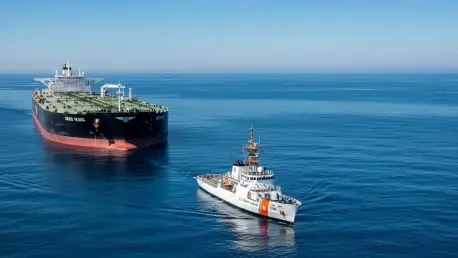

The open seas have transformed into a geopolitical chessboard where supertankers are the pawns, and the latest moves by the United States threaten to checkmate Venezuela’s beleaguered oil industry. In a dramatic escalation of its pressure campaign, Washington has shifted from economic sanctions to direct maritime interdictions, physically halting the flow of Venezuelan crude. This aggressive new strategy has sent shockwaves through global energy markets, created a logistical nightmare for the state-run oil company, and sparked international condemnation, redrawing the lines of conflict over the future of Venezuela.
The Sanctioned Seas a High Stakes Game of Oil and Power
For years, Venezuela’s state-run oil industry has operated under the shadow of U.S. sanctions, a landscape of mounting financial restrictions designed to isolate the government of Nicolas Maduro. The industry, managed by the national company Petróleos de Venezuela, S.A. (PDVSA), has struggled to maintain production and find buyers amid a tightening web of economic penalties that target its ability to access international financial systems and technology.
This high-stakes confrontation involves several key actors. On one side stands the U.S. government, deploying its economic and military might to enforce its foreign policy objectives. On the other is PDVSA, desperately trying to keep its operations afloat. Caught in the crossfire are international tanker operators and their crews, who now face the direct risk of interception, and global buyers, who must weigh the appeal of discounted crude against the potential for catastrophic financial and legal repercussions.
The strategic importance of these oil exports to Venezuela’s economy cannot be overstated. Crude oil represents the primary source of foreign currency and the central pillar of the national budget. By targeting the physical transportation of this vital commodity, the U.S. is not merely applying economic pressure but striking at the very heart of the Venezuelan state’s ability to function, raising the stakes for all involved.
From Sanctions to Seizures a New Era of Enforcement
The U.S. Maritime Dragnet Interceptions on the High Seas
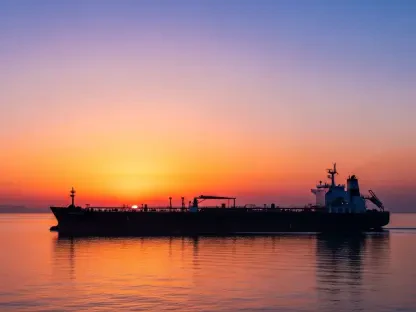
The recent campaign marks a significant tactical shift from financial penalties to direct maritime interdictions on the high seas. This move from sanctioning entities on paper to physically seizing assets at sea represents a far more muscular approach to enforcement. The U.S. Coast Guard, backed by a heightened military presence in the Caribbean, is now actively intercepting vessels suspected of transporting sanctioned Venezuelan oil, creating a de facto blockade that is much harder to circumvent than financial sanctions.
This new doctrine was vividly illustrated by several recent incidents. The U.S. Coast Guard successfully seized the supertanker Skipper, which was rerouted toward the Texas coast. Authorities also attempted to intercept two other key vessels: the Centuries, a fully loaded tanker bound for China, and the Bella 1, an empty, previously sanctioned supertanker. These three tankers alone have been instrumental in evading sanctions, having collectively moved over 41 million barrels of Iranian and Venezuelan crude in recent years, making them high-value targets in this new enforcement era.
The policy of asset seizure has been explicitly confirmed at the highest levels of the U.S. government. President Donald Trump publicly affirmed the actions, stating that Washington could either sell the confiscated oil or keep the vessels. This declaration solidifies a strategy where the assets of adversaries are not just frozen but actively appropriated, a tactic defended as part of a counter-narcotics operation but widely interpreted as a direct move against the Maduro government.
Market Tremors and Stranded Cargoes Quantifying the Impact
The immediate market reaction to these developments was pronounced, with fears of a supply disruption rippling through global energy markets. Brent crude futures rose 2.4% to $61.94 a barrel, and U.S. West Texas Intermediate (WTI) crude saw a similar 2.4% climb to $57.89. This price surge reflects the market’s sensitivity to geopolitical risk, as the potential removal of Venezuelan barrels from the market adds another layer of uncertainty on top of ongoing conflicts elsewhere.
On the ground in Venezuela, the impact has been devastating. Tanker loading activities have slowed to a trickle, with most maritime traffic reduced to domestic port-to-port transfers. A growing flotilla of fully loaded tankers is now anchored in Venezuelan waters, unable or unwilling to depart due to the high risk of interception. This has left millions of barrels of crude stranded, creating a logistical bottleneck that paralyzes the export chain from wellhead to customer.
In a striking contrast to this general blockade, U.S. oil major Chevron continues its operations in Venezuela under a specific license from the U.S. Treasury Department. The company recently dispatched a 500,000-barrel cargo to the U.S. Gulf Coast and has successfully sent seven shipments to the United States this month. This exception underscores that the U.S. strategy is not a blanket ban but a targeted campaign designed to control who can and cannot engage in the Venezuelan oil trade.
Venezuela’s Perfect Storm External Pressure Meets Internal Collapse
The U.S. enforcement actions have created a logistical paralysis for PDVSA that extends beyond its own shores. Inbound tankers, carrying essential diluents like naphtha needed to process Venezuela’s heavy crude, have been observed reversing course or halting their voyages. Ship owners, wary of getting caught in the U.S. dragnet, are awaiting new instructions, starving PDVSA of the materials it needs to prepare its oil for export.
This heightened risk has also poisoned commercial relationships. Customers who are still willing to take on Venezuelan cargoes are now demanding significant changes to contracts and deeper price discounts to compensate for the elevated danger and uncertainty. This dynamic further squeezes PDVSA’s revenue, forcing it to sell its primary resource at a fraction of its market value, if it can be sold at all.
Compounding these severe external pressures is a debilitating internal crisis. PDVSA has been hobbled by a recent cyberattack that has crippled its administrative and operational systems. The company has struggled to restore its centralized online platform, forcing a return to antiquated written records and hampering its ability to manage logistics, process payments, and even pay its own employees on time, creating a perfect storm of external blockade and internal collapse.
Navigating Troubled Waters International Law and Diplomatic Fallout
The aggressive U.S. actions have not gone unchallenged on the world stage. Venezuela’s Foreign Affairs Minister, Yvan Gil, swiftly condemned the seizures as “acts of piracy” that flagrantly violate international law. This sentiment was echoed by China, a key destination for Venezuelan oil, whose Foreign Ministry declared the U.S. interceptions a “serious violation of international law,” signaling a growing diplomatic rift.
The incident has also drawn in flag states, which are responsible for regulating vessels registered under their authority. Following the attempted interception of the Centuries, Panama’s Foreign Minister, Javier Martinez-Acha, confirmed the vessel had violated maritime rules by changing its name and disabling its transponder to evade detection. As a result, Panama is now considering canceling the ship’s registration, a move that would render it stateless and unable to operate legally.
Beyond the immediate diplomatic fallout, these enforcement actions raise profound questions about global maritime norms and the freedom of navigation. By asserting the authority to intercept and seize commercial vessels on the high seas, the United States is challenging long-standing principles that govern international waters. This precedent could have far-reaching implications for global trade, potentially emboldening other nations to use similar tactics to achieve their own geopolitical goals.
Charting the Future Escalation Risks and the Fate of Venezuelan Oil
The long-term consequence of these seizures is a profound chilling effect across the maritime industry. Ship owners, insurers, and charterers are now reassessing the risks of any involvement with Venezuela. The fear of having a multi-million-dollar vessel and its cargo seized is a powerful deterrent that will likely scare away even the most risk-tolerant players, further isolating Venezuela from global markets.
Moreover, the use of asset seizure as a primary tool of foreign policy introduces significant risks of escalation. Such direct action could provoke retaliatory measures, not just from Venezuela but from its allies, potentially leading to a wider conflict in the Caribbean. The normalization of such tactics could also destabilize global norms, creating a more unpredictable and contentious environment for international shipping and trade.
The future of Venezuela’s oil sector appears increasingly grim. Trapped between sustained U.S. pressure from the outside and a deepening state of internal decay, PDVSA’s ability to produce and export oil is severely compromised. Without a significant change in the political landscape or a reversal of U.S. policy, the nation’s oil industry faces a protracted period of stagnation and decline, with dire consequences for its economy and people.
The Final Barrels Assessing the Effectiveness and Consequences of U.S. Strategy
The shift toward direct maritime interdictions proved to be a highly effective, if controversial, strategy for paralyzing Venezuelan oil exports. By moving beyond financial sanctions to physically intercepting tankers, the United States successfully created a prohibitive level of risk for anyone involved in the trade, effectively cutting off the Maduro government’s primary revenue stream and achieving a key policy objective.
This external pressure campaign collided with PDVSA’s own internal crises, including operational decay and a crippling cyberattack, to create a perfect storm. The confluence of these events left the state oil company and, by extension, the Venezuelan economy in a precarious position, facing a dual crisis that crippled its present and clouded its future prospects.
The aggressive use of asset seizure had profound strategic implications that rippled beyond Venezuela. It introduced a new volatility into global energy markets and established a new precedent for U.S. foreign policy in the region. This approach reshaped the diplomatic and economic battlefield, demonstrating a willingness to use direct action to enforce sanctions and setting a new, more confrontational tone for international relations in the Western Hemisphere.