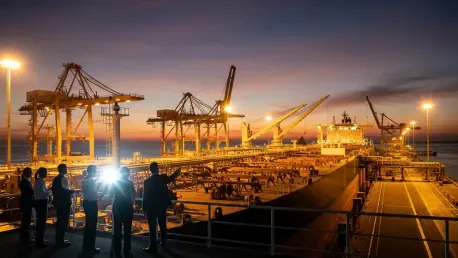

In a move that sent shockwaves through global energy markets and geopolitical circles, the United States has pivoted from military action in Venezuela directly to an ambitious economic blueprint aimed at resurrecting the nation’s collapsed oil industry following the capture of President Nicolas Maduro. President Donald Trump’s press conference on January 3 detailed a plan where American corporations would lead the charge in rebuilding Venezuela, framing the intervention’s primary objective not as a political maneuver but as an economic revitalization project of unprecedented scale. The announcement signals a dramatic new phase in U.S. policy toward the resource-rich but crippled South American nation.
Venezuela’s Crippled Colossus: A Look Inside the Nation’s Decaying Oil Sector
Venezuela’s oil industry is a story of immense potential squandered by years of mismanagement and political turmoil. As a founding member of OPEC and the custodian of the world’s largest proven oil reserves, estimated at 303 billion barrels, the country was once a dominant force in global energy. Its historical significance is a stark contrast to its present reality, where its influence has all but evaporated, leaving behind a legacy of what could have been.
The decline has been nothing short of catastrophic. From a production peak of 3.5 million barrels per day (bpd) in the late 1990s, output has plummeted to a mere 800,000 bpd. This collapse is a direct result of chronic underinvestment, the exodus of skilled labor, and the decay of essential infrastructure, from refineries and pipelines to export terminals. The nation’s energy sector, once the engine of its economy, now stands as a monument to its systemic failure, operating at a fraction of its capacity.
Despite the dire situation, a handful of international players have clung to their positions within the country. Chevron remains the most significant U.S. presence, navigating a complex web of sanctions and operational challenges. Alongside it, state-owned entities from China and Russia have maintained strategic interests, providing financial lifelines to the previous regime in exchange for oil access. These companies now find themselves at a crossroads, their futures in Venezuela dictated by the new U.S.-led reality unfolding on the ground.
A Bold Intervention and its Market Implications
An American Blueprint: Trump’s Plan for Economic Revival
President Trump’s strategy for Venezuela represents a direct, corporate-led approach to nation-building, centered entirely on the oil sector. The plan calls for billions of dollars in private investment from major U.S. energy firms, which will be tasked with the monumental job of repairing and modernizing the country’s dilapidated oil infrastructure. This infusion of American capital and technology is intended to be the catalyst for a rapid economic turnaround.
To facilitate this transition, the U.S. will establish a temporary administrative body to oversee the country’s governance, ensuring a stable environment for reconstruction. Trump stated the U.S. would “run the country with a group” to manage a “safe, proper and judicious transition.” The financial model underpinning this effort is unconventional: participating American companies will front the costs for all reconstruction and operational activities. In return, they are to be reimbursed from the proceeds of future oil sales once production is restored, effectively betting on their own ability to revive the industry.
Global Ripples: Gauging the Impact on an Oversupplied Market
The immediate aftermath of the U.S. intervention has raised concerns among market analysts about a potential disruption to Venezuela’s already limited oil exports. With a power vacuum in Caracas, international buyers may hesitate, uncertain of who has the legal authority to sell crude and receive payment. This could temporarily remove all 800,000 bpd from the market, creating a short-term supply shock.
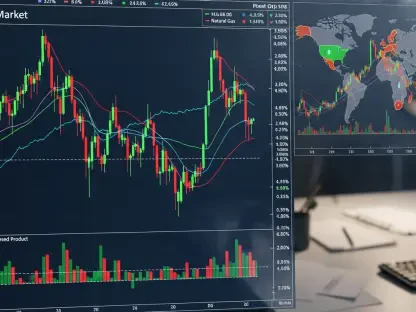
However, the global oil market appears well-positioned to absorb such a disruption. High production levels from OPEC+ and the United States throughout the previous year have created an oversupplied environment, which contributed to a nearly 20% drop in prices in 2025. This market softness provides a crucial buffer, suggesting that the loss of Venezuelan crude, while notable, is unlikely to cause a dramatic or sustained price spike. The more significant long-term question is how quickly U.S. intervention can bring production back online and what that eventual flood of oil will mean for global balances.
Navigating the Chaos: Immediate Security and Logistical Hurdles
The most formidable and immediate challenge to the U.S. plan is ensuring security on the ground. Venezuela’s oil facilities, sprawling across vast and often remote regions, are highly vulnerable to sabotage, looting, and attacks from factions loyal to the former regime or opportunistic criminal groups. Securing these assets, along with the personnel required to operate them, is a critical prerequisite for any meaningful reconstruction work to begin and will likely require a significant and sustained security presence.
Beyond the physical risks, the political vacuum in Caracas creates profound uncertainty that complicates every aspect of the mission. Establishing a legitimate and functional transitional authority is paramount, yet the path to doing so is fraught with difficulty. Logistically, the task is immense. Revitalizing an energy infrastructure that has suffered from decades of neglect involves more than just repairing pipelines; it requires rebuilding entire supply chains, sourcing specialized equipment, and potentially retraining a workforce, all within a politically unstable environment.
From Embargo to Oversight: The New Rules of Engagement
In a strategic move, President Trump has declared that the existing U.S. oil embargo on Venezuela will remain in effect during the transitional period. This decision ensures that all oil operations and subsequent sales will be tightly controlled under the U.S.-led administrative oversight. By channeling all activities through a sanctioned framework, Washington aims to prevent capital flight and ensure that revenues are directed exclusively toward reconstruction efforts and, eventually, the national treasury, rather than disappearing into the hands of unauthorized actors.
This new reality presents a complex legal and operational landscape for companies. The establishment of a temporary U.S. administration raises unprecedented questions about sovereignty and international law, which corporate legal teams must carefully navigate. In response to the unfolding events, Chevron issued a statement prioritizing the safety of its employees and assets while reaffirming its commitment to operating in strict compliance with all applicable laws. This cautious stance reflects the broader corporate sentiment of balancing the immense opportunity with the significant legal and reputational risks involved.
Rebuilding a Petro-State: The Long Road to Restoring Oil Dominance
The ultimate ambition of the U.S. plan is not merely to repair Venezuela’s oil industry but to restore it to its former glory as a global energy powerhouse. The long-term vision involves a multi-year, multi-billion-dollar effort to overhaul every component of the production chain, from drilling and extraction in the Orinoco Belt to refining and exporting from coastal terminals. The goal is to systematically ramp up production, eventually exceeding its previous peak and unlocking the full economic potential of the nation’s vast reserves.
American energy giants are positioned to play the central role in this reconstruction. Their access to cutting-edge technology, vast capital resources, and decades of project management experience are deemed essential for tackling a challenge of this magnitude. These companies are not just investors; they are the architects and engineers of Venezuela’s new energy future, tasked with rebuilding a petro-state from the ground up.
If successful, this ambitious plan could fundamentally reorder the global energy map. A fully productive Venezuela would introduce millions of barrels of oil per day into the market, potentially influencing global prices and shifting geopolitical alliances. The re-emergence of Venezuela as a major, U.S.-aligned oil supplier would have far-reaching implications for OPEC, as well as for rivals like Russia and China, who have long held influence in the region.
A High-Stakes Gamble: Weighing the Promise and Peril of the Plan
The unfolding situation in Venezuela represents one of the most audacious geopolitical and economic gambles in recent memory. The intervention, transitioning from a swift military strike to a long-term nation-building project, is predicated on the idea that economic revival, led by American industry, can pave the way for political stability. It is a high-stakes play where the lines between foreign policy, national security, and corporate interest are intrinsically blurred.
Ultimately, the success of this plan balances on a knife’s edge. The economic promise is immense; unlocking 303 billion barrels of oil offers a generational opportunity for both Venezuela and the U.S. companies involved. Yet, the perils are equally profound. The mission faces daunting security threats, deep-seated political instability, and the sheer logistical complexity of rebuilding a failed state. The world now watches to see whether this bold American blueprint will transform Venezuela into a stable energy titan or become a cautionary tale of ambition colliding with a harsh reality.