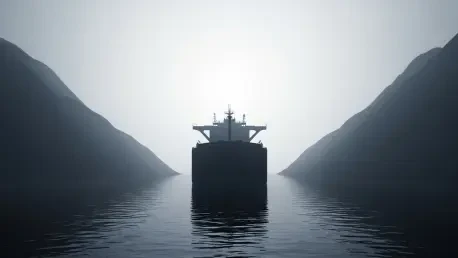

The global energy market currently finds itself gripped by a profound sense of uncertainty as the vital maritime artery of the Persian Gulf remains constricted despite a tenuous cessation of hostilities. While a fragile ceasefire established in late February 2026 has temporarily silenced the batteries of missiles and drones, the economic shockwaves of the recent conflict between the United States, Israel, and Iran continue to reverberate through every major stock exchange and fuel station across the globe. National Economic Council Director Kevin Hassett recently attempted to illustrate the gravity of the situation by noting that every single supertanker that fails to transit the Strait of Hormuz represents a loss of roughly 2 million barrels of crude oil. This staggering volume is not merely a statistic; it is a critical component of the global supply chain that has vanished from the market, leaving a vacuum that has pushed oil prices back above the psychological threshold of $100 per barrel.
The Disconnect Between Rhetoric and Reality
Discrepancies in Maritime Traffic Reporting
Official statements from the White House have consistently attempted to project an image of a stabilizing region where commerce is beginning to resume its natural rhythm. Defense Secretary Pete Hegseth and Press Secretary Karoline Leavitt have publicly asserted that the waterway is “open” for business, citing a supposed uptick in vessel movements to reassure nervous international partners. However, these claims are increasingly at odds with real-time maritime intelligence and satellite tracking data provided by independent analysts. Before the recent escalation of kinetic warfare, the strait served as the primary corridor for more than 100 commercial vessels every single day, effectively facilitating the movement of 20% of the world’s daily oil consumption. The contrast between that historical baseline and the current reality is stark, as ship owners remain hesitant to commit their assets to a zone where the threat of seizure or collateral damage remains a constant, looming shadow.
Maritime data platforms like Kpler have provided a much more sobering assessment of the situation, revealing that only a handful of tankers have successfully navigated the passage since the ceasefire was declared. This massive bottleneck has effectively sequestered hundreds of millions of barrels of oil within the Persian Gulf, preventing them from reaching refineries in Asia, Europe, and North America. By maintaining this stranglehold, Tehran has managed to retain significant strategic leverage over the global economy, even after suffering conventional military setbacks from U.S. and Israeli precision strikes. The disparity between the “freedom of navigation” promised by diplomats and the actual flow of cargo suggests that the waterway is currently operating under a state of undeclared blockade. This lack of transparency regarding the safety of the route continues to fuel market skepticism, as traders focus more on the absence of physical oil than on the optimistic press releases emanating from the West Wing.
Economic Impact of Restricted Navigation
The economic consequences of this maritime congestion are being felt far beyond the immediate region, manifesting as a persistent inflationary pressure that threatens to derail broader global recovery efforts. Sultan Ahmed Al Jaber, the CEO of the Abu Dhabi National Oil Company, has been vocal about the nature of this crisis, describing the current operating environment as one defined by coercion rather than cooperation. Reports suggest that Iran is not merely slowing traffic but is actively seeking to institutionalize its control by imposing unilateral tolls on any vessel attempting to cross through its territorial waters. Such a move would represent a fundamental shift in the legal status of international straits, turning a global common into a revenue-generator for a sanctioned state. This development directly contradicts the specific demands for a “complete, immediate, and safe opening” that were outlined by the U.S. administration as a prerequisite for the current two-week pause in military operations.
This tactical maneuvering by Tehran has created a high-stakes game of chicken with the global energy market, where the cost of insurance and risk premiums has skyrocketed for any carrier willing to brave the passage. For most commercial operators, the combination of high insurance rates and the physical danger of navigation makes the route nearly untenable without direct military escort, which has not yet been deployed on a scale sufficient to restore confidence. Consequently, the “huge chunk” of missing supply referenced by the National Economic Council remains trapped, creating a structural deficit in the market that cannot be easily mitigated by drawing down strategic reserves or increasing production elsewhere. Until there is a verified return to pre-conflict traffic levels, the global price of energy will likely remain unmoored from traditional supply and demand fundamentals, driven instead by the shifting geopolitical winds of the Middle East.
Future Projections and Diplomatic Challenges
Upcoming Negotiations in Islamabad
The international community is now looking toward Pakistan, where upcoming negotiations in Islamabad are expected to serve as the primary forum for resolving the maritime standoff. The U.S. administration is currently attempting to balance a delicate strategy that involves offering specific diplomatic incentives to Tehran while simultaneously maintaining the credible threat of renewed military intervention should the bottleneck persist. These talks are viewed as a critical pivot point that will determine whether the current ceasefire can be transformed into a durable peace or if it is merely a brief intermission before a more destructive phase of the conflict begins. The primary objective for Western negotiators is to secure a binding agreement that guarantees the unhindered passage of commercial shipping without the imposition of illegal tolls or the threat of harassment by the Islamic Revolutionary Guard Corps’ naval assets.
Despite the hope surrounding these diplomatic efforts, the atmosphere remains highly charged and prone to sudden deterioration. Tehran has already accused the United States of violating the spirit of the ceasefire, using these allegations as a pretext to justify its continued restriction of the strait. This narrative of victimhood allows the Iranian leadership to maintain domestic support while continuing to squeeze the global economy for concessions. The lack of clarity regarding the specific rules of engagement and maritime safety protocols keeps the energy sector in a state of high volatility, as any minor skirmish or misunderstanding in the Persian Gulf could instantly trigger a return to open hostilities. This uncertainty ensures that the risk premium on oil remains baked into the price, as market participants hedge against the possibility that the Islamabad summit may end in a stalemate rather than a breakthrough.
Strategy for Energy Security and Resilience
As the situation continues to evolve, it has become increasingly clear that the global community must reconsider its long-term dependence on a single, vulnerable maritime chokepoint. The current crisis underscores the necessity of accelerating the development of alternative energy transport infrastructure, such as pipelines that bypass the Strait of Hormuz entirely, though these projects require years of investment and regional cooperation to become viable. In the immediate term, governments and private sector leaders should prioritize the diversification of energy sources and the strengthening of strategic alliances with alternative producers outside the Persian Gulf. This includes providing technical and financial support for expanded drilling and refining capabilities in more stable regions to ensure that a localized conflict cannot again hold the entire global economy hostage through the manipulation of maritime trade routes.
Looking past the immediate negotiations, the final resolution of this crisis will require a fundamental reassessment of how international waters are policed and protected. Stakeholders should advocate for a more robust, multilateral maritime security framework that goes beyond temporary task forces and instead establishes a permanent, internationalized presence to guarantee the right of innocent passage. This approach would move the responsibility for waterway security away from a single superpower and toward a collective of nations with a shared interest in stable energy prices. By institutionalizing the protection of such critical bottlenecks, the global community can reduce the strategic value of maritime coercion and ensure that the flow of commerce is no longer subject to the whims of regional actors. Only through such comprehensive, forward-looking measures can the world hope to escape the cycle of volatility that has characterized the energy markets over the past several months.
The period of intense regional tension has demonstrated that the stability of the global economy is inextricably linked to the physical security of a narrow strip of water. While the immediate focus remains on the Islamabad talks and the potential for a diplomatic resolution, the long-term lesson is one of extreme vulnerability. It is now evident that the traditional methods of managing maritime security were insufficient to prevent a significant disruption of the global oil supply. Moving forward, the emphasis was placed on creating redundant energy corridors and a more resilient international legal framework to protect trade. The transition toward a more diversified energy landscape and the strengthening of global maritime alliances were seen as the only viable paths toward ensuring that such a bottleneck would never again result in such profound economic instability.