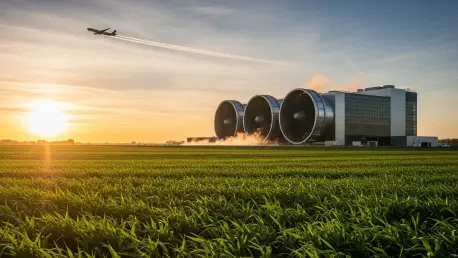

The global aviation industry is currently navigating one of its most significant challenges to date, facing mounting pressure to radically decarbonize its operations and achieve ambitious sustainability targets set for 2050. As the world moves towards a greener future, the long-term viability of air travel hinges on its ability to transition away from its deep-seated reliance on conventional fossil-based jet fuels. While futuristic solutions like hydrogen-powered and electric aircraft capture the imagination, their widespread implementation remains decades away, requiring a complete overhaul of global fleet and infrastructure. In this critical interim, the industry cannot afford to wait. The consensus among policymakers, technologists, and industry leaders is that a powerful, practical, and immediately deployable solution already exists. This solution, Sustainable Aviation Fuel (SAF), represents the most critical and effective pathway to securing a sustainable future for aviation, demanding a unified and immediate commitment to accelerate its adoption on a global scale.
Understanding Sustainable Aviation Fuel
The “Drop-In” Solution for Immediate Impact
A central and compelling advantage of Sustainable Aviation Fuel is its designation as a “drop-in” fuel, which positions it as the most pragmatic and effective near-term solution for decarbonizing air travel. This crucial attribute means that SAF can be seamlessly blended with traditional kerosene-based jet fuel and utilized within the existing global aviation ecosystem without requiring any costly or time-consuming modifications. Aircraft engines, airport hydrant systems, and the entire fueling supply chain can accommodate SAF blends today, eliminating immense technical and logistical barriers that would otherwise impede progress. The fuel is meticulously engineered to be chemically identical to its fossil-based counterpart, perfectly matching it in all critical performance metrics, including energy density, freezing point, and combustion characteristics. This interchangeability ensures that safety and operational standards are maintained without compromise. By removing the need for new equipment or specialized training for ground crews and pilots, SAF provides a direct and accessible pathway for airlines to begin reducing their carbon footprint immediately, making it the premier choice for tangible emissions reduction now.
Diverse and Sustainable Production Pathways
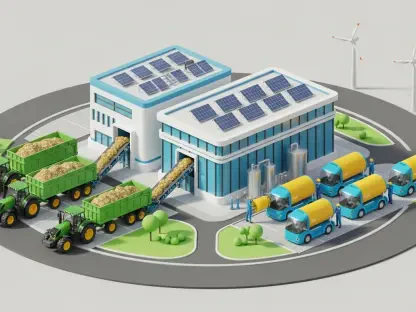
The production of Sustainable Aviation Fuel is rooted in diverse and innovative pathways that leverage a wide array of sustainable feedstocks, broadly categorized into two main types. The first category involves the conversion of biological waste streams and residues into fuel. This includes materials such as used cooking oil, agricultural byproducts like corn stover, and even municipal solid waste. Through advanced processes like hydro-processing and fermentation, these materials are transformed from potential pollutants into a high-value energy source, actively contributing to a circular economy by upcycling waste. The second, and arguably more scalable, category is synthetic SAF, often referred to as e-fuel. This type is produced through a power-to-liquids process that combines green hydrogen—produced via electrolysis using renewable electricity from solar or wind—with carbon dioxide captured directly from the atmosphere or from industrial sources. While the production of biological SAF is limited by the finite availability of feedstocks, the potential for e-fuels is immense, constrained primarily by the capital investment required for new production facilities rather than by a scarcity of raw materials like water and air.
The Environmental Advantage a Closed Carbon Loop
The most profound benefit of SAF, and the core of the argument for its widespread adoption, is its substantial impact on reducing lifecycle carbon emissions. While the combustion of any hydrocarbon fuel, including SAF, releases carbon dioxide, the critical difference lies in the origin of that carbon. Conventional jet fuel releases “ancient” carbon that has been sequestered underground for millions of years in the form of crude oil, thereby adding new carbon to the atmosphere and contributing directly to the greenhouse effect. In stark contrast, SAF operates within a “closed carbon loop.” The carbon emitted during its combustion was only recently absorbed from the atmosphere, either by the plants used as biofuel feedstock or captured directly from the air for the production of e-fuels. This process of recycling atmospheric carbon fundamentally alters the fuel’s climate impact. This key distinction is what allows SAF to achieve a lifecycle carbon emission reduction of up to 80% when compared to its fossil-fuel equivalent, presenting the aviation industry with its most powerful tool for meaningful and immediate decarbonization.
Paving the Way for Widespread Adoption
The Role of Government in Driving the Market
Despite its clear environmental benefits, the primary obstacle to the widespread adoption of SAF has been its high cost, which can be two to five times greater than traditional jet fuel. Recognizing this market failure, government policy has emerged as an essential driver to stimulate production and bridge the price gap. The United Kingdom’s proactive Sustainable Aviation Fuel Bill serves as an exemplary model, employing a strategic, two-pronged approach. First, the government is implementing a clear and escalating mandate that legally requires an increasing percentage of SAF to be blended into all aviation fuel. The roadmap begins with a 2% requirement, rising steadily to 10% by 2030 and reaching 22% by 2040. Second, to de-risk the significant private investment needed to build production facilities, the bill establishes an innovative financial mechanism. This system allows a governing body to enter into long-term contracts with producers at a pre-agreed price, guaranteeing revenue stability. This policy framework is designed to eliminate financial uncertainty, foster a stable supply to meet the national mandates, and ultimately drive down the cost of SAF as production volumes increase and economies of scale are achieved.
A Strategic Imperative for a Greener Future
The strategic decisions made to foster the growth of Sustainable Aviation Fuel proved to be a turning point for the aviation industry. The scaling of SAF production created a wave of new economic opportunities, stimulating investment in advanced research, robust supply chains, and state-of-the-art production facilities, which in turn generated thousands of skilled jobs. For airlines, embracing SAF became essential not only for complying with stringent regulatory requirements and achieving corporate sustainability goals but also for meeting the clear and growing demand from passengers for more environmentally responsible travel options. Major airlines had set ambitious net-zero targets, and aircraft manufacturers were already delivering new planes fully capable of flying on 100% SAF. As other transport sectors, particularly road transport, rapidly electrified and reduced their reliance on fossil fuels, the traditional refining infrastructure began to shrink. SAF was perfectly positioned to fill this emerging gap in the energy market, solidifying its role as a fundamental strategic imperative, rather than merely an environmental alternative, for the enduring future of aviation.