
Christopher Hailstone brings decades of high-level expertise in energy management and utility infrastructure to the table, offering a seasoned perspective on the intersection of grid security and macroeconomic stability. As global energy markets face unprecedented volatility, his insights into how electricity delivery and fuel supply chains impact national economies have become essential for understanding today’s fiscal landscape. In this conversation, we explore the intricate dynamics of rising consumer costs, the technical shift to modern data modeling, and the strategic maneuvers required to navigate a world where geopolitical tensions and energy shortages threaten to disrupt the delicate balance of growth and inflation.
India’s consumer inflation recently rose to 3.21%, with food inflation climbing significantly above 3%. How are these rising costs affecting the average household budget, and what specific steps can be taken to protect vulnerable populations from further price volatility in the food sector?
The jump in food inflation to 3.47% creates a tangible strain on the daily lives of millions, as the cost of basic nutrition begins to outpace general wage growth. For many families, this isn’t just a statistical shift; it means making difficult choices between the quality of their meals and other essential expenses like education or healthcare. To safeguard the most vulnerable, the government must leverage the “bright” food supply prospects the central bank mentioned by ensuring efficient distribution and preventing hoarding. Strengthening the logistical chain from farm to table is critical to prevent these price spikes from becoming a permanent fixture of the household budget.
The calculation for inflation now uses a 2024 base year to reflect changes in digitalization and urbanization. How does this updated methodology alter our understanding of consumer behavior, and what are the technical difficulties of transitioning to such a modern data series?
Shifting the base year from 2012 to 2024 is a monumental technical undertaking that allows us to see the modern consumer for who they truly are—someone deeply integrated into the digital economy and services sector. This change captures structural shifts in income levels and urbanization that the old 2012 series simply missed, giving policymakers a much clearer lens through which to view current spending habits. However, the transition is fraught with the difficulty of reconciling historical data with these new parameters, ensuring that the “Goldilocks narrative” of growth remains accurate rather than just a byproduct of a new formula. It requires a meticulous recalibration of thousands of data points to ensure that the 3.21% inflation figure we see today is truly comparable to the economic realities of the past decade.
Nearly 90% of India’s LPG imports pass through the Strait of Hormuz, which is currently seeing major maritime disruptions. What are the immediate implications for domestic cooking fuel availability, and how should the country diversify its energy routes to mitigate these geopolitical risks?
The fact that 90% of LPG imports are bottlenecked in the Strait of Hormuz creates a precarious situation for national energy security, particularly for a fuel as vital as household cooking gas. While crude oil imports have already shown progress in diversification—with 70% now coming from routes outside the Strait—LPG remains dangerously exposed to the escalating conflict in the Middle East. The immediate implication is a tightening of supply that forces the government into difficult rationing decisions to keep kitchen fires burning across the country. Long-term stability will require a massive investment in alternative shipping lanes and perhaps a shift toward more domestic renewable heating sources to break this dependency on a single, volatile maritime corridor.
Commercial fuel supplies are being diverted to residential areas, causing significant distress for hotels and restaurants. What are the economic consequences of prioritizing household energy over the service sector, and what policy adjustments could help businesses survive these supply shortages?
When the government prioritizes residential LPG to prevent a public outcry, the service sector—the very engine of modern urban growth—takes a direct hit, leading to the potential closure of many hotels and restaurants. This creates a ripple effect where job losses and reduced tax revenues can stifle the “expansion of the services sector” that the 2024 base year was meant to celebrate. To help businesses survive, we need policy adjustments that offer temporary subsidies or tax breaks for commercial energy users during these supply crunches. Without such a buffer, the hospitality industry faces an existential threat that could derail the broader economic momentum the country has worked so hard to build.
Global oil prices have hit $100 a barrel, complicating the central bank’s inflation targets and growth forecasts. How does this energy price surge influence the decision to hold or raise interest rates, and what are the potential trade-offs for the country’s broader economic stability?
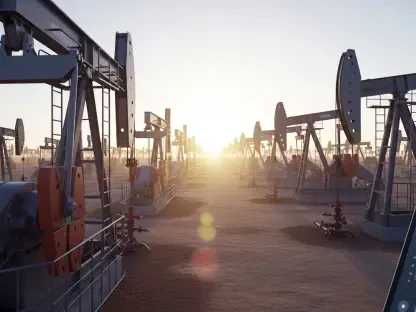
With Brent crude touching the $100 mark, the central bank is backed into a corner where the “dovish” hopes for lower interest rates are effectively sidelined in favor of a cautious policy hold. The surge in energy costs acts as a persistent upward pressure on inflation, making it nearly impossible to trigger the rate cuts that many businesses were hoping would stimulate further investment. The trade-off here is stark: by keeping rates steady to combat energy-driven inflation, the central bank risks slowing down the overall growth rate of the economy. It is a delicate balancing act where the need to stay within the 2% to 6% target range must be weighed against the very real danger of an economic cool-down caused by expensive credit and even more expensive fuel.
What is your forecast for India’s economy?
I believe the economy will remain resilient in the short term, maintaining its “Goldilocks” status of growth despite the 3.21% inflation rate, provided that the geopolitical situation in the Middle East does not deteriorate further. However, we should expect a period of “policy hold” from the Reserve Bank of India, as the $100-a-barrel oil price serves as a persistent anchor that prevents more aggressive fiscal expansion. In the long run, the success of the economy will depend on how quickly the country can finalize its transition to a modernized, diversified energy infrastructure that is less vulnerable to the whims of international maritime corridors. The next few months will be a test of endurance, where managing the supply of LPG and crude oil will be just as important as managing the interest rate.