
The sudden and aggressive surge in global energy prices has fundamentally altered the American economic landscape, pushing national gasoline averages above the four-dollar mark for the first time in nearly two years. This dramatic shift is not merely a localized fluctuation but a direct consequence of escalating military tensions in the Middle East, primarily involving the United States, Israel, and Iran. As fuel costs climb by more than thirty percent in a matter of weeks, the resulting volatility is sending shockwaves through every sector of the domestic economy, threatening to dismantle the hard-won progress made in stabilizing consumer prices and financial markets. The scale of this disruption is unprecedented in the modern era, forcing policymakers and industry leaders to confront a reality where energy security is no longer a given. This crisis serves as a stark reminder of how deeply the American consumer’s purchasing power is intertwined with geopolitical stability thousands of miles away, creating an atmosphere of uncertainty that impacts everything from household spending to large-scale corporate investment.
Geopolitical Instability and Global Supply Disruption
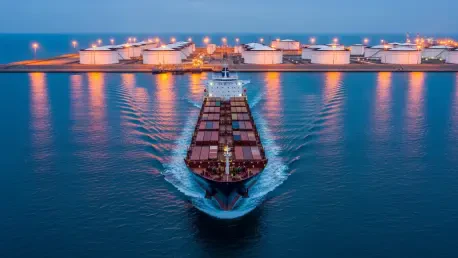
At the epicenter of the current energy turmoil is the tactical paralysis of the Strait of Hormuz, a maritime chokepoint that serves as the primary artery for approximately twenty percent of the world’s oil supply. Hostilities in the region have effectively halted the safe passage of tanker traffic, prompting the International Energy Agency to categorize this event as the most significant supply disruption in recorded history. With Brent crude prices soaring by over fifty percent since the onset of the conflict, the global market is grappling with a sudden vacuum of Gulf Arab oil exports. This supply shock is exacerbated by the fact that regional producers, unable to move their product through the blocked waterway, have reached their maximum local storage capacities. This forced reduction in output has created a tightening of the market that cannot be easily offset by other global players, leading to a frantic search for alternative energy sources and shipping routes that are currently non-existent or prohibitively expensive to implement on short notice.
Building on this foundation of global scarcity, the immediate impact on international energy benchmarks has translated into a period of extreme price volatility that shows no signs of abating. Analysts observe that the current market behavior is driven as much by the fear of prolonged conflict as it is by the physical absence of oil barrels. This psychological pressure has led to a speculative environment where even minor updates regarding military movements result in massive price swings. Consequently, the United States finds itself in a precarious position, as its domestic energy production, while robust, is still tied to these international pricing structures. The inability to decouple domestic costs from the global crisis means that as long as the Strait remains a contested zone, the upward pressure on prices will remain a dominant feature of the economy. The systemic nature of this disruption suggests that even a swift resolution to the physical blockade would leave a lasting mark on the financial structures governing energy trading for the foreseeable future.
Escalating Financial Burdens for Consumers and Logistics
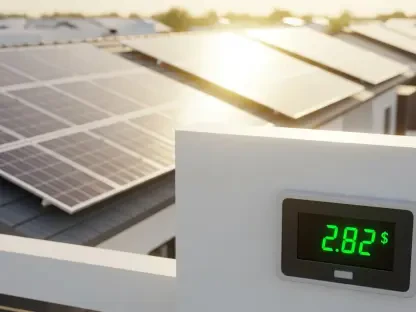
The most visible manifestation of this crisis for the average American is the immediate and painful increase in gasoline prices, which recently hit a national average of $4.018 per gallon. This rapid ascent in costs is reminiscent of the 1990 oil shock, creating an environment where household budgets are being squeezed by essential transportation expenses. Economists point out that for every cent increase at the pump, billions of dollars in consumer spending are diverted away from other sectors of the economy, such as retail, dining, and travel. This shift in spending habits is already beginning to manifest in lowered consumer confidence indices, as families prioritize fuel for work and school over discretionary purchases. The speed of the price hike has left little room for behavioral adaptation, meaning that the financial impact is felt almost instantaneously across diverse demographics, regardless of their location or income level, as the necessity of personal transportation remains a core requirement for participation in the American workforce.
While gasoline prices capture public attention, the surge in diesel costs to over five dollars per gallon represents a far more insidious threat to the broader economic framework. Diesel is the primary fuel for the nation’s freight rail and long-haul trucking networks, which serve as the backbone of the entire supply chain. As transportation companies face forty percent higher fuel overheads, these costs are inevitably passed down to the consumer in the form of higher prices for groceries, pharmaceuticals, and e-commerce deliveries. This secondary wave of inflation is expected to become fully integrated into the retail market by the second quarter of the year, potentially triggering a persistent inflationary cycle that is difficult for central banks to control. The ripple effect of expensive diesel means that even those who do not own a vehicle will feel the sting of the energy crisis through the rising cost of living. This systemic burden risks slowing down the overall momentum of economic growth, as both businesses and individuals are forced to navigate a landscape where the cost of moving goods is at an all-time high.
Federal Mitigation Efforts and Economic Outlook
In response to the mounting economic pressure, the federal government has deployed an extensive array of strategic interventions designed to bolster the domestic fuel supply and provide immediate relief. A cornerstone of this strategy is the massive release of 172 million barrels from the Strategic Petroleum Reserve, part of a coordinated international effort to inject liquidity into a parched market. Furthermore, the temporary suspension of the Jones Act has been implemented to allow foreign-flagged vessels to transport fuel between American ports, specifically targeting shortages on the West Coast and in the Northeast. These moves are supplemented by the Environmental Protection Agency’s decision to issue emergency waivers for E15 ethanol blends, which are typically restricted during warmer months. These actions demonstrate a high-level commitment to using every available regulatory lever to prevent a total logistical shutdown, yet they are widely viewed as temporary stopgaps rather than permanent solutions to a crisis rooted in international conflict.
Moving forward, the long-term health of the American economy will depend on the successful integration of more resilient energy strategies that can withstand such extreme geopolitical shocks. While current federal interventions provide a necessary cushion, the next phase of the response must focus on accelerating the diversification of the energy mix and enhancing the efficiency of the domestic logistics network to reduce its sensitivity to fuel price spikes. Decision-makers should consider incentivizing the transition of heavy freight to alternative power sources and investing in localized energy storage to prevent regional shortages. The lessons learned from this crisis highlight the necessity of a proactive rather than reactive energy policy, where the focus shifts toward long-term structural independence. As the nation navigates this period of high volatility, the priority must be on maintaining the integrity of supply chains while preparing for a global market that remains fundamentally unpredictable. The ability of the United States to adapt its economic infrastructure to these new realities was the ultimate test of its financial resilience during this period.