
A deep-seated environmental paradox is unfolding across the waters of Puget Sound, where the urgent push to clean the air from maritime shipping has ignited a fierce and divisive conflict. As the region’s major seaports champion a transition away from polluting heavy fuel oil, they find themselves caught in a crossfire between the global shipping industry’s pragmatic choice of liquefied natural gas (LNG) and the adamant opposition of climate activists who view it as a dangerous environmental gamble. This clash of priorities highlights the immense challenge of aligning immediate, practical solutions with long-term climate imperatives in a world deeply reliant on global trade. Port authorities are now tasked with navigating this turbulent landscape, balancing economic realities with the powerful public demand for a truly sustainable future.
A Region Divided Over a Cleaner Future
The Local Mandate for Cleaner Air
In a notable divergence from stalled international efforts to decarbonize global shipping, the ports of the Pacific Northwest are forging their own path toward environmental stewardship. The ports of Seattle and Tacoma have given preliminary approval to a joint 2026-2030 Clean Air Implementation Plan, a strategy closely coordinated with similar initiatives by the Vancouver Fraser Port Authority. Recognizing that massive cargo vessels represent the single greatest source of seaport-related air pollution, these plans outline several concrete and largely uncontroversial measures. Key among these are the expansion of shore power infrastructure, which allows ships to plug into the local electrical grid instead of idling their diesel engines at berth, and the promotion of electrification for port-side equipment, including trucks and cargo-handling machinery. These actions represent a significant commitment to improving local air quality and reducing the immediate environmental impact of port operations on surrounding communities.
However, this regional consensus quickly dissolves when the focus shifts from land-based equipment to the propulsion systems of the oceangoing vessels themselves. Navigating the transition to cleaner fuels for these ships has proven to be the most challenging and contentious aspect of the clean air strategy. While there is universal agreement on the need to move beyond traditional bunker fuel, the choice of a replacement has created a stark divide. Port authorities find themselves in an incredibly difficult position, attempting to facilitate a transition over which they have limited direct control. They must cater to the fuel choices made by the global shipping lines that are their primary customers, while simultaneously responding to intense pressure from local environmental advocates who demand a fossil-fuel-free future, creating a complex policy dilemma with no easy answers.
LNG: Bridge Fuel or Climate Threat?
The global maritime industry has overwhelmingly chosen liquefied natural gas as its primary near-term alternative to conventional marine fuels, viewing it as a crucial transitional step. This preference is reflected in market trends, with the number of LNG-powered ships in operation having doubled between 2021 and 2024, a figure projected to double again by 2030. According to the maritime analytics firm DNV, LNG-capable propulsion dominated new alternative fuel ship orders in 2025, capturing a commanding 67% market share. Proponents, including shipping giants like TOTE Maritime and Seaspan, emphasize its immediate and tangible air quality benefits, citing a 20-27% reduction in carbon dioxide emissions and a dramatic decrease in harmful pollutants like soot and smog-forming nitrogen oxides. Furthermore, the industry values the flexibility of modern dual-fuel engines, which can run on traditional fuels when LNG is not available, a critical logistical safeguard in a global supply chain.
This industry-led embrace of LNG is on a direct collision course with climate organizations such as 350 Tacoma, which vehemently oppose its inclusion in any “clean air” plan. These groups label LNG as “fracked gas,” arguing that its environmental benefits are an illusion when its entire lifecycle is considered. Their central concern is methane leakage, or “methane slip,” which occurs during the extraction, transportation, storage, and combustion of the fuel. As uncombusted methane is a greenhouse gas far more potent than carbon dioxide in the short term, activists argue that even a modest leakage rate can completely negate, or even worsen, the climate impact compared to burning traditional fuels. They contend that investing in LNG infrastructure locks the region into a fossil fuel dependency for decades, thereby undermining genuine, long-term decarbonization goals and swapping one environmental problem for another.
Market Realities and Future Pathways
Infrastructure and Industry Momentum
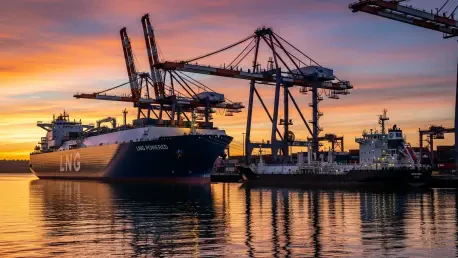
The debate over LNG is not merely a theoretical exercise; it is being solidified in concrete and steel throughout the Salish Sea region as infrastructure is built to support the growing fleet. TOTE Maritime became a first mover in 2023 by converting two of its cargo ships on the Tacoma-to-Anchorage route to run on LNG. These vessels are now refueled at a controversial liquefaction and storage facility constructed by Puget Sound Energy directly at TOTE’s Tacoma berth. This significant investment demonstrates a long-term commitment by key industry players, making it increasingly difficult for policymakers to pivot away from the fuel. The physical presence of this infrastructure anchors LNG’s role in the regional economy, creating a powerful argument for its continued use and expansion, regardless of the ongoing environmental debate about its ultimate climate impact. This reality on the ground presents a formidable challenge to those advocating for a complete rejection of LNG as a transitional fuel.
This commercial momentum is set to accelerate as other major players enter the market. The British Columbia-based conglomerate Seaspan has already launched ship-to-ship LNG refueling services in Vancouver and Nanaimo, utilizing specialized “bunker vessels” for mobile delivery. The company has explicitly stated its ambition to expand these operations south into Puget Sound, targeting the major hubs of Seattle, Tacoma, and Port Angeles. This planned expansion signals a strong industry belief that the demand for LNG will only continue to grow. Faced with this undeniable market trend, port authorities are in a pragmatic but difficult position. As the Port of Seattle Commission stated in a letter to critics, it would be “inappropriate” to entirely remove LNG from consideration, given that they do not ultimately control the fuel choices made by the global shipping operators that constitute their customer base. They must therefore work within the realities of a global industry that is rapidly adopting LNG.
The Search for a True Green Solution
While the current debate is dominated by LNG, port authorities and shipping lines are also looking toward a more distant horizon through collaborative “green corridor” projects aimed at developing genuinely zero-emission solutions. Alliances formed between the ports of Seattle, Tacoma, Vancouver, Alaska, and South Korea have identified green methanol as a preferred alternative to study in future demonstration projects. Green methanol is a synthetic fuel that holds the potential to be truly zero-emission if its production is powered entirely by renewable electricity. However, its path to widespread adoption is blocked by substantial hurdles. It remains extremely expensive compared to fossil fuels, its global availability is currently very low, and it possesses a lower energy density, meaning ships would need to dedicate more valuable cargo space to larger fuel tanks. Furthermore, scaling up its production would require a colossal investment in new green energy infrastructure.
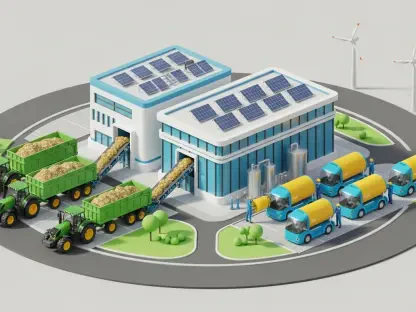
In an effort to bridge the gap between the industry’s current investment in LNG and the pressing climate imperative, a potential middle path has emerged in the form of renewable natural gas (RNG), also known as bio-LNG. This fuel is chemically similar to conventional natural gas but is derived from the decomposition of organic waste from sources like landfills, agricultural manure, or sewage treatment plants. Its primary advantage is that it can be used as a “drop-in” fuel in existing LNG-powered ships and infrastructure, offering a direct pathway to decarbonize the growing LNG fleet. Proponents noted that RNG could be certified as carbon neutral and that it shared LNG’s benefits in reducing local air pollutants. However, this solution was not without its own significant drawbacks. RNG remained more expensive than its fossil-fuel counterpart, and critically, it did not solve the fundamental problem of methane leakage, which could still offset its potential climate benefits.