
The silhouette of massive tankers docking at Tripoli’s harbor now tells a story of a nation fundamentally rewriting its geopolitical destiny through the language of energy and infrastructure. For years, the Mediterranean’s second-largest oil producer found itself caught in a paradoxical trap: despite sitting on some of the world’s most coveted sweet crude, it remained tethered to foreign imports to simply keep its own cities powered. This reliance often manifested in opaque, “crude-for-fuel” swaps that favored Russian intermediaries, but a sweeping transformation is currently replacing those backroom deals with the clinical precision of Western corporate standards and competitive transparency.
This strategic shift is not merely a matter of logistics; it represents the most significant realignment of Libyan economic power since the beginning of the post-Gaddafi era. By 2026, the nation has effectively neutralized its dependence on Russian refined products, transitioning from a heavy reliance on Moscow to a sophisticated network of European and American partnerships. This “nut graph” of Libya’s modern energy policy reveals a state determined to reclaim its sovereignty by integrating into the global financial and regulatory mainstream, moving away from the “gray zone” of international energy trading.
A Mediterranean Shakeup: The Rapid Decline of Russian Crude in Tripoli
Libya is currently orchestrating a tectonic shift in its energy policy that would have seemed impossible just a few years ago. Russian fuel exports to the nation have plummeted from a high of 56,000 barrels per day to a mere 5,000 by 2026. This aggressive decoupling from Moscow marks a definitive end to the era of opaque energy deals and signals Libya’s return to the global fold. By ditching outdated “crude-for-fuel” swaps, the state is effectively cutting off a major revenue stream for the Kremlin while simultaneously fortifying its own economic sovereignty.
The removal of these Russian volumes has created a vacuum that is being rapidly filled by Mediterranean neighbors. Libyan officials have recognized that the previous model, while functional during times of extreme internal strife, was ultimately an unsustainable drain on national wealth. This pivot ensures that every barrel of oil produced serves the direct interest of the Libyan people rather than being used as a pawn in broader geopolitical conflicts.
Reclaiming Stability After Fifteen Years of Economic Turmoil
Since the fall of the Gaddafi regime in 2011, Libya’s energy sector has been defined by volatility and aging infrastructure. As Africa’s second-largest oil producer, the nation’s inability to refine its own crude has long been its Achilles’ heel, forcing a reliance on foreign imports to keep the lights on. This transition to Western partners is not merely a political statement; it is a survival strategy aimed at modernizing trade mechanisms and stabilizing an economy that has been hampered by over a decade of civil unrest and institutional fragmentation.
Moreover, the National Oil Corporation (NOC) has recognized that technical stability requires more than just new contracts; it requires a wholesale cultural shift toward professionalization. By engaging with entities that adhere to international compliance standards, Libya is insulating its most precious industry from the localized corruption that previously hindered growth. This stabilization effort is the bedrock upon which the country hopes to build a more unified national identity.
Strategic Realignment Through Competitive Trading and Western Partnerships
The NOC is overhauling its operations by introducing a rigorous competitive tender process that prioritizes transparency over traditional, backroom swap models. Industry giants like Vitol and Trafigura have already secured rights to supply five to ten gasoline cargoes monthly, alongside significant diesel volumes. This new framework favors Mediterranean refineries—particularly those in Italy—and integrates Western majors like TotalEnergies and Austria’s OMV into the heart of Libya’s supply chain.
By diversifying its pool of suppliers, Libya is successfully insulating its domestic market from the geopolitical risks associated with Russian refined products. The move toward Italy and other European hubs shortens supply lines and reduces shipping costs, making the entire energy lifecycle more efficient. This competitive atmosphere has forced traders to offer better terms, ensuring that the NOC retains a greater share of the profit from its natural resources.
The Statistical Collapse of Russian Energy Dominance
The shift toward Western entities is backed by hard data that reflects a broader global movement to marginalize Russian energy due to international sanctions. While Moscow is forced to pivot toward China as traditional buyers in Turkey and India face increasing pressure, Libya is moving in the opposite direction by reintegrating into Western supply chains. The restructuring of export rights now grants priority to established Western majors over smaller, less transparent traders.
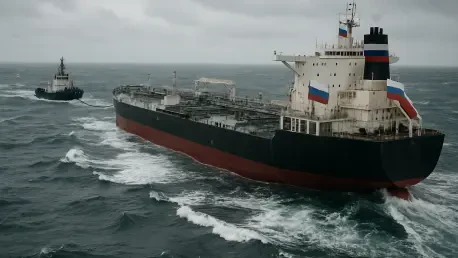
This statistical decline is particularly visible in the shipping manifests recorded at Libyan ports over the last year. Where Russian flags once dominated the horizon, the presence of tankers chartered by Swiss and American trading houses has become the new norm. This data underscores a reality where compliance with international sanctions is no longer an obstacle but a pathway toward the modernization of the entire North African energy landscape.
A Master Plan for Infrastructure and Production Growth
To reach its ambitious goal of increasing domestic production from 1.4 million to 2 million barrels per day, the Libyan government is implementing a multi-billion dollar framework for foreign investment. A cornerstone of this strategy is a 25-year, $20 billion development agreement with TotalEnergies and ConocoPhillips designed to overhaul aging extraction sites. Beyond just importing fuel, the strategy involves inviting these Western giants to help build the domestic refining capacity Libya currently lacks.
This roadmap prioritized professionalization and long-term infrastructure over short-term fixes, positioning the nation as a reliable energy hub for the European market. Leaders successfully navigated the complex transition by offering attractive, long-term fiscal terms to those willing to invest in the country’s future. The focus finally shifted from simple extraction to a comprehensive energy strategy that sought to secure the nation’s place as a cornerstone of the Mediterranean economy.