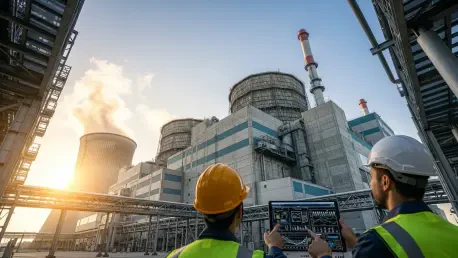

The fate of Europe’s largest nuclear power plant hangs precariously in the balance, caught between the crossfire of active conflict and the high-stakes world of international diplomacy. A new proposal from Ukrainian President Volodymyr Zelenskyy, positioning the United States as a key arbiter in the future of the Russian-occupied Zaporizhzhia Nuclear Power Station (ZNPP), has emerged as a central pillar of a potential US-led peace plan. This development marks a significant shift in negotiations, reportedly involving former US President Donald Trump, and presents an alternative to concessions on territorial sovereignty. At the heart of the matter lies a contentious struggle for control over a facility that poses a radiological risk to the entire continent, forcing a difficult conversation about whether a negotiated settlement can be reached before a technological catastrophe unfolds. The situation remains a complex web of political maneuvering, military posturing, and urgent safety concerns that demand a resolution.
The Diplomatic Chessboard
A bold new framework for the ZNPP’s future has been put forward by Kyiv, proposing that Ukraine would receive 50% of the electricity output, while the United States would control the remaining 50% and oversee the division of its associated assets. This plan was reportedly formulated after President Zelenskyy categorically rejected an earlier proposal for a three-way joint venture between the US, Ukraine, and Russia. Citing the ongoing conflict, the Ukrainian government deemed any form of commercial cooperation with Russia to be both unrealistic and fundamentally unacceptable. For Kyiv, the core issues of territorial integrity and sovereign control over the nuclear facility represent non-negotiable “red lines” in any peace discussion. This stance underscores the profound difficulty in finding common ground, as the plant is not just an energy asset but a powerful symbol of national sovereignty and a critical piece in the broader territorial dispute that defines the war. The proposal effectively seeks to sideline Russia from the plant’s future operations while securing a powerful international guarantor in the United States.
The competing proposals are best understood as intricate diplomatic maneuvers aimed at de-escalating a uniquely dangerous standoff and creating a workable, face-saving compromise for all parties involved. Ukraine has consistently maintained that the ZNPP is its sovereign territory under illegal Russian occupation, a position widely supported by international law. In stark contrast, Russia asserts direct ownership and operational control through its state nuclear corporation, Rosatom, which has had personnel on-site for a significant period. The US-backed initiatives are thus framed as an attempt to break this intractable impasse. A meeting between President Zelenskyy and former President Trump at Mar-a-Lago reportedly concluded with an agreement for their respective teams to continue developing the plan, with a potential future summit in Washington, D.C., on the horizon. This high-level engagement highlights the gravity of the situation, where the plant’s future is being negotiated at the highest echelons of global power, far from the front lines where its security is threatened daily.
A Precarious Physical Reality
Beneath the veneer of diplomatic negotiations, the Zaporizhzhia plant itself is in a dire and deteriorating physical condition, a reality that complicates any potential political settlement. While all six of its reactors have been in a state of shutdown for an extended period, they still require a constant and reliable supply of electricity to power essential cooling systems. The failure of these systems would prevent the removal of residual decay heat from the nuclear fuel, a scenario that could lead to a catastrophic meltdown and a massive radiological release. The International Atomic Energy Agency (IAEA) has repeatedly sounded the alarm over the recurring loss of backup power to the site, labeling the situation as “unsustainable” and fraught with risk. This precarious state is exacerbated by the ongoing military activity in the vicinity, with both sides trading accusations of shelling near the plant, which severely hinders the ability of maintenance crews and international inspectors to carry out critical repair or assessment missions.
The plant’s operational viability has been further undermined by a severe, long-term cooling crisis that began with the collapse of the Nova Kakhovka Dam in 2023. The dam’s reservoir was the primary source of the vast quantities of water needed to cool the plant’s reactors and spent fuel pools. Its destruction has created a fundamental logistical and engineering challenge that makes the potential restart of most of the reactors highly questionable, regardless of which nation is ultimately in control. This environmental disaster has introduced a technical constraint that transcends the political conflict, meaning that any agreement on the plant’s future must grapple with the immense cost and complexity of either securing a new, stable water source or beginning a decades-long decommissioning process. The physical reality on the ground suggests that even a perfect political deal might be insufficient to overcome the immense technical hurdles now facing the beleaguered facility.
A Tenuous Balance
The diplomatic overtures surrounding the Zaporizhzhia Nuclear Power Station painted a picture of potential progress, yet they unfolded against a backdrop of escalating physical risk. The proposal for a US-brokered energy-sharing agreement represented a creative attempt to circumvent the intractable sovereignty dispute, offering a path that avoided direct concessions to Russia while engaging a powerful third party. However, these high-level discussions were fundamentally challenged by the grim realities at the plant itself. The constant threat of power loss, coupled with the permanent damage to its primary cooling source, meant that the facility’s crisis was as much an engineering and environmental problem as it was a political one. Ultimately, the events underscored a critical lesson: a lasting solution required more than a signature on a peace accord. It demanded a comprehensive, technically sound plan to stabilize and secure a facility that had become a symbol of modern warfare’s unprecedented dangers, a challenge that continued to loom large for the international community.