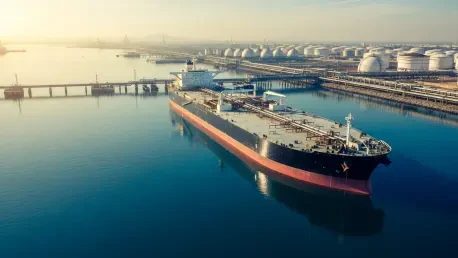

The maritime arteries of the Persian Gulf are currently experiencing a total systemic failure as the strategic closure of the Strait of Hormuz sends shockwaves through every corner of the global economy. What began as a series of localized military exchanges has rapidly evolved into a full-scale energy emergency, forcing nations to confront a reality where twenty percent of the world’s liquid fuel supply is suddenly inaccessible. This roundup examines the multifaceted perspectives on this crisis, from the aggressive shifts in Iranian leadership to the unprecedented measures taken by the international community to prevent a total industrial collapse.
The Chokepoint Collapse: Why the Persian Gulf Blockade Redefines Global Stability
The geopolitical landscape of the Middle East has shifted toward a state of total war, fundamentally altering the security architecture that has protected maritime trade for decades. Military analysts observe that the transition from tactical skirmishes to systematic commerce raiding marks a definitive end to the era of unchallenged naval dominance in the region. By targeting the very infrastructure of global trade, regional actors have effectively turned a territorial dispute into a leverage point against the entire industrialized world.
Furthermore, the disruption has moved beyond the naval sphere, impacting diplomatic relations and international law. Many observers argue that the traditional rules of maritime engagement are being rewritten in real time as merchant vessels become primary targets in a broader ideological struggle. This shift suggests that the protection of shipping lanes can no longer be guaranteed by conventional carrier strike groups alone, requiring a more complex and perhaps more costly approach to international security.
Weaponizing the Flow: Mojtaba Khamenei’s Strategic Gamble
The emergence of Mojtaba Khamenei as the central figure in Tehran has introduced a doctrine of economic total war that utilizes the Strait of Hormuz as a primary weapon. Following the death of the previous Ayatollah, the new leadership has abandoned traditional deterrence in favor of active market destabilization to force a Western military withdrawal from the region. This strategy treats energy exports not as a source of national revenue, but as a pressure point designed to inflict maximum pain on global consumers and political administrations.
Financial experts suggest that this gamble is intended to trigger a domestic crisis within the United States and Europe, leveraging high inflation to weaken political resolve. By officially declaring the passage closed, Iran has successfully pushed energy futures into a volatile upward spiral. This move highlights a calculated willingness to endure internal economic hardship if it results in the broader strategic retreat of foreign military forces from Middle Eastern soil.
The Jebel Ali and Umm Qasr Strikes: A New Frontier of Maritime Risk
The escalation reached a critical threshold on March 12 when targeted strikes hit a container ship near Jebel Ali and oil tankers in Iraqi waters near Umm Qasr. These incidents, which resulted in civilian fatalities and injuries, have effectively paralyzed commercial traffic throughout the Persian Gulf. Shipping companies are no longer willing to risk their assets or crews, leading to a mass exodus of vessels from the region and a reliance on significantly more expensive logistical alternatives.
Safety experts emphasize that the precision and location of these attacks demonstrate a capability to strike even in supposedly neutral or protected waters. This development has shattered the confidence of the insurance industry, causing maritime premiums to skyrocket to prohibitive levels. Consequently, the Persian Gulf has been transformed from a bustling trade hub into a high-risk combat zone, leaving regional economies that depend on these ports in a state of sudden, forced isolation.
Strategic Reserves and the $200 Barrel Threat
In a direct response to warnings that oil could breach the $200 mark, the International Energy Agency authorized the release of 400 million barrels of oil from emergency reserves. This intervention represents the largest coordinated drawdown since the 1970s and serves as a desperate attempt to stabilize a market characterized by panic and uncertainty. While the release provides a temporary buffer, energy analysts remain skeptical about its long-term efficacy if the blockade persists for months rather than weeks.
The threat of such high prices has also triggered a broader debate regarding the vulnerability of global energy dependency. The current situation exposes the fragility of the “just-in-time” supply chain model when applied to essential commodities like crude oil and liquefied natural gas. Without a clear path to reopening the Strait, the depletion of these strategic reserves could eventually leave the international community with no remaining tools to combat runaway energy inflation.
Domestic Aftershocks: Fuel Inflation and the Agricultural Impasse
The crisis is vibrating through the internal infrastructure of the United States, where rising fuel costs are only the beginning of a larger economic disruption. The agricultural sector is facing a severe shortage of energy-intensive inputs such as fertilizer, which threatens the stability of food supply chains and consumer prices. This domestic pressure has created a sense of urgency within the administration, as the political costs of a prolonged energy shortage begin to mount.
Internal friction within the intelligence community further complicates the response, with some advisors questioning the viability of a purely military solution. There is a growing recognition that kinetic strikes may not be sufficient to reopen a waterway that is so easily harassed by asymmetric tactics. This realization has left the economy vulnerable to a persistent “energy tax” that could stifle growth and spark widespread social discontent if a diplomatic or strategic breakthrough is not achieved soon.
Navigating the Impasse: Strategic Responses to a Prolonged Blockade
To survive this era of energy volatility, stakeholders must move toward a model of radical resilience that reduces dependency on singular geographic chokoints. Investing in localized energy production and expanding transcontinental pipeline networks can help bypass vulnerable maritime routes. Additionally, the development of advanced synthetic fuels and expanded nuclear capacity offers a way to decouple industrial productivity from the fluctuations of Middle Eastern geopolitics.
Global leaders also identified the need for a new framework of maritime diplomacy that addresses the underlying grievances of regional powers before they escalate into global emergencies. Strengthening ties with alternative suppliers and creating robust, redundant supply chains were seen as essential steps for national security. Ultimately, the crisis demonstrated that the path forward requires a fundamental shift in how the world values and secures its most critical resources.