
In a stunning reversal that underscores the growing impact of Western sanctions on global energy markets, India’s once-booming importation of Russian crude oil is set to collapse following a record-setting surge. This dramatic shift marks a pivotal moment for one of the world’s largest energy consumers, forcing a rapid recalibration of its procurement strategy and signaling a potential end to a lucrative, albeit controversial, chapter in its energy history. The whiplash from a five-month high to a projected three-year low in a matter of weeks reveals the profound challenges refiners face when navigating the complex intersection of economics and geopolitics.
The India Russia Oil Nexus a Strategic Alliance Under Pressure
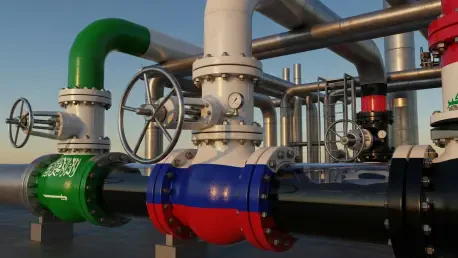
Following the 2022 invasion of Ukraine, India and Russia forged a powerful energy alliance of convenience. As Western nations shunned Russian crude, India stepped in, quickly becoming the largest seaborne buyer of Moscow’s discounted oil. This arrangement proved mutually beneficial: Russia secured a vital market to sustain its revenues, while India gained access to cheaper energy, helping to curb domestic inflation and bolster its energy security in a volatile global market.
This trade was facilitated by a network of key players. On the Russian side, oil giants like Rosneft and Lukoil were the primary suppliers. In India, both state-owned refiners, such as Indian Oil Corp (IOC), Hindustan Petroleum Corp (HPCL), and Mangalore Refinery and Petrochemicals Ltd (MRPL), along with private behemoth Reliance Industries, became major customers. For nearly two years, this steady flow of discounted crude was a cornerstone of India’s economic management, but the foundation of this strategic nexus is now showing deep fractures under intensifying external pressure.
A Tale of Two Months the Surge and the Slump
The Pre Sanction Stockpile Strategy
The final quarter of last year painted a picture of calculated risk and strategic maneuvering. In November, India’s imports of Russian oil surged to an impressive 1.855 million barrels per day (bpd), a significant jump from October’s 1.48 million bpd and the highest volume recorded in five months. This spike was not driven by a sudden increase in demand but by a deliberate stockpiling strategy. Indian refiners, anticipating the imminent tightening of U.S. sanctions, rushed to secure as many cargoes as possible before the regulatory window closed.
This preemptive buying frenzy was a rational response to a closing opportunity. With a November 21 deadline looming for winding down transactions with sanctioned Russian producers Rosneft and Lukoil, refiners made a conscious decision to maximize their intake of discounted crude. This behavior highlights the agility of Indian companies in a volatile geopolitical environment, where procurement decisions must balance economic incentives against escalating compliance risks.
From Record Highs to a Drastic Reversal
The November high, however, was merely the prelude to a dramatic collapse. Forward-looking projections for December indicated that India’s imports of Russian crude would plummet to between 600,000 and 650,000 bpd. Such a level would represent the lowest intake in at least three years, effectively wiping out the massive gains Russia had made in the Indian market since 2022.
This sharp contraction is a direct consequence of the stricter sanctions regime. The correlation is undeniable: as Western enforcement became more robust, the risk calculus for Indian refiners shifted decisively. The December figures are expected to primarily consist of cargoes for Indian Oil Corp and Nayara Energy, along with some late-arriving November shipments for Reliance, signaling a broad-based retreat from the market by most other major players.
Navigating the Sanctions Minefield
The primary challenge for Indian refiners stems from the heightened scrutiny of financial transactions. International banks, wary of violating Western regulations, have become extremely cautious in facilitating payments for Russian oil, creating significant logistical hurdles. This financial squeeze has made it increasingly difficult and risky for Indian companies to continue their purchases, even if the crude itself is priced attractively.
In response, a strategic halt in procurement has become the prevailing trend. Major state-run entities like MRPL and HPCL, along with the private-sector giant Reliance Industries, have largely ceased new purchases to mitigate their exposure. Reliance has clarified it will only process cargoes that were committed before the new sanctions took effect. This coordinated withdrawal underscores a consensus within the industry that the potential penalties for non-compliance now far outweigh the benefits of discounted crude, forcing the complex and costly process of unwinding established supply chains.
The West Tightens its Grip New Sanctions Reshaping Trade
The recent wave of sanctions has been particularly effective due to its multi-pronged approach. The United States led the charge by imposing a strict November 21 wind-down deadline for all transactions with key Russian producers Rosneft and Lukoil, directly targeting the source of the supply. This measure created a clear compliance red line that Indian refiners were unwilling to cross.
Compounding this pressure is a formidable new regulation from the European Union, set to take effect on January 21. This rule will prohibit the import of fuels from any refinery that has processed Russian crude within the preceding 60 days. For Indian refiners, who are also major exporters of refined products like diesel and jet fuel to Europe, this regulation presents a critical business risk. It forces them to choose between processing Russian crude for domestic consumption and maintaining access to the lucrative European market, further incentivizing a pivot away from Russian oil.
Beyond Russian Crude India’s Strategic Pivot
Faced with mounting risks, India is now actively diversifying its oil procurement strategy. Refiners are increasingly turning toward more reliable and sanction-free suppliers to fill the void left by Russian barrels. The most likely alternatives lie in the traditional energy powerhouses of the Middle East, such as Saudi Arabia and Iraq, as well as potential sources in West Africa and the Americas. This shift marks a return to more conventional supply patterns after a two-year deviation.
This recalibration carries significant geopolitical weight, especially in light of Russian President Vladimir Putin’s recent visit to India. While the nations share deep historical ties, the sharp decline in oil trade introduces a point of friction. The long-term effects of this pivot will ripple across the globe, influencing global oil flows and potentially adding upward pressure on prices as India competes for non-Russian crude in the open market.
The End of an Era Recalibrating India’s Energy Map
The precipitous drop in India’s imports of Russian oil marked a definitive end to a unique, two-year period in global energy trade. What began as a pragmatic economic decision for India evolved into an untenable risk, demonstrating the far-reaching influence of coordinated Western sanctions. The swiftness of the reversal showed how effectively financial and regulatory pressures can redraw major trade routes, even those forged out of strong mutual interest. This episode served as a stark reminder that in an interconnected global economy, energy security cannot be divorced from geopolitical reality. India’s path forward now involves a crucial recalibration, prioritizing supply chain resilience and diversification as it continues its quest to power a growing economy.