
A Strategic Pivot in Global Trade Dynamics
In an era defined by shifting geopolitical alliances and economic uncertainty, India is making a decisive move to fortify its international partnerships, with a rapidly deepening relationship with the United Arab Emirates at the forefront of this strategy. This pivot gains significance against a backdrop of increasing trade friction with the United States. This article explores the multifaceted nature of the burgeoning India-UAE partnership, analyzing the landmark agreements in energy and trade that signal a new chapter in their bilateral ties. It will delve into the strategic calculus behind India’s diversification efforts, examining how this alliance serves as a crucial hedge against the unpredictability of its traditional Western partners and sets a new course for its economic future.
From Historic Ties to a Modern Strategic Alliance
The connection between India and the UAE is rooted in centuries of cultural and commercial exchange, but recent years have witnessed an unprecedented acceleration of this relationship. The turning point was the signing of the Comprehensive Economic Partnership Agreement (CEPA) in 2022, a landmark pact that dismantled trade barriers and laid the groundwork for deeper economic integration. This foundational agreement transformed a historically strong but conventional relationship into a dynamic and strategic alliance. Understanding this evolution is key to appreciating the current momentum, as the CEPA created the trust and institutional framework necessary for the ambitious, large-scale collaborations now taking shape.
The Cornerstones of a Deepening Partnership
A Landmark Energy Deal Forging Long-Term Security
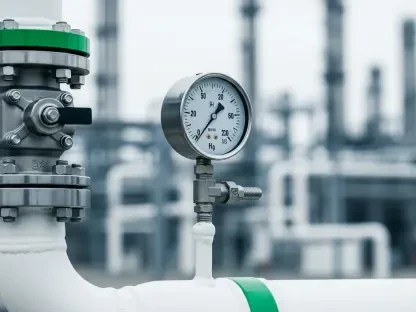
A cornerstone of the strengthened alliance is a monumental $3 billion liquefied natural gas (LNG) agreement between the Abu Dhabi National Oil Company (ADNOC) and India’s Hindustan Petroleum Corporation. This 10-year deal, set to commence in 2028, will not only bolster India’s energy security but will also cement its position as the UAE’s single largest LNG customer. For India, a nation with soaring energy demands, this long-term supply contract provides critical stability. For the UAE, it guarantees a reliable, high-growth market, insulating a key sector from global volatility and underscoring the mutual dependency that now defines the relationship.
An Ambitious Vision for Bilateral Trade Expansion
Building on the success of the 2022 CEPA, both nations have set their sights on an audacious new goal: doubling their bilateral trade from $100 billion to $200 billion by 2032. This target is not merely aspirational; it reflects a shared confidence in their integrated economic futures across sectors like technology, finance, and manufacturing. This pursuit of exponential growth stands in stark contrast to the challenges India faces elsewhere. The stability and clear-eyed ambition of the UAE partnership offer a predictable pathway for growth, attracting investment and fostering cross-border business ventures in a way that strained relationships cannot.
Diversification as a Response to U.S. Trade Unpredictability
India’s pivot toward the UAE is a calculated strategic response to growing friction with the United States, its largest trading partner. Recent American trade policy, including the imposition of a 50% tariff on certain Indian goods, has introduced a level of unpredictability that New Delhi is keen to mitigate. By consciously diversifying its economic dependencies, India is de-risking its foreign trade portfolio. This trend extends beyond the UAE, with similar trade pacts being pursued with the UK, Oman, and New Zealand. Expert consensus affirms that the India-UAE relationship has evolved into a robust, multifaceted friendship where high-level diplomatic engagements are becoming routine, signaling a deliberate and long-term strategic alignment.
The Future Trajectory: Beyond Commerce to Geopolitical Clout
The India-UAE partnership is poised to evolve far beyond its economic foundations. The current trajectory suggests a future where collaboration expands into cutting-edge technology, space exploration, and strategic defense initiatives. As trust deepens, the routine nature of high-level talks will likely translate into a more coordinated foreign policy outlook on regional and global issues. This alignment could position the India-UAE axis as a significant stabilizing force in the Indo-Pacific and the Middle East, offering a model of cooperation for other middle powers navigating the complexities of a multipolar world. The next decade will likely see this partnership mature into a significant geopolitical bloc.
Key Insights and Strategic Imperatives
The analysis reveals several critical takeaways for policymakers and business leaders. First, the India-UAE alliance exemplifies the power of strategic diversification in mitigating geopolitical risk. Second, the success of the CEPA serves as a powerful case study in how well-structured trade agreements can unleash enormous economic potential. For businesses, the clear directive is to leverage the favorable terms of the CEPA to explore emerging opportunities in these fast-growing markets. For governments, the partnership underscores the importance of cultivating stable, long-term alliances built on mutual respect and shared economic goals, rather than over-relying on historically dominant but increasingly volatile partners.
A Partnership Forged for a New Global Order
In conclusion, the deepening bond between India and the United Arab Emirates is more than a series of lucrative deals; it is a definitive statement about the future of international relations. This strategic friendship, anchored by landmark agreements in energy and an ambitious vision for trade, represents a pragmatic and forward-looking approach to navigating global uncertainty. As the world fragments into competing blocs, the India-UAE partnership stands out as a blueprint for resilient, mutually beneficial cooperation. Its continued success will not only reshape economic corridors but also contribute to a more stable and multipolar global order.